












Dust removal skeleton design: how to improve the service life of filter bags?
Mar 02,2026
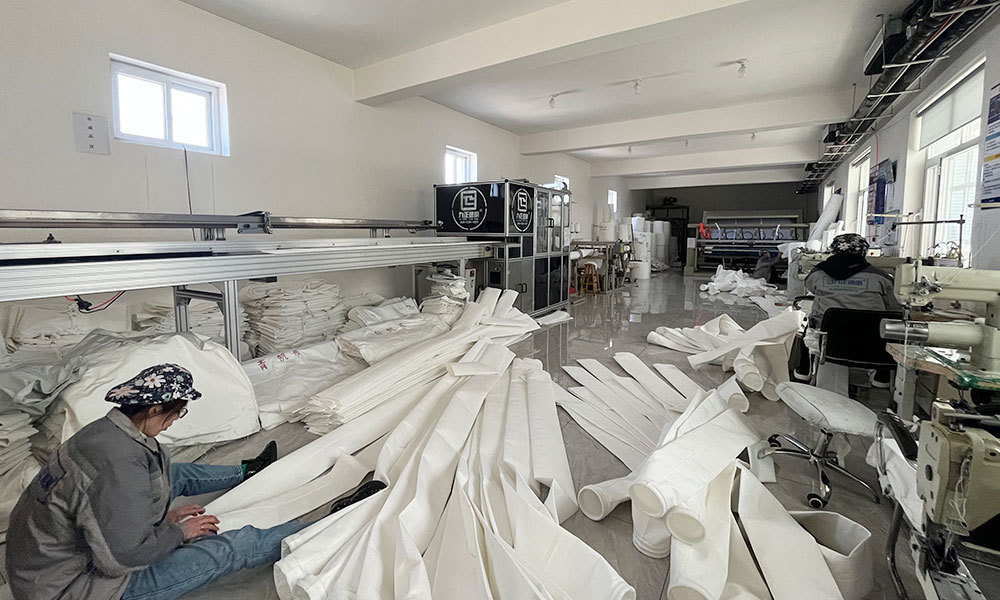
As the core supporting component of the filter bag, the design rationality of the dust removal skeleton directly determines the stress state, filtration efficiency, and service life of the filter bag. The filter bag, as a vulnerable part of the dust collector, has a high replacement cost. The core goal of optimizing the skeleton design is to reduce the wear of the filter bag, avoid local stress concentration, and thus extend its service life. Below are practical design ideas shared from the core design points, key optimization directions, and practical considerations, which are in line with industrial application scenarios.
1、 Skeleton structure design: reduce mechanical wear of filter bags
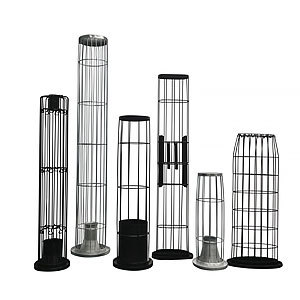
The scientificity of the skeleton structure is the basis for avoiding filter bag wear, with a focus on appearance, spacing, and connection methods. Firstly, the diameter of the skeleton needs to be accurately matched with the filter bag. If it is too large, it can easily lead to a large gap between the filter bag and the skeleton, which can cause the filter bag to shake and friction to intensify during filtration; If it is too small, it will squeeze the filter bag, causing deformation of the filter material under stress and accelerating aging. Secondly, the spacing between longitudinal and transverse bars should be designed reasonably. The spacing between longitudinal bars is recommended to be controlled between 100-150mm, and the spacing between transverse bars should be adjusted according to the length of the skeleton to avoid excessive spacing causing damage to the filter bag bulge. If the spacing is too small, it will increase the difficulty of fitting the filter bag and affect the cleaning effect.
At the same time, the design of both ends of the skeleton needs to balance smoothness and stability. The upper port adopts flanging or curling technology to remove burrs and sharp angles, avoiding scratching the filter bag during installation and operation; The connection between the lower port and the flower board should be tight to reduce the shaking of the skeleton and prevent friction loss between the bottom of the filter bag and the skeleton or flower board. In addition, the overall verticality of the skeleton needs to be strictly controlled to avoid tilting after installation, which may cause uneven local stress on the filter bag.
2、 Material selection design: Suitable for working conditions, delaying corrosion and aging
The selection of skeleton material should be combined with the operating conditions of the dust collector, with the core being corrosion resistance and high temperature resistance, to avoid material degradation and damage to the filter bag. For working conditions at room temperature and without corrosive dust (such as woodworking and grain processing), carbon steel material can be selected, and the surface can be galvanized or sprayed to improve wear resistance and rust prevention; For high temperature and corrosive working conditions (such as chemical and metallurgical industries), stainless steel materials (such as 304, 316L) should be selected, or a PTFE coating should be applied to the surface of the carbon steel skeleton to prevent scratching the filter bag after the skeleton corrodes and deforms.
In addition, the thickness of the material needs to be adjusted according to the length of the skeleton and the stress situation, to avoid deformation of the skeleton caused by insufficient thickness and compression of the filter bag; If the thickness is too thick, it increases the weight of the skeleton and increases the load-bearing capacity of the filter bag. Long term operation can easily cause the top of the filter bag to tear.
3、 Detail optimization design: Avoiding the risk of filter bag damage
Detail design is the key to extending the service life of filter bags, with a focus on addressing issues such as stress concentration and dust cleaning interference. One is to optimize the shape of the longitudinal bars in the skeleton, using arc-shaped longitudinal bars instead of square ones to reduce local compression on the filter bag and avoid holes in the filter material due to long-term stress; The second is to add a flexible buffer layer (such as silicone gasket) at the key contact point between the skeleton and the filter bag to reduce the impact friction between the skeleton and the filter bag during dust cleaning, especially suitable for pulse jet dust collectors.
The third is to design a reasonable skeleton length to ensure that the filter bag fully fits the skeleton, avoid the bottom of the filter bag hanging, and prevent the filter bag from swinging and wearing due to the impact of air flow during filtration; Fourthly, the welding process of the skeleton needs to be standardized, and the welding points should be smooth and firm, without weld beads or virtual welding, to avoid welding burrs scratching the filter bag, and to prevent the skeleton from breaking and damaging the filter bag due to weak welding.
4、 Design adaptability: matching filter bag type and operating conditions
The skeleton design needs to be accurately adapted to the type of filter bag, dust removal method of the dust collector, and operating parameters. For pulse jet bag dust collectors, the framework should be designed as a lightweight structure to reduce the impact force during dust cleaning, while reserving a reasonable dust cleaning airflow channel to avoid direct airflow impacting the filter bag locally; For reverse blowing dust collectors, the skeleton needs to have stronger stability to prevent the skeleton from shaking and exacerbating the wear of the filter bag caused by reverse blowing airflow.
In addition, for high viscosity and high humidity dust working conditions, the skeleton should be designed as an easy to clean structure to reduce the adhesion of dust on the surface of the skeleton and avoid squeezing the filter bag after dust agglomeration; For long filter bags (over 6 meters in length), a support ring needs to be added in the middle of the skeleton to enhance its rigidity and prevent the middle of the filter bag from sagging or folding, leading to local wear.
In summary, the core design of the dust removal framework is to "fit the filter bag, adapt to the working conditions, reduce wear, and delay aging". By optimizing the structure, precise selection, and refining details, the mechanical damage and aging speed of the filter bag can be effectively reduced, the service life of the filter bag can be extended, and the stable operation of the dust collector can be guaranteed, reducing the operation and maintenance costs for industrial dust control.
Hot Tags:


Contact Us
Tel:
WeChat:
WhatsApp:
E-mail:
Address:
338 National Road South, Longfengdian Village, Botou City, Hebei Province, China
JiuznTomine is expertly delivering technically complicated projects in markets & provides custom solutions for their customized need.


CONTACT INFO
Tel: +86 18531710311
WeChat: +86-18531710311
338 National Road South, Longfengdian Village, Botou City, Hebei Province, China