












Dust bag selection guide: Matching according to needs is the core
Dec 02,2025

In industrial dust removal systems, the selection of dust removal bags as the filtering core directly determines dust removal efficiency, equipment operation and maintenance costs, and environmental compliance. For overseas factories, the environmental standards and regional operating conditions of different countries highlight the importance of "matching according to demand". Blindly selecting expensive filter media or universal models may lead to premature damage to filter bags and excessive emissions, which in turn increases overall costs.
1、 Selection first calculates the "basic account": 3 core parameters determine the direction
The selection of dust removal bags is not based on empirical judgment, but on the rigid basis of operating parameters. Regardless of the industry, the following three core indicators need to be clearly defined as a prerequisite for avoiding selection bias.
1. Smoke temperature: the "lifeline" of filter material
The temperature directly determines the material selection of the filter material. Exceeding the tolerance temperature can cause the filter bag to burn out instantly or accelerate aging, while below the dew point temperature, it is easy to condense and paste the bag. When selecting, attention should be paid to two data points: "continuous operating temperature" and "instantaneous peak temperature":
1. Normal temperature conditions (<100 ℃): such as food processing and electronic component manufacturing, where there is no high temperature impact on the flue gas, polyester filter material can be used, which has a lower cost and meets general filtration accuracy requirements; If there is a small amount of oil pollution, polyester filter material that has undergone oil repellent treatment can be selected.
2. Medium temperature conditions (100-200 ℃): commonly used in chemical reaction vessels, plastic granulation and other scenarios, it is necessary to use acrylonitrile butadiene styrene filter media with stronger temperature resistance. Its continuous operating temperature can reach 190 ℃, instantaneous tolerance to 210 ℃, and it has certain acid and alkali resistance; If the sulfur content in the flue gas is high, PTFE coating should be used to further enhance its corrosion resistance.
3. High temperature conditions (>200 ℃): For example, blast furnace gas in steel plants and exhaust gas from cement kilns, high-temperature filter materials such as glass fiber and basalt fiber should be selected. These filter materials should be careful to avoid frequent breakage, and the selection should match the flatness of the filter bag skeleton.
4. Special Reminder: If equipment is installed outdoors in cold regions, the impact of low temperature on the toughness of the filter material should be considered. Ordinary polyester that is prone to brittleness below -20 ℃ should be avoided, and modified filter materials or PTFE filter materials with added antifreeze agents should be preferred.
2. Dust characteristics: the "determining factor" of filtration accuracy and durability
The particle size, concentration, hardness, and corrosiveness of dust directly affect the filtration method, surface treatment process, and service life of the filter material, and require targeted matching:
1. Dust particle size: Fine dust should be filtered using membrane filter media, utilizing the microporous structure of the membrane to achieve surface filtration and avoid dust from penetrating into the interior of the filter media and causing blockage; Coarse dust can be treated with needle punched felt filter material, which has good breathability and is not easily worn.
2. Dust concentration: In scenarios where the inlet dust concentration is greater than 50g/m ³, high dust holding filter media should be selected, and a pulse dust cleaning system should be used to avoid frequent dust cleaning and damage to the filter media; Thin filter media can be used for low concentration dust to reduce equipment resistance.
3. Dust corrosiveness: PTFE or PPS filter media are preferred for acidic dust, while polyester filter media can be used for alkaline dust to avoid the fiber of the filter media being corroded and broken; If it is a highly corrosive flue gas, anti-corrosion treatment should also be applied to the seam of the filter bag.
4. Flammable and explosive dust: such as flour used in grain processing and plastic particles used in chemical industry, anti-static filter media should be selected, and the filter bag should be well grounded to prevent static electricity accumulation from causing explosions. Such filter media should comply with the EU ATEX or US NFPA explosion-proof standards.
3. Smoke humidity: the "invisible killer" of filter bag blockage
When the relative humidity of the flue gas is greater than 60%, it is easy to encounter problems such as dust sticking to filter bags and condensation sticking bags. The selection should focus on the hydrophobic performance of the filter material:
1. High humidity and room temperature conditions: Use polyester filter media treated with silicone oil or Teflon waterproofing to reduce dust adhesion.
2. High humidity and medium temperature conditions: PTFE filter material is preferred, as it has excellent hydrophobic properties and temperature resistance suitable for medium temperature environments.
3. Special attention: If the flue gas has the characteristics of "low temperature and high humidity", it is necessary to combine equipment insulation measures to ensure that the flue gas temperature is above 5 ℃ above the dew point temperature, and to avoid freezing inside the filter bag.
2、 Industry scenario segmentation: practical solutions matched on demand
The working conditions vary significantly across different industries, and a single filter material cannot adapt to all scenarios. The following provides validated selection solutions for high-frequency industries in foreign trade, covering environmental compliance and operation and maintenance needs.
1. Food and Pharmaceutical Industry: Safety and Compliance Priority
Core requirements: Complies with food contact grade standards such as FDA (USA) and EU 10/2011 (EU), has no fiber shedding, and is easy to clean.
Selection plan: Use food grade polyester or PTFE filter media to avoid using filter media containing azo dyes; If it is processed as powdered food, anti-static function should be added to prevent dust explosion; The preferred cleaning method is low-pressure pulse to reduce fiber shedding caused by filter wear.
2. Chemical and petrochemical industries: corrosion resistance and stability come first
Core requirements: Resistant to acid and alkali corrosion, organic vapors, and meet the VOCs synergistic filtration requirements of EU CE or US EPA.
Selection plan: PPS or PTFE should be used as the basic filter material, and PTFE film should be used to enhance protection for chlorine containing and sulfur-containing flue gas; If there is viscous oil mist in the flue gas, a smooth surface expanded PTFE filter material can be used to reduce the adhesion of oil mist; The filter bag stitching must use PTFE thread to prevent the stitching from being corroded and broken first.
3. Steel and Metallurgical Industry: Balancing High Temperature and Wear Resistance
Core requirements: high temperature resistance, dust abrasion resistance, emission concentration meets the EU IED directive.
Selection plan: Glass fiber filter material is used for blast furnace gas purification, combined with graphite coating to enhance wear resistance; The converter flue gas uses basalt fiber filter material, which can withstand instantaneous high temperature impact; If it is emulsion mist in the cold rolling workshop, use oil resistant PTFE filter material to avoid oil mist penetrating the inside of the filter material.
4. Building materials and mining industry: high dust capacity and anti blocking are the main focus
Core requirements: Large dust holding capacity, good breathability, capable of handling high concentrations of dust, and reducing dust cleaning frequency.
Selection plan: Choose thick polyester needle punched felt or polypropylene filter material. Polypropylene filter material has a lower cost and is suitable for non corrosive dust; The mining crushing scene requires the use of wear-resistant filter materials to enhance the surface strength of the filter materials; If it is a high humidity and high dust working condition at the tail of the cement kiln, the combination scheme of PPS filter material+PTFE coating should be selected.
5. Electronics and semiconductor industry: high precision and pollution-free
Core requirements: filtration accuracy ≤ 0.1 μ m, no particle shedding, meeting the Class 5 cleanliness standard of the semiconductor industry.
Selection plan: PTFE coated filter material must be selected, with membrane pore size controlled at 0.1-0.3 μ m. The filter material substrate should be fine polyester to reduce fiber gaps; When the equipment is running, the cleaning pressure should be controlled to be ≤ 0.2MPa to avoid high pressure damaging the membrane structure and causing a decrease in filtration accuracy.
3、 Selection avoidance pitfalls: stay away from 3 common misconceptions
Many companies make decision-making errors due to information bias during selection. The following three misconceptions need to be avoided, especially in scenarios where overseas compliance requirements are strict. Incorrect selection may lead to environmental penalties.
Misconception 1: "What's expensive is good", blindly pursuing high-end filter media
Although PTFE filter material has excellent performance, its cost is 3-5 times that of ordinary polyester. If it is a normal temperature, low dust, and non corrosive working condition, using polyester filter material can meet the demand. Blindly using PTFE will lead to doubled operation and maintenance costs. The correct approach is to select the most cost-effective filter material based on the operating parameters while meeting the requirements.
2. Misconception 2: Only focusing on the material of the filter material, ignoring the structure and size of the filter bag
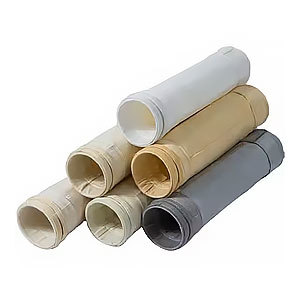
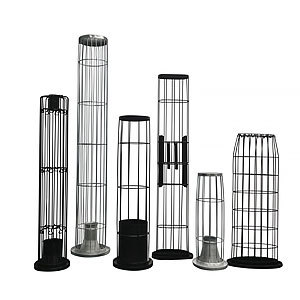
The sewing process and sealing method of the filter bag directly affect the sealing performance and air leakage rate of the equipment. If overseas factories exceed emission standards due to poor sealing of filter bags, they may face high fines from local environmental protection departments. In addition, the size of the filter bag needs to be accurately matched with the filter bag skeleton. If the gap is too large, it can easily cause the filter bag to shake and wear, while if it is too small, it is difficult to install.
3. Misconception 3: Neglecting environmental standards and failing to meet local compliance requirements for filter materials
The requirements for dust removal emissions vary greatly among different countries. For example, the European Union requires industrial dust emissions to be ≤ 10mg/m ³, some states in the United States require ≤ 5mg/m ³, and some Southeast Asian countries have relatively relaxed requirements. When selecting, it is necessary to confirm the local environmental standards in advance. If exporting to Europe and America, the filter material must pass third-party testing to ensure that the filtration efficiency meets the standards; The food industry needs to provide additional food contact certifications such as FDA.
4、 Selection loop: full process control from testing to operation and maintenance
Accurate selection is not a one-time decision, but requires the formation of a closed loop of "parameter collection sample testing batch use operation and maintenance optimization", especially in complex overseas working conditions, this process can minimize risks to the greatest extent possible.
1. Parameter collection: Detailed records of flue gas temperature, humidity, dust concentration, composition, as well as local environmental standards, equipment models, and other information, forming a complete working condition file.
2. Sample testing: Request samples from the filter material supplier and conduct 1-2 weeks of small-scale testing under actual working conditions to monitor the pressure difference changes, filtration efficiency, and dust adhesion of the filter bag, and verify whether the selection is suitable.
3. Batch use: After replacing the filter bags in batches, it is necessary to strengthen inspections in the first month, record the operating data of the filter bags, and communicate with the supplier in a timely manner to adjust if there are problems such as abnormal pressure difference or excessive emissions.
4. Operation and maintenance optimization: Develop a regular replacement plan based on the service life of the filter bag; Based on the operational data of the dust cleaning system, optimize the dust cleaning frequency and pressure to extend the lifespan of the filter bag.
In short, the core of selecting dust removal bags is "not being greedy for high prices, not blindly following, and not lacking items". With operating parameters as the anchor point, combined with local environmental standards and operation and maintenance needs overseas, the goal of "achieving filtration standards, controllable costs, and stable service life" can be achieved. For foreign trade enterprises, accurate selection of filter bags is not only a guarantee for stable equipment operation, but also an important link for enterprises to comply with local environmental regulations and establish a professional image.
Hot Tags:


Contact Us
Tel:
WeChat:
WhatsApp:
E-mail:
Address:
338 National Road South, Longfengdian Village, Botou City, Hebei Province, China
JiuznTomine is expertly delivering technically complicated projects in markets & provides custom solutions for their customized need.


CONTACT INFO
Tel: +86 18531710311
WeChat: +86-18531710311
338 National Road South, Longfengdian Village, Botou City, Hebei Province, China