












Winter Cold Attack: Troubleshooting and Operation Guide for Dust Removal Equipment
Dec 01,2025

When the temperature drops sharply below 0 ℃, the operating environment of industrial dust removal systems will undergo significant changes. Low temperatures can easily cause embrittlement of filter materials, condensation and freezing of compressed air, and freezing of pipeline dust, leading to abnormal pressure differentials, ineffective dust cleaning, and excessive emissions. Especially in high latitude regions such as Northern Europe and North America, the combination of severe cold below -20 ℃ and high humidity, wind and snow weather will further exacerbate equipment wear and tear.
1、 Focus on the core contradiction first: 3 major causes of winter failures
The malfunction of winter dust removal equipment is not caused by a single factor, but by the combined effect of "low temperature+humidity/dust+equipment characteristics". The core causes can be summarized into three categories, and the scenario needs to be clarified before troubleshooting:
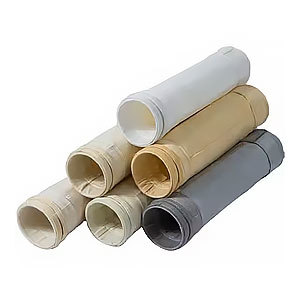
Material brittleness and freeze-thaw damage: Ordinary filter bags and seals experience a decrease in elasticity at low temperatures, and frequent start stop or dust cleaning vibrations can easily lead to cracking; When high humidity flue gas comes into contact with low-temperature filter materials, it will first condense and then freeze, forming an "ice shell" that blocks the filter layer.
Freezing of fluid medium: If the compressed air of the ash cleaning system and the ash discharge channel of the ash hopper are not insulated and protected, it is easy for the pulse valve to jam and the ash discharge valve to be blocked due to condensation and freezing of water vapor.
Sealing failure caused by thermal expansion and contraction: The equipment shell and pipeline may experience thermal expansion and contraction due to the large temperature difference between day and night, which may cause the flange sealing surface to loosen, resulting in air leakage or snow ingress.
2、 Typical fault special investigation: locating the root cause from the phenomenon
Winter faults are often manifested as three core problems: "abnormal pressure difference", "ineffective dust cleaning", and "clogged dust discharge". It is necessary to make accurate judgments based on on-site phenomena to avoid blind disassembly.
1. Sudden increase/fluctuation in pressure difference: Freezing of filter bag is the primary suspicion
Abnormal pressure difference in winter is often caused by "surface icing of filter bags" or "brittle and damaged filter materials", and there is a significant difference in the judgment and treatment methods between the two:
Filter bag icing: The pressure difference surges rapidly in a short period of time, accompanied by abnormal equipment noise. Judgment basis: After opening the maintenance door, the surface of the filter bag appears as a hard "ice shell", and there is a crisp sound when struck; After shutdown, wait for the temperature to rise and the pressure difference will slowly decrease. Commonly found in high humidity conditions or equipment installed outdoors. Solution tip: ① Emergency handling: Pause the dust cleaning system, introduce hot air into the dust collector, melt the ice layer, and manually clean up the fallen ice deposits; ② Remedial measures: Install rock wool insulation layer on the dust collector shell, install heat tracing strip inside the filter bag chamber, and install a pre heater at the air inlet to ensure that the temperature of the flue gas entering the equipment is not lower than 10 ℃.
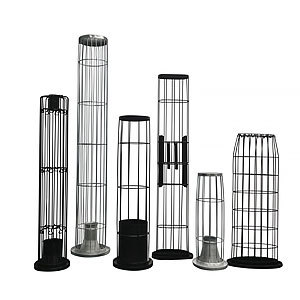
Brittle and damaged filter material: The pressure difference first increases and then decreases, and the judgment basis for excessive emission concentration is that in the early stage, the pressure difference increases due to local blockage of the filter bag, and in the later stage, the filter bag becomes brittle and cracks, resulting in a phenomenon of "sudden drop in pressure difference+ash emission from the discharge port". Mostly occurs on ordinary polyester filter bags that have been in use for more than one year. Solution tip: Immediately replace the filter material that is suitable for low temperatures, such as PTFE coated filter bags or PPS filter bags; When replacing, check whether the filter bag frame has deformed due to low temperature. If there is any bending, it needs to be corrected synchronously to avoid scratching the filter bag again.
2. Ash cleaning system failure: Compressed air "strike" is the main cause
90% of winter dust cleaning failures are related to the freezing of compressed air systems, followed by low-temperature failures of pulse valve components, which need to be investigated in the order of "gas source → pipeline → executing components":
Compressed air condensation and freezing: The pulse valve does not operate, and the pressure gauge reading is abnormal. The judgment basis is that there is ice on the outer wall of the compressed air pipeline, the pulse valve coil heats up but the valve body has no blowing sound, and the pressure gauge pointer fluctuates violently. Due to the dryer not being turned on or incomplete water removal, the water vapor condenses and freezes in the pipeline. Solution tip: ① Emergency handling: Close the gas source valve, rinse and thaw along the pipeline with hot water, and focus on unclogging the pulse valve inlet; ② System optimization: Install heat tracing cables and insulation layers on the compressed air pipeline. The dryer needs to operate 24 hours a day and regularly discharge the accumulated water at the bottom of the gas storage tank; Install a precision filter in front of the pulse valve to increase the filtration accuracy to 0.01 μ m and reduce the entry of water vapor.
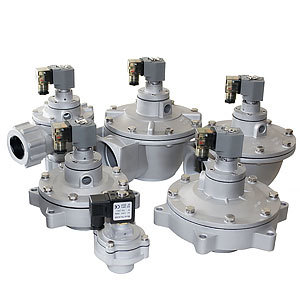
Low temperature failure of pulse valve components: weak blowing or air leakage judgment basis: pulse valve has action but weak blowing sound, or there is icing and air leakage at the connection between the valve body and the pipeline. The core reason is that components such as membranes and springs experience elastic attenuation at low temperatures. Solution: Replace the low-temperature resistant pulse valve components, use EPDM material for the diaphragm, and use stainless steel material for the spring to avoid low-temperature corrosion; Install insulation gaskets between the valve body and flange during installation to reduce heat transfer.
3. Blockage of the ash discharge system: "Freezing" of the ash hopper is more difficult than accumulating ash
In winter, the blockage of ash hoppers is often caused by "dust freezing bridging" rather than simply accumulating dust. Forcefully starting the ash discharge valve can easily cause the motor to burn out. To investigate, it is necessary to first confirm the degree of freezing:
Mild freezing: The ash discharge valve rotates slowly, and the ash level gauge displays abnormal readings. The judgment basis is to strike the side wall of the ash hopper with a small hammer, and the sound is dull rather than crisp. There is a small amount of agglomerated dust discharged from the outlet of the ash discharge valve. Solution: Turn on the ash hopper heat tracing device, maintain the temperature at 15-20 ℃, and start the vibrator to use vibration to break the thin ice; It is strictly prohibited to use open flames to bake the ash hopper to avoid damage to the filter bag caused by heat.
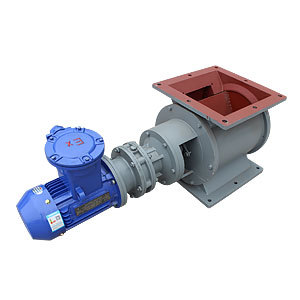
Severe freezing: The ash discharge valve is completely stuck, and the thickness of ice on the side wall of the ash hopper is judged based on the tripping of the ash discharge valve motor and the obvious ice column at the connection between the bottom of the ash hopper and the ash discharge valve. It often occurs in windy and snowy weather, where rainwater enters the ash hopper and mixes with dust to freeze. Solution: ① Safe shutdown: Cut off the power supply of the ash discharge valve to prevent the motor from burning out; ② Layered thawing: Wrap a heating blanket around the outside of the ash hopper and gradually thaw from top to bottom. During the thawing process, gently poke open the frozen block that builds the internal bridge with a wooden stick; ③ Preventive renovation: Install a rain cover on the top of the ash hopper, set up a tilted baffle at the feed inlet to prevent rainwater from falling directly, and increase the slope of the inner wall of the ash hopper from 60 ° to 70 ° to reduce dust adhesion and freezing.
4. Electrical system failure: Hidden damage to the "central nervous system" caused by low temperatures
The control instrument, sensors, cables and other electrical components of the dust collector are prone to signal disorder or power interruption at low temperatures, and are often misjudged as mechanical faults:
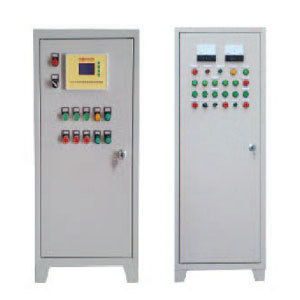
Control instrument black screen/program disorder: Often caused by low temperature leading to a decrease in capacitance performance, or display screen condensation and short circuit. Solution tip: Move the controller to the insulated electrical cabinet, install a small heater inside the cabinet, and ensure that the ambient temperature is not lower than 5 ℃; Regularly wipe the display screen with a dry cloth to avoid condensation.
Sensor malfunction: Differential pressure gauge and temperature sensor are prone to reading deviation below -20 ℃. Solution tip: Replace the low-temperature resistant sensor, install insulation cover on the sensor probe to avoid direct exposure to cold wind.
Cracking of cable insulation layer: Outdoor cables become brittle at low temperatures and are prone to damage and leakage due to vibration or pulling. Solution: Replace the cold resistant cable, wrap the outer layer of the cable with a snow and frost resistant sleeve, reserve a certain amount of expansion and contraction at the fixing point to cope with thermal expansion and contraction.
3、 Winter operation and maintenance core: establishing a closed-loop mechanism of "prevention priority"
The cost of troubleshooting dust removal equipment in winter is three times that of daily operations, and it is prone to environmental compliance risks. Establishing targeted prevention mechanisms is more crucial
1. "Preheating check" before starting up: In low-temperature environments, the heat tracing system and preheater need to be turned on before starting the equipment. After the internal temperature of the dust collector rises to above 10 ℃ and the compressed air pipeline is free of ice, the fan and dust cleaning system can be started; Focus on checking whether the filter bag is stiff due to low temperature. If so, manually shake the filter bag holder to avoid tearing during startup.
2. "High frequency inspection" during operation: Establish a "every 2 hours inspection" system, focusing on recording pressure difference, dust cleaning frequency, ash discharge valve operation status, and electrical cabinet temperature; In windy and snowy weather, increase the inspection frequency of ash hoppers and pipelines, clean up surface snow in a timely manner, and prevent melting and infiltration into the interior of equipment.
3. "Evacuation protection" after shutdown: Short term shutdown requires maintaining the operation of the heat tracing system, and the ash cleaning system should be started once per hour; Long term shutdown requires thorough cleaning of dust in the filter bag and ash hopper, emptying of accumulated water in the compressed air pipeline and storage tank, and drying of the equipment interior with hot air before turning off the main power supply.
4. "Low temperature adaptation" reserve of spare parts: For overseas cold regions, reserve spare parts such as low-temperature resistant filter bags, pulse valve membranes, and cold resistant cables in advance to avoid delays in logistics that may cause malfunctions that cannot be resolved in a timely manner.
Special Reminder for Foreign Trade Scenarios: Regional Adaptation and Adjustment
Nordic/Canadian extremely cold regions (below -30 ℃): The dust collector needs to adopt a "double-layer shell+rock wool insulation" structure, and the ash cleaning system uses electric tracing instead of steam tracing. The control instrument uses industrial grade low-temperature models.
High humidity and freezing rain areas in North America/Europe: focus on strengthening equipment sealing, using double sealing for maintenance doors, and installing defogging devices on the top of ash hoppers to prevent rainwater and dust from mixing and freezing; Regularly check the lightning rod and grounding system to avoid electrical faults caused by wind and snow weather.
Dry and cold regions in Russia/Central Asia: Although the humidity is low, dry dust can easily generate static electricity. Therefore, it is necessary to add anti-static coatings when selecting filter bags, and strengthen cable insulation inspections to avoid low temperature embrittlement and electric leakage causing fires.
Compliance guarantee: In Europe and America, maintenance records need to be kept after winter fault handling. Some countries require real-time uploading of equipment emission data at low temperatures to environmental protection platforms to ensure that monitoring systems work properly at low temperatures.
The core of winter dust removal equipment operation and maintenance lies in "active adaptation" rather than "passive maintenance". By accurately identifying the root cause of faults in low-temperature environments and optimizing insulation, heat tracing, spare parts, and other aspects based on regional working conditions, it can not only reduce equipment failure rates but also ensure emission compliance, providing stable support for continuous winter production in overseas factories.
Hot Tags:


Contact Us
Tel:
WeChat:
WhatsApp:
E-mail:
Address:
338 National Road South, Longfengdian Village, Botou City, Hebei Province, China
JiuznTomine is expertly delivering technically complicated projects in markets & provides custom solutions for their customized need.


CONTACT INFO
Tel: +86 18531710311
WeChat: +86-18531710311
338 National Road South, Longfengdian Village, Botou City, Hebei Province, China