











Plastic fired board vs bag filter: comparison of performance under complex working conditions and actual testing
Nov 10,2025

In the field of industrial dust removal, both plastic fired plate dust collectors and bag dust collectors are mainstream equipment. However, when facing complex working conditions such as high humidity, high viscosity, and high corrosion, there are significant differences in their adaptability, stability, and operation and maintenance performance. This article is based on multi industry measured data, objectively comparing from the core performance dimension, providing technical reference for equipment selection under different working conditions, without any product promotion tendency.
1、 Compare core dimensions with measured conditions
1. Compare dimensions
Focus on the 5 core indicators that industrial users are most concerned about: temperature and corrosion resistance, anti blocking and anti sticking performance, fine powder capture rate, operation and maintenance frequency, and service life.
2. Actual test conditions
Select 3 typical complex scenarios for synchronous testing to ensure data objectivity:
High humidity and high viscosity working conditions: Food factory baking workshop (humidity 65% -80%, dust is sticky flour fine powder)
Corrosion condition: Acid alkali waste gas treatment in chemical industrial parks (flue gas containing SO ₂, Cl ⁻, pH 3-11)
High temperature and high dust conditions: sintering workshop of steel plant (temperature 120-180 ℃, dust concentration 800-1200mg/m ³)
2、 Comparison of core performance testing
1. Temperature and corrosion resistance: Plastic fired board is suitable for extreme working conditions
The conventional version of the plastic fired plate dust collector has a temperature resistance range of 120-160 ℃, while the high-temperature version can reach 220 ℃; Under corrosive conditions, the resin material combined with anti-corrosion coating can operate continuously for 6 months without cracking or corrosion. The core advantage lies in the seamless overall molding, which prevents corrosive media from penetrating and avoids corrosion risks structurally.
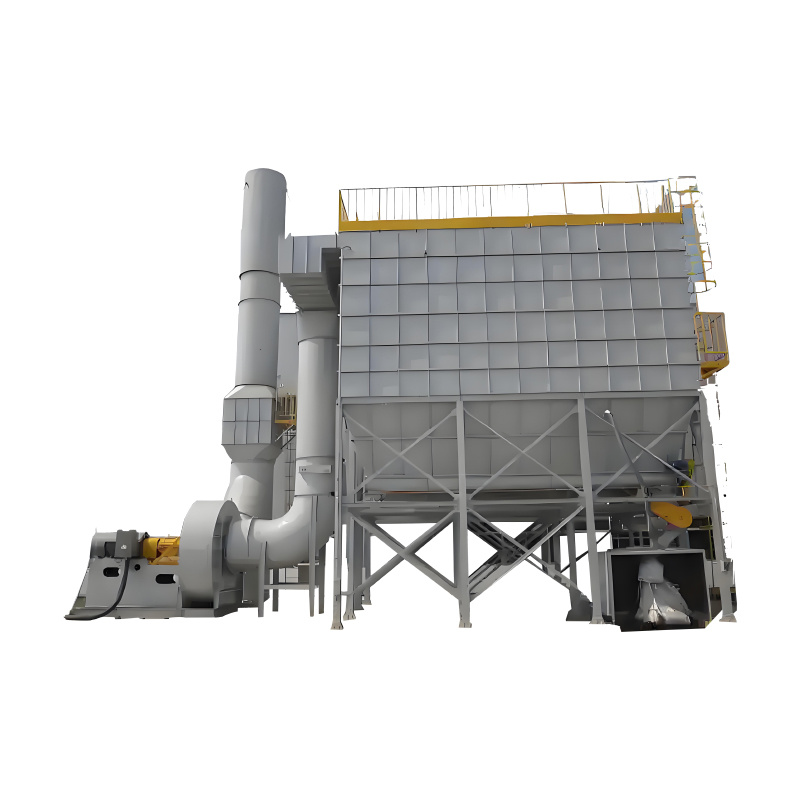
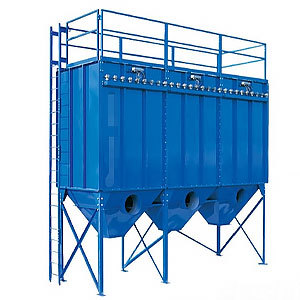
The conventional bag filter has a temperature resistance of 80-120 ℃, while the high-temperature version has a temperature resistance of 160-200 ℃; In corrosive conditions, local corrosion occurs in polyester filter bags after 3 months of operation. Even if PTFE coated bags are used, the sealing performance will significantly decrease after 6 months. The weak points are concentrated at the seams of the filter bag, which are easily corroded by corrosive media and affect the overall sealing performance.
2. Anti blocking and anti sticking performance: Plastic fired board has significant advantages
In the actual measurement of high humidity and high viscosity working conditions, the surface of the plastic fired board is smooth without pores, and the dust adhesion rate is less than 5%. After continuous operation for 30 days, the resistance remains stable at 800-1000Pa without any blockage. This is due to the characteristics of its rigid filtering medium, which makes it difficult for dust to adhere after surface polishing treatment.
The flexible fiber material of the bag filter has natural gaps and is easily filled with viscous dust. After 15 days of operation, the resistance rises to over 1500Pa, and it needs to be cleaned 2-3 times a day. Even if the dust is cleaned frequently, local blockages may still occur, affecting the continuity of dust removal.
3. Fine powder capture rate: The performance of the two is similar, with no significant difference
Under the same filtration precision configuration (plastic fired plate micro pore size of 0.3 μ m, PTFE coated cloth bag), both have a capture rate of over 99.5% for 0.1-5 μ m fine powder, and an emission concentration of ≤ 5mg/m ³, which can meet European and American environmental standards.
The subtle difference is that under high dust load impact, the short-term capture rate of bag filters will fluctuate by 1% -2%; The plastic fired plate dust collector is less affected by load changes, and the capture rate remains stable without any fluctuations.
4. Maintenance frequency and cost: Plastic fired board is more worry free
Under high humidity and high viscosity conditions, the plastic fired plate dust collector only needs to be cleaned once a month without the need to replace the filter material; Bag filters require cleaning 2-3 times a week and replacing filter bags every 3 months, resulting in significantly higher maintenance frequency and consumable costs.
In corrosive conditions, the plastic fired plate dust collector can be inspected once every 6 months without additional replacement costs; The bag filter needs to replace 30% of the filter bags after 6 months of operation, and the replacement cost is about 2.5 times that of the plastic fired board.
Under high temperature and high dust conditions, the plastic fired plate dust collector is cleaned every 2 months, with an annual operation and maintenance cost of approximately $800; The bag filter needs to clean the dust once a month and replace the filter bag every 6 months. The annual operation and maintenance cost is about $2200, which is nearly three times that of plastic fired board.
5. Service life: Plastic fired board has a longer service life
The measured data under high temperature and high dust conditions shows that the continuous operation life of the plastic fired plate dust collector can reach 3-5 years; In bag filters, PTFE coated filter bags have a lifespan of 1-2 years, while ordinary polyester filter bags can only be used for 6-8 months.
The core reason for the difference in lifespan is that the cloth bag is affected by the impact of cleaning airflow and dust friction, and the fibers are prone to aging and damage; The rigid structure of plastic fired board has strong impact resistance, slow wear rate, and can maintain structural integrity for a long time.
3、 Analysis of Complex Working Condition Adaptation Scenarios
1. Plastic fired board dust collector is more suitable for scenarios
High humidity and high viscosity working conditions: such as food processing, feed production, and chemical adhesive workshops, can avoid frequent shutdowns caused by dust blockage and ensure production continuity.
Corrosion conditions: such as acid-base chemical and electroplating waste gas treatment, corrosion resistance can significantly reduce the frequency of filter material replacement and lower long-term operation and maintenance costs.
Low operation and maintenance scenarios are required, such as remote factories and small businesses, which do not require a professional operation and maintenance team and can achieve stable operation with simple operations.
2. Bag filter is more suitable for scenarios
Room temperature drying conditions: such as electronic factory welding smoke treatment and wood processing, in low humidity and low viscosity dust environments, there is no need for extreme weather resistance, and the cost-effectiveness is higher.
Conventional dust removal scenarios with high air volume: such as conventional dust treatment in cement plants, the modular design of bag filters is easier to adapt to high air volume requirements, and the initial equipment investment is lower than that of plastic fired plates.
Temporary renovation scenario: such as short-term standard renovation of old factories, with convenient installation and flexible disassembly of bag dust collectors, which can meet the needs of rapid landing.
4、 Summary: The core of selection lies in "matching working conditions"
Plastic fired board and bag filter are not "superior or inferior", but "adaptable": if facing complex working conditions such as high humidity, high viscosity, corrosion, and pursuing long-term stable operation and low maintenance costs, the performance of plastic fired board filter is more advantageous; If the working conditions are mild (room temperature, dry, low viscosity), and the budget is limited and quick landing is required, bag filters are still an economical and practical choice.
The performance difference between the two is essentially due to the material and structural characteristics of the filter medium. When selecting, priority should be given to considering the temperature, humidity, dust viscosity, and corrosiveness of the operating conditions, rather than blindly pursuing "high performance". Actual test data shows that only equipment that accurately matches working conditions can achieve the dust removal goal of "achieving standard stability+optimal cost".
Hot Tags:


Contact Us
Tel:
WeChat:
WhatsApp:
E-mail:
Address:
338 National Road South, Longfengdian Village, Botou City, Hebei Province, China
JiuznTomine is expertly delivering technically complicated projects in markets & provides custom solutions for their customized need.


CONTACT INFO
Tel: +86 18531710311
WeChat: +86-18531710311
338 National Road South, Longfengdian Village, Botou City, Hebei Province, China