













Electromagnetic pulse valve: the "heart" of bag filter dust cleaning system
May 08,2026

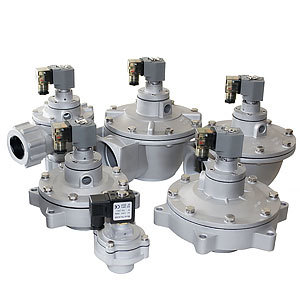
In the operation system of pulse bag filter, although the electromagnetic pulse valve is not large in volume, it plays a crucial role. As the compressed air "switch" of the dust cleaning and spraying system, its performance directly determines the dust cleaning efficiency, operating resistance, and service life of the filter bag of the dust collector. Therefore, it is vividly called the "heart" of dust removal equipment in the industry.
1、 Core working principle
Electromagnetic pulse valve is essentially a diaphragm valve controlled by electrical signals. Its internal structure is mainly composed of electromagnetic pilot head, diaphragm, valve body, and spring. Its working process is driven by air pressure difference, with extremely fast response speed:
Under normal conditions, compressed air enters the rear chamber of the diaphragm through the throttle hole. The pressure in the rear chamber works together with the spring force to press the diaphragm tightly against the output port of the valve, and the valve is in a "closed" sealed state. When the pulse jet control device sends out a cleaning electrical signal, the electromagnetic pilot head moves to quickly open the unloading hole and release the pressure gas in the rear chamber. At this moment, the pressure in the front chamber of the diaphragm is instantly greater than that in the back chamber, and the pressure difference force lifts the diaphragm up. The valve opens, and the high-pressure air in the air storage bag is instantly blown to clean the filter bag through the blowing pipe. After the electrical signal disappears, the pilot head resets and closes the unloading hole, and the rear chamber is filled with gas again. The diaphragm falls back under the pressure difference and spring action, and the valve closes again.
2、 Common structural types and characteristics
In order to adapt to different dust collector structures and installation spaces, electromagnetic pulse valves are mainly divided into the following mainstream types:
1. Right angle electromagnetic pulse valve: Its inlet and outlet form a 90 degree angle, suitable for vertical installation of gas storage bags and spray pipes. This type of compact structure and easy maintenance is currently the most common type among small and medium-sized dust collectors.
2. Submerged electromagnetic pulse valve: directly embedded and installed inside the airbag, with no inlet and outlet pipe resistance, smooth airflow channel, and minimal pressure loss. It is particularly suitable for large dust removal systems with high air volume and low pressure.
3. Straight through electromagnetic pulse valve: The inlet and outlet centerlines are on the same straight line, and the flow channel is unobstructed. It is usually used in specific design situations where the air bag and spray pipe are arranged in the same straight line.
3、 Key selection and working condition adaptation
The appropriate selection of electromagnetic pulse valves directly affects the energy consumption and stability of the dust removal system. In practical applications, it is usually necessary to pay attention to the following core dimensions:
1. Diameter and blowing capacity: The diameter of the pulse valve determines the air flow rate for a single blow. When selecting, it is necessary to match according to the quantity, diameter, and length of the filter bags. A too small caliber can lead to 'weak blowing' and incomplete dust cleaning; If the diameter is too large, it will cause waste of compressed air and even damage the filter bag due to strong spraying.
2. Voltage specifications: Currently, the most mainstream and safe choice for industrial sites is DC24V, which has a fast response speed and is less prone to coil heating. AC220V or AC110V is usually only used in special scenarios where cable transmission distances are extremely long to reduce voltage drop losses.
3. Special working condition protection: In flammable and explosive dust environments, explosion-proof pulse valves with explosion-proof coils and explosion-proof junction boxes must be selected. If dealing with acidic or corrosive flue gas, the valve body material needs to be upgraded to stainless steel, and the diaphragm also needs to be made of corrosion-resistant special rubber.
As the actuator for automated dust removal in dust collectors, although electromagnetic pulse valves are vulnerable components, their quality and selection are crucial. High quality pulse valve membranes typically have a lifespan of over one million cycles. Scientific and reasonable selection and maintenance can not only ensure the long-term low resistance and efficient operation of dust collectors, but also effectively extend the service life of core consumables such as filter bags, bringing significant energy-saving and consumption reducing benefits to enterprises.
Hot Tags:

Contact Us
Tel:
WeChat:
WhatsApp:
E-mail:
Address:
338 National Road South, Longfengdian Village, Botou City, Hebei Province, China
JiuznTomine is expertly delivering technically complicated projects in markets & provides custom solutions for their customized need.


CONTACT INFO
Tel: +86 18531710311
WeChat: +86-18531710311
338 National Road South, Longfengdian Village, Botou City, Hebei Province, China