












What factors affect the dust removal efficiency of a cyclone dust collector?
Apr 18,2026

Cyclone dust collectors are widely used in industrial dust control due to their simple structure, low energy consumption, and strong adaptability. Their dust removal efficiency directly determines the dust control effect and environmental compliance.
1、 Characteristics of dust itself: basic influencing factors
The physical characteristics of dust are the core basis that affects dust removal efficiency, mainly reflected in three points: first, the particle size of dust. The larger the particle size, the greater the inertia, and the easier it is to be separated under centrifugal force, resulting in higher dust removal efficiency; Fine dust has low inertia and is prone to escape with the airflow, significantly reducing efficiency. The second is dust density. The higher the density of dust, the more obvious the centrifugal force effect and the better the separation effect. Conversely, lightweight dust is less likely to be captured. The third is the humidity and viscosity of dust. Dust with high humidity and viscosity is prone to adsorb on the inner wall of equipment, causing dust accumulation and blockage, disrupting the airflow trajectory, and indirectly reducing dust removal efficiency.
2、 Equipment structural parameters: core determining factors
The structural design of a cyclone dust collector directly determines the magnitude of centrifugal force and the state of airflow movement, with key parameters affecting the following:
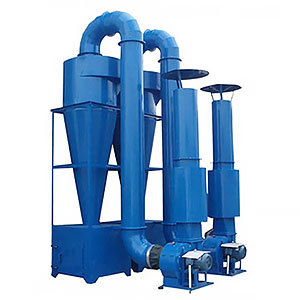
1. Cylinder size: The smaller the diameter of the cylinder, the faster the airflow rotates, the greater the centrifugal force, and the higher the dust removal efficiency. However, a diameter that is too small can easily lead to blockage; Reasonably extending the height of the cylinder can increase the dust separation time and improve efficiency. If it is too high, it will increase the airflow resistance.
2. Design of air inlet and outlet: The air velocity at the inlet should be controlled within a reasonable range (usually 12-20m/s), with low wind speed, insufficient dust inertia, and incomplete separation; Excessive wind speed can easily generate eddies, leading to secondary dust entrainment. Improper insertion depth of the air outlet can disrupt internal airflow balance and reduce separation efficiency.
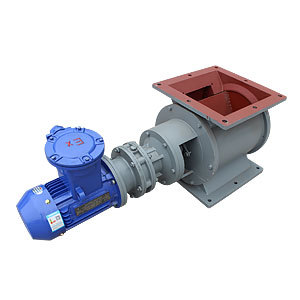
3. Ash hopper and unloading device: The angle of the ash hopper should be adapted to the flowability of dust. If the angle is too small, it can easily lead to ash accumulation and blockage of the ash discharge outlet; Poor operation of the unloading device can lead to dust accumulation and backflow, polluting the airflow and directly affecting the dust removal efficiency.
3、 Operating condition parameters: key influencing factors
The operating parameters during the operation of the equipment directly affect the airflow state and dust separation effect. The core includes two points: first, the air volume is processed. If the air volume is too large, the residence time of the airflow in the cylinder is shortened, and the dust is discharged before it can be separated; The air volume is too low and the centrifugal force is insufficient to effectively capture dust. It is necessary to match the rated air volume of the equipment for operation. The second is the temperature and pressure of the gas. High temperature gas has a low density, which can reduce centrifugal force and may also cause thermal expansion and contraction of equipment materials, affecting sealing performance; Unstable gas pressure can disrupt the rotational stability of the airflow and indirectly reduce dust removal efficiency.
4、 Other auxiliary influencing factors
In addition to the core factors mentioned above, equipment maintenance and installation can also affect efficiency: excessive dust accumulation on the inner wall of the equipment can reduce the effective cylinder space, disrupt the airflow trajectory, and reduce centrifugal force; During installation, if the equipment is tilted or not firmly fixed, it can cause the airflow to rotate out of balance, affecting the separation effect; The pipeline connection is not sealed, and air leakage will dilute the dust concentration and reduce the dust removal efficiency.
Summary: The factors that affect the dust removal efficiency of cyclone dust collectors are interrelated. Dust characteristics are the foundation, equipment structure is the core, operating conditions are the key, and daily maintenance is the guarantee. Understanding these factors can not only provide reference for equipment selection, but also improve equipment dust removal efficiency by optimizing working conditions and strengthening maintenance, and adapt to the actual needs of industrial dust control.
Hot Tags:
PREVIOUS:
Contact Us
Tel:
WeChat:
WhatsApp:
E-mail:
Address:
338 National Road South, Longfengdian Village, Botou City, Hebei Province, China
JiuznTomine is expertly delivering technically complicated projects in markets & provides custom solutions for their customized need.


CONTACT INFO
Tel: +86 18531710311
WeChat: +86-18531710311
338 National Road South, Longfengdian Village, Botou City, Hebei Province, China