












Maintenance cycle setting and common troubleshooting methods for star shaped unloaders
Apr 16,2026

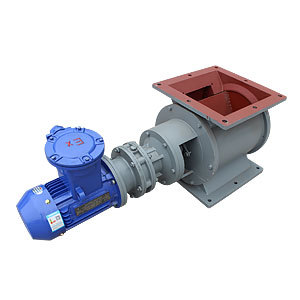
The star shaped unloader, as the core auxiliary equipment of industrial dust removal system and material conveying system, is mainly responsible for uniform unloading, sealing and air locking. Its operational stability directly affects the continuous operation of the entire system. This article summarizes the key points of scientific maintenance cycle setting for star shaped unloaders, as well as common troubleshooting and solutions, which meet the practical needs of foreign trade practitioners and equipment maintenance personnel, while balancing simplicity and practicality.
1、 Star shaped unloader maintenance cycle setting (graded according to working conditions, accurately adapted)
The maintenance cycle should be combined with the operating load of the unloader, the characteristics of dust treatment (viscosity, hardness, corrosiveness), and the setting of the usage environment to avoid excessive or untimely maintenance. The core is divided into three levels of maintenance, which are streamlined and can be directly implemented.
(1) Daily maintenance (once a day)
Core: Quick inspection, timely detection of obvious problems, and prevention of minor issues from escalating. Key inspection: Check whether the equipment operates smoothly without sharp friction or abnormal noise; Whether the motor temperature and bearing temperature are normal (not exceeding 70 ℃); Is there any material accumulation or leakage at the discharge port; There is no dust leakage in the sealed area.
(2) Regular maintenance (once a week)
Core: Clean and lubricate to ensure smooth operation of equipment. Key operation: Clean the dust inside the unloader and the discharge port to avoid material clumping and sticking; Check the lubrication condition of the bearings and replenish lubricating grease (choose lubricating grease that is suitable for the working conditions, and choose high-temperature resistant type for high-temperature working conditions); Check the gap between the blades and the shell to avoid excessive clearance causing air leakage or friction caused by insufficient clearance.
(3) Quarterly maintenance (once every 3 months)
Core: Conduct a comprehensive inspection, identify hidden faults, and extend equipment lifespan. Key operations: Disassemble and inspect the wear of the blades, and replace them promptly if the wear is severe; Check the motor wiring terminals and circuit insulation to avoid circuit faults; Check the aging condition of seals (sealing rings, sealing gaskets) and replace them in a timely manner; Calibrate the levelness of the equipment and tighten loose fixing bolts; Clean the motor heat sink to avoid overheating and damage.
(4) Special working condition adjustment
Reduce the regular maintenance cycle to once every 5 days and quarterly maintenance to once every 2 months when dealing with high viscosity, high hardness, corrosive dust, or 24-hour continuous operation; When the dust is relatively clean and the operating load is low, the maintenance cycle can be appropriately extended, but the longest should not exceed 1.5 times the original cycle.
2、 Common troubleshooting and solutions (no need for professional tools)
The faults of star shaped unloaders are mostly concentrated in material jamming, abnormal noise, poor unloading, air leakage, etc. The troubleshooting follows the idea of "visual observation first, disassembly and inspection later" to quickly locate the problem and efficiently solve it.
(1) Fault 1: Material jamming (most common)
Troubleshooting approach: Observe whether there are large or clumped materials accumulating at the discharge port, or if the gap between the blade and the shell is too small, or if the blade is worn or deformed, resulting in jamming.
Solution: Immediately shut down the machine and cut off the power, clean the discharge port and the accumulated materials and clumps inside; Adjust the gap between the blades and the shell, and replace severely worn blades in a timely manner; If the viscosity of the material is high, the maintenance frequency can be appropriately increased to avoid material adhesion and agglomeration.
(2) Fault 2: Abnormal noise and severe vibration during operation
Troubleshooting approach: Focus on checking the lubrication of bearings, imbalanced blade wear, loose fixing bolts, and coaxiality deviation between motors and unloaders.
Solution: Supplement lubricating grease and replace severely worn bearings in a timely manner; Clean up the accumulated dust on the blades, correct the balance of the blades, and replace worn and deformed blades; Tighten the equipment base and motor fixing bolts, calibrate the coaxiality between the motor and the unloader, and avoid eccentric operation.
(3) Fault 3: Poor unloading and insufficient unloading volume
Troubleshooting approach: Check if the motor speed is normal, if the blades are severely worn, or if material clumps block the discharge channel, or if there is excessive ash accumulation at the feed inlet.
Solution: Check the motor wiring to ensure that the speed meets the standard; Replace worn blades, clean the discharge channel and feed inlet for dust accumulation and clumping; If the material has high humidity, it can be pre treated in advance to avoid clumping and affecting unloading.
(4) Fault 4: Leakage of air and powder
Troubleshooting approach: Check whether the seals (sealing rings, gaskets) are aging or damaged, whether the gap between the blades and the shell is too large, or whether the connection part of the discharge port is loose.
Solution: Replace aging or damaged seals; Adjust the gap between the blades and the shell to ensure sealing performance; Tighten the connecting bolts of the discharge port, and if necessary, add sealing gaskets to block air and powder leakage points.
(5) Fault 5: Motor overheating, unable to start
Troubleshooting approach: Check if the motor load is too high (material jamming), if the circuit is damaged, if the bearings are stuck, or if the power supply voltage is abnormal.
Solution: Clean up stuck materials and reduce motor load; Check and repair damaged circuits, replace stuck bearings; Check the power supply voltage to ensure compliance with equipment requirements and avoid motor overload and burnout.
3、 Core precautions for maintenance and troubleshooting
1. Before all maintenance and troubleshooting operations, the machine must be shut down and powered off, and safety measures must be taken to avoid material splashing and mechanical injury;
2. Lubricating grease and seals should be selected with models that are suitable for the working conditions to avoid equipment damage caused by improper selection;
3. When replacing components such as blades and bearings, ensure that they are installed in place, calibrate clearances, and avoid installation deviations;
4. Regularly record maintenance and failure situations, summarize common problems, optimize maintenance cycles, and reduce failure rates.
Summary: The stable operation of the star shaped unloader relies on scientific maintenance cycles and efficient troubleshooting. By setting a graded maintenance plan based on working conditions, the occurrence rate of failures can be effectively reduced; For common faults, following simple and practical troubleshooting methods can quickly restore equipment operation, ensuring the continuous and stable operation of industrial dust removal and material conveying systems.
Hot Tags:


Contact Us
Tel:
WeChat:
WhatsApp:
E-mail:
Address:
338 National Road South, Longfengdian Village, Botou City, Hebei Province, China
JiuznTomine is expertly delivering technically complicated projects in markets & provides custom solutions for their customized need.


CONTACT INFO
Tel: +86 18531710311
WeChat: +86-18531710311
338 National Road South, Longfengdian Village, Botou City, Hebei Province, China