











Analysis of the key points of corrosion resistance and service life for the material of the burr wire of the electrostatic precipitator
Mar 20,2026

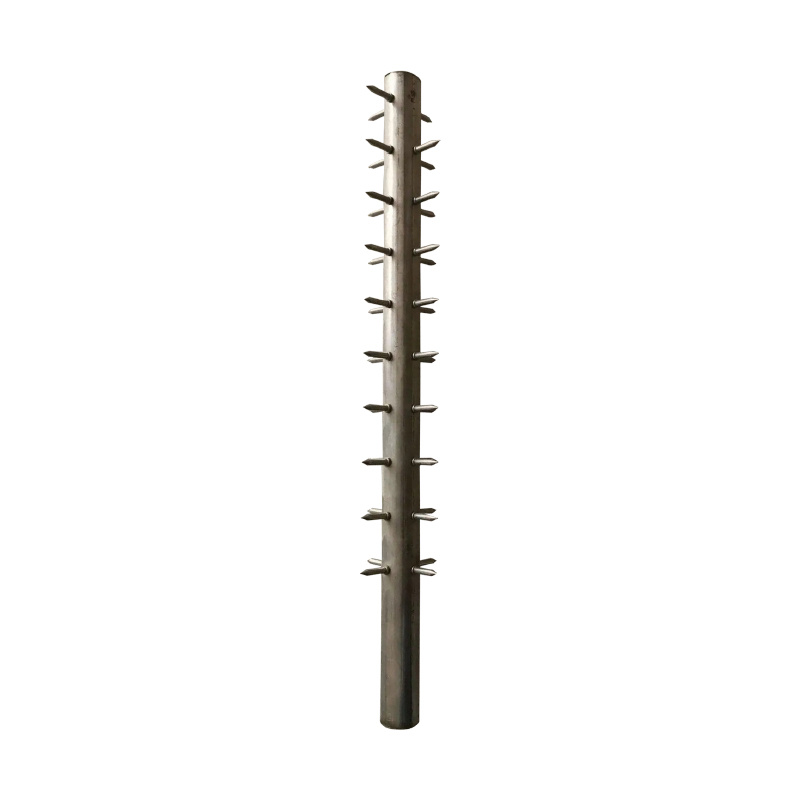
As the core discharge component of electrostatic precipitators, the material of the barbed wire directly determines the discharge stability, corrosion resistance, and overall service life of the equipment. Under corrosive flue gas conditions such as sulfur-containing, chlorine containing, and high humidity, improper material selection can easily lead to problems such as burrs, wear, fracture, corrosion, and passivation. This not only increases operation and maintenance costs, but also significantly reduces dust removal efficiency.
1、 Comparison of Corrosion Resistance of Mainstream Thorn Thread Materials
The commonly used filigree materials in the market have significant differences in adaptability to different scenarios, and their corrosion resistance level is directly linked to the working condition medium. The core material characteristics are as follows:
1. Ordinary carbon steel material: Low cost, easy to process, only suitable for non corrosive, dry and clean flue gas conditions; The acid and alkali resistance, as well as the water vapor corrosion resistance, are extremely poor. Rust and burrs will appear in high humidity/corrosive flue gas after several months, and the service life is extremely short.
2. Stainless steel 304 material: It has basic resistance to weak acids and water vapor corrosion, and is suitable for mild corrosion and normal temperature flue gas conditions; The ability to tolerate chloride ions and sulfides is weak, and long-term exposure to sulfur-containing flue gas is prone to pitting corrosion, with a service life of about 1-3 years.
3. Stainless steel 316L material: Upgraded to low-carbon corrosion resistance, with better resistance to chloride ions, sulfides, and weak acid corrosion than 304. Suitable for moderate corrosion and high humidity flue gas conditions, it is a universal choice for industries such as chemical and building materials; Under normal operation and maintenance, the service life can reach 3-5 years.
4. Alloy materials (nickel chromium alloy, titanium alloy): high-end corrosion-resistant selection, nickel chromium alloy is resistant to high temperature and strong acid corrosion, titanium alloy has full resistance to strong acid, alkali, and chloride ion corrosion, suitable for extreme working conditions of high temperature and high concentration corrosive flue gas; The cost is relatively high, but the service life can reach 5-8 years or even longer.
5. Galvanized/sprayed anti-corrosion material: The carbon steel substrate is treated with anti-corrosion treatment, which can resist mild corrosion in the short term. Long term use is prone to coating peeling, zinc layer loss, and rapid corrosion of exposed areas. It is only used as a low-cost temporary alternative and is not recommended for long-term use.
2、 The influence of corrosion inducing factors on the service life of barbed wire
In addition to the material itself, the working environment is the core factor that accelerates the corrosion of burrs and shortens their lifespan. In practice, it is important to avoid:
1. Corrosion of flue gas medium: containing acidic gases such as SO ₂, HCl, HF, etc., it forms an acid solution when encountering water vapor, which directly corrodes the metal surface, causing pitting corrosion, thinning and fracture; The higher the chloride ion content, the faster the corrosion rate.
2. High humidity condensation corrosion: When the flue gas temperature is below the dew point, water vapor condenses to form a water film, adsorbs dust and corrosive gases, and forms electrochemical corrosion, greatly accelerating the rate of material loss.
3. Dust erosion and wear: High concentration and high hardness dust erosion on the pointed edge for a long time can damage the surface anti-corrosion layer of the material, exacerbating the dual losses of corrosion and wear.
4. Aging under high temperature conditions: Overtemperature operation can damage the internal structure of alloy materials, reduce their corrosion resistance and toughness, and lead to high-temperature oxidation, deformation, and brittle fracture.
3、 Practical suggestions for extending the service life of barbed wire
Balancing corrosion resistance and service life, there is no need to blindly pursue high priced materials. By doing a good job in selection matching and operation control, long-term stability can be achieved
1. Precise matching of materials and working conditions: 304 stainless steel is selected for mild corrosion/dry working conditions; Select 316L stainless steel for moderate sulfur/high humidity conditions; Use nickel chromium or titanium alloy materials directly for extreme strong corrosion and high temperature conditions, and refuse to use low-grade materials beyond the standard.
2. Strictly control the operating parameters of flue gas: ensure that the flue gas temperature is stable above the dew point and prevent condensation; Control the flow rate of flue gas to reduce excessive erosion of dust on thorns.
3. Regular inspection and maintenance: Regularly clean the surface dust of the thorns and check for corrosion, deformation, and fracture marks; Timely replace damaged parts to avoid the expansion of local faults that may affect the overall discharge efficiency of the machine.
4. Take good anti-corrosion protection measures: For special corrosive conditions, passivation and spraying treatment can be applied to the barbed wire, and the integrity of the anti-corrosion layer should be regularly rechecked to block the contact of corrosive media with the substrate.
Core summary: The corrosion resistance and service life of the burr wire in electrostatic precipitators are the result of bidirectional adaptation between material selection and working condition control. Choosing the right material that fits the actual degree of smoke corrosion, combined with refined operation and maintenance, can not only avoid material waste, but also maximize the service life and reduce replacement frequency.
Hot Tags:
PREVIOUS:

Contact Us
Tel:
WeChat:
WhatsApp:
E-mail:
Address:
338 National Road South, Longfengdian Village, Botou City, Hebei Province, China
JiuznTomine is expertly delivering technically complicated projects in markets & provides custom solutions for their customized need.


CONTACT INFO
Tel: +86 18531710311
WeChat: +86-18531710311
338 National Road South, Longfengdian Village, Botou City, Hebei Province, China