











Guidelines for Selecting and Adapting Dust Removal Skeleton Sizes to Different Filter Bag Specifications
Feb 09,2026

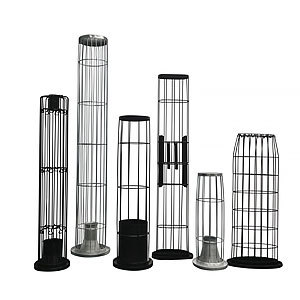
The dust removal skeleton (filter bag cage) is the core supporting component of the bag filter, and its dimensional accuracy directly determines the fitting effect with the filter bag, thereby affecting the dust removal efficiency, filter bag life, and equipment stability. Overseas industrial filter bags come in various specifications, and precise matching of the skeleton selection is required. Size deviations can easily lead to problems such as filter bag damage and dust leakage, increasing operation and maintenance costs.
1、 Core premise: Clarify the specifications and parameters of the filter bag, laying the foundation for selection
The core prerequisite for skeleton selection is to master the core specifications of the filter bag. Overseas, circular filter bags are mainly used, supplemented by elliptical and irregular filter bags. The following four points need to be confirmed to avoid selection deviation:
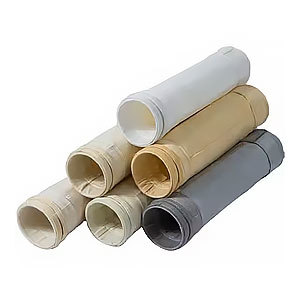
1. Filter bag type: Clearly define the structural type, with circular filter bags paired with circular skeletons, elliptical filter bags paired with elliptical skeletons, and irregular filter bags requiring customized corresponding skeletons.
2. Inner diameter/side length of filter bag: For circular filter bags, check the inner diameter, and for elliptical and irregular filter bags, check the corresponding side length. This is the core basis for selecting the skeleton size.
3. Filter bag length: The standard specification is 2000-4000mm, and large equipment can reach 6000mm. The skeleton length needs to be accurately matched with strict error control.
4. Thickness and elasticity of filter bag: It directly affects the diameter adaptation difference between the skeleton and the filter bag. The better the elasticity, the smaller the difference. Otherwise, it needs to be increased to avoid installation damage.
Additional note: Overseas filter bag labeling often follows the standard of "inner diameter x length x thickness". Before selecting, it is necessary to confirm the specifications to avoid confusion between inner diameter and outer diameter.
2、 Circular Filter Bag Compatible with Circular Skeleton: Core Size Selection and Adaptation Standards (Overseas Mainstream)
Circular filter bags are the mainstream overseas, suitable for circular skeletons. The core dimensions include diameter, length, longitudinal bars, and transverse ring spacing. Diameter and length are the key to adaptation, and the specific standards are as follows:
(1) Skeleton diameter selection: Suitable for the inner diameter of the filter bag, controlling the reasonable difference
The diameter of the skeleton should be slightly smaller than the inner diameter of the filter bag, with a reasonable margin reserved, taking into account both the fit and the protection of the filter bag. In overseas practice, the elastic division of the filter bag should be standardized:
1. Good elasticity filter bag (polyester, polypropylene, PPS): adaptation difference of 2-3mm, i.e. skeleton diameter=inner diameter of filter bag - (2-3) mm.
Adaptation logic: It can be slightly stretched, with a small difference to ensure a tight fit, without affecting the cleaning effect and reducing friction loss.
2. Poor elasticity filter bag (fiberglass, PTFE, fiberglass film): adaptation difference of 3-5mm, i.e. skeleton diameter=inner diameter of filter bag - (3-5) mm.
Adaptation logic: The material is relatively brittle, with a large difference to avoid installation breakage, while ensuring the filtering area and reducing local friction.
Error control: Diameter error ≤ ± 0.5mm, same batch deviation ≤ 0.3mm, overseas batch selection requires size inspection report.
(2) Skeleton length selection: completely synchronized with the length of the filter bag, strictly controlling errors
The length of the skeleton needs to be completely matched with the total length of the filter bag, and the error needs to be strictly controlled. Being too long or too short will affect the fitting effect. The overseas practical standards are as follows:
1. Basic standard: Skeleton length=total length of filter bag, without redundancy or shortage, ensuring that the filter bag is not tight or sagging after installation.
2. Error requirements: Length error ≤ ± 2mm, the longer the length, the stricter the error control, to avoid the following problems:
-The skeleton is too long: it breaks the bottom of the filter bag, affecting dust cleaning and causing incomplete dust stripping;
-Short skeleton: The filter bag droops and wrinkles, which is prone to dust accumulation and blockage, accelerating local wear and dust leakage.
Addendum: When installing the filter bag with an interface, the top of the frame should reserve a corresponding fitting length to ensure smooth installation.
(3) Distance between longitudinal bars and transverse rings: adapted to the specifications of the filter bag to ensure stable support
The spacing between longitudinal bars and transverse rings needs to be adjusted according to the specifications of the filter bag, taking into account both support stability and cost. The overseas practical standards are as follows:
1. Longitudinal reinforcement spacing: positively correlated with the inner diameter of the filter bag, with a spacing controlled between 25-40mm, specifically:
-Filter bag inner diameter ≤ 130mm: 8-10 longitudinal bars with a spacing of 30-35mm;
-The inner diameter of the filter bag is 130-150mm, with 10-12 longitudinal bars spaced 30-38mm apart;
-Filter bag inner diameter>150mm: 12-16 longitudinal bars with a spacing of 35-40mm.
2. Horizontal ring spacing: positively correlated with the length of the filter bag, adjusted according to thickness, typically 100-200mm, specific:
-Filter bag length ≤ 2400mm: spacing 150-200mm;
-Filter bag length 2400-4000mm: spacing 120-150mm;
-Filter bag length>4000mm: spacing 100-120mm;
-Thin material filter bag (≤ 1.0mm): The spacing is reduced by 20-30mm to prevent local collapse.
Key requirement: The connection between the longitudinal reinforcement and the transverse ring should be polished smooth, without burrs or sharp corners, to avoid wear on the inner wall of the filter bag.
3、 Oval/irregular filter bag adaptation skeleton: special requirements for size selection
Elliptical and irregular filter bags are rarely used overseas and are suitable for special dust collectors. The selection of the skeleton should follow the principle of "customization", and the core size should be completely matched with the filter bag. Specific requirements:
(1) Oval filter bag compatible with oval skeleton
1. Size adaptation: Skeleton long axis=inner diameter of filter bag long axis - (3-4) mm, short axis=inner diameter of filter bag short axis - (3-4) mm;
2. Length adaptation: Consistent with circular filter bags, with an error of ≤± 2mm;
3. Structural requirements: Elliptical longitudinal bars+transverse ring structure, with the number of longitudinal bars adjusted as needed, without deformation, and a verticality error of ≤ 3mm/m.
(2) Irregular filter bag adapted to irregular skeleton
1. Selection prerequisite: Obtain detailed size drawings of the filter bag. Overseas selection needs to be requested from the supplier to avoid deviation;
2. Size adaptation: The skeleton size is completely consistent with the drawing, with an error of ≤± 1mm, and the corners have curved transitions without sharp corners;
3. Customization requirements: Customized according to needs, sample adaptation testing is required before mass production, and testing needs to be reserved for overseas mass customization.
4、 Practical skills and error control points for size selection (overseas practical focus)
In the selection and installation of overseas sites, dimensional errors and negligence in details can easily lead to poor adaptation. Based on practical experience, summarize the core skills and key points:
(1) Practical selection skills
1. Prioritize measuring the inner diameter of the filter bag, calculate the skeleton diameter based on elasticity, and do not blindly rely on labeled specifications;
2. Before batch selection, request samples to be tested for compatibility with actual filter bags, and only place bulk orders after passing the test;
3. Fine tune the cleaning method: pulse blowing reduces the diameter by 0.5-1mm, and counter blowing increases it by 0.5-1mm;
4. Suitable for special working conditions: Reserve 1-2mm thermal expansion allowance at high temperatures, and increase the diameter by 0.5-1mm when wet.
(2) Key points of error control
1. Dimensional error: diameter ≤ ± 0.5mm, length ≤ ± 2mm, verticality ≤ 3mm/m, deviation within the same batch ≤ 0.3mm, as specified in the contract;
2. Surface error: The surface is smooth without burrs, and the connection is polished flat with an error of ≤ 0.3mm to prevent filter bag wear;
3. Installation error: Vertical installation without tilting, the filter bag is tightly attached to the frame without looseness or wrinkles.
5、 Common selection misconceptions and avoidance methods (avoiding pitfalls in overseas practice)
Based on overseas operation and maintenance experience, summarize four common selection misconceptions, clarify hazards and avoidance methods, and reduce operation and maintenance costs:
Misconception 1: The skeleton is consistent with the inner diameter of the filter bag without any difference - Harm: The filter bag is difficult to install, easily damaged, and has poor dust cleaning effect; Avoidance: Reserve a 2-5mm difference according to elasticity.
Misconception 2: Ignoring length errors (>2mm) - Hazards: Damaged filter bags, accelerated wear due to accumulated dust; Avoidance: Check the length, clarify the error requirements, and conduct actual measurements before installation.
Misconception 3: Randomly setting the spacing between longitudinal bars and transverse rings - Hazards: collapse of filter bags or increased costs; Avoidance: Set according to the standards in this article, combined with the specifications of the filter bag.
Misconception 4: Selecting irregular filter bags based on circular skeletons - Hazards: inability to install, filter bag wear and dust leakage; Avoidance: Provide customized drawings and sample testing before batch production.
The core of skeleton selection is "precise adaptation of filter bags, strict control of errors, and fitting of working conditions". Overseas, circular filter bags are mainly adapted to circular skeletons, and the diameter and length differences need to be controlled, combined with the elasticity of the filter bags, cleaning methods, and working conditions for fine adjustment; Elliptical and irregular filter bags need to be customized and adapted to ensure consistent size.
The compatibility between the skeleton and the filter bag directly affects the stability of the equipment, the lifespan of the filter bag, and the maintenance cost. Overseas practitioners can achieve perfect adaptation, ensure efficient and stable operation of dust collectors, meet environmental requirements, and reduce costs by following the selection points, standards, and techniques in this article, strictly controlling errors, and avoiding misunderstandings.
Hot Tags:


Contact Us
Tel:
WeChat:
WhatsApp:
E-mail:
Address:
338 National Road South, Longfengdian Village, Botou City, Hebei Province, China
JiuznTomine is expertly delivering technically complicated projects in markets & provides custom solutions for their customized need.


CONTACT INFO
Tel: +86 18531710311
WeChat: +86-18531710311
338 National Road South, Longfengdian Village, Botou City, Hebei Province, China