












Practical skills for selecting the skeleton of bag filter and matching the filter bag
Feb 09,2026
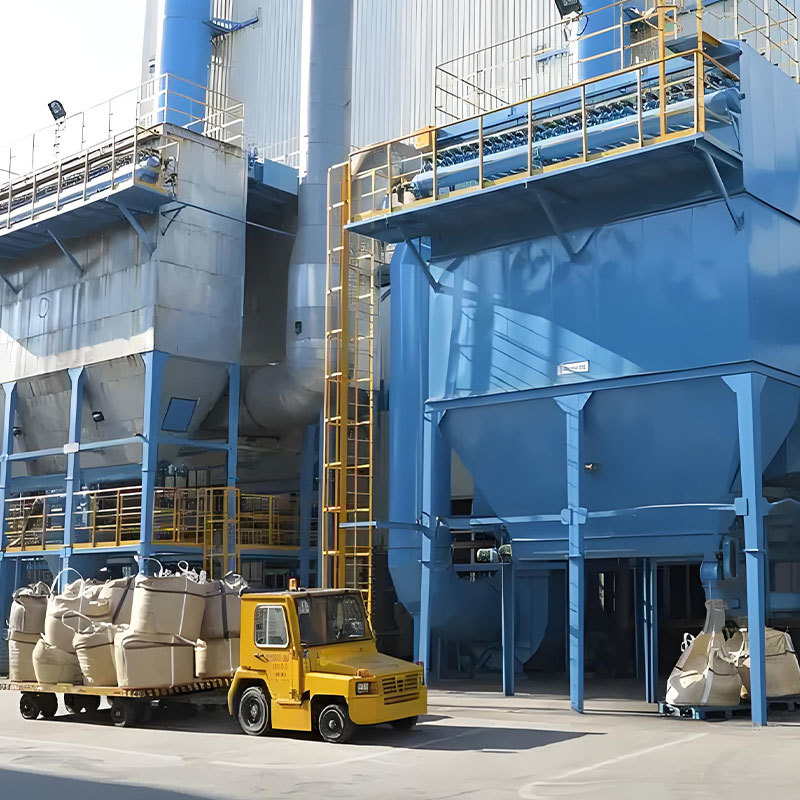
The skeleton of the bag filter (filter bag cage) and the filter bag are the core supporting components of the filtration system, and their compatibility directly determines the dust removal efficiency, filter bag life, dust cleaning effect, and equipment stability. The skeleton supports the filter bag to withstand airflow impact and vibration, and the filter bag relies on the skeleton to maintain its unfolding and avoid dust accumulation and blockage. There are significant differences in overseas working conditions, and incorrect selection and matching of the two can easily lead to filter bag damage, ash leakage, shortened lifespan, and increased operation and maintenance costs.
1、 Key points for selecting the skeleton of bag filter (suitable for overseas working conditions, priority for adaptability)
The core of skeleton selection is "adaptation to working conditions, stable support, adhesion to filter bags, and extended service life". Combined with the characteristics of dust in overseas working conditions and equipment parameters, the focus is on the four dimensions of material, structure, size, and surface treatment, which directly affect the matching effect with filter bags and equipment stability.
(1) Material selection: Suitable for working conditions, avoiding corrosion and high temperature losses
The core of skeleton material selection is to match the temperature of flue gas and the corrosiveness of dust, while also considering the support strength. There are three commonly used types of materials overseas, based only on the adaptation to working conditions, without any superiority or inferiority:
1. Carbon steel material: Suitable for flue gas ≤ 120 ℃, non corrosive dust working conditions, strong support, low cost, suitable for overseas small and medium-sized equipment. It should be noted that it is not resistant to corrosion, high temperature, humidity, or slight corrosion conditions and requires surface treatment to prevent rusting and wear of the filter bag.
2. Stainless steel material: Suitable for special working conditions, 304 stainless steel is suitable for ≤ 200 ℃ and mild corrosive dust; 316L stainless steel is suitable for temperatures ≤ 250 ℃ and strong corrosive dust. Corrosion and high temperature resistance, no need for complex surface treatment, long service life, but high cost, suitable for overseas high demand working conditions.
3. Galvanized/Spray Coated Carbon Steel: Upgraded version of carbon steel, suitable for humid and slightly corrosive working conditions. Through surface treatment, corrosion is isolated and rust is avoided, balancing cost and performance. It is the preferred choice for overseas humid working conditions, and the surface treatment must be uniform without peeling.
Selection technique: For overseas working conditions, priority should be given to determining the temperature resistance level based on the flue gas temperature, and then selecting materials based on the corrosiveness of dust; If there are no special requirements, carbon steel is preferred to control costs, and the corresponding model of stainless steel is directly selected for high temperature and strong corrosion conditions.
(2) Structural selection: Stable support, no wear on the filter bag
The skeleton structure affects the unfolding and cleaning effect of the filter bag, and an unreasonable structure can easily cause wrinkles and damage to the filter bag. Overseas selection focuses on the four major details of longitudinal reinforcement, transverse ring, top, and bottom:
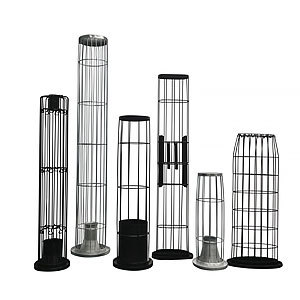
1. Longitudinal reinforcement and transverse ring: The main support of the longitudinal reinforcement and the anti deformation of the transverse ring should match the size and spacing of the filter bag material. The longer the diameter and length of the filter bag, the more longitudinal bars and the smaller the spacing between the horizontal rings; Thin material filter bags need to be reinforced with longitudinal bars and transverse rings, while thick materials can be relaxed appropriately. The connection should be polished smooth and free of burrs to avoid wear on the filter bag.
2. Top structure: The Venturi tube type is suitable for pulse blowing and dust cleaning, which can evenly guide the airflow to protect the filter bag and is the mainstream overseas; Horn mouth type suitable for anti blowing dust cleaning, easy to disassemble and assemble filter bags; The flat mouth structure is simple and suitable for small intermittent equipment overseas.
3. Bottom structure: Bottom sealed type suitable for direct ash discharge from ash hopper, commonly used in overseas mining and building materials industries; The open type is easy to connect with the ash discharge device and is suitable for large compartment cleaning equipment. It is necessary to ensure that the opening size is suitable for leak proof ash.
(3) Size selection: precise matching to avoid loose or tight filter bags
Accurately matching the size of the skeleton and filter bag is the key to preventing damage and blockage. The core controls the three major parameters of diameter, length, and verticality, and strictly controls the error range:
1. Diameter matching: The skeleton diameter is slightly smaller than the inner diameter of the filter bag, with a conventional difference of 2-5mm. For filter bags with good elasticity, the difference is 2-3mm to ensure a snug and anti friction fit; Filter bags with poor elasticity have a difference of 3-5mm to avoid installation and tensile damage.
2. Length matching: The length of the skeleton and filter bag is exactly the same, with an error of ≤± 2mm. If it is too long, the filter bag will be tightly stretched and damaged, and if it is too short, the filter bag will wrinkle and accumulate dust, both of which will shorten the service life of the filter bag.
3. Verticality: The verticality error of the skeleton should be ≤ 3mm/m to avoid bending deformation. Otherwise, it will cause uneven stress on the filter bag, incomplete dust cleaning, and exacerbate local wear, and overseas large-scale equipment needs to be inspected with emphasis.
(4) Surface treatment selection: anti-corrosion, anti-wear, and extended adaptation life
The core of skeleton surface treatment is to prevent corrosion and wear, reduce friction with filter bags, and match materials and working conditions for overseas selection. There are three commonly used methods:
1. Galvanizing treatment: Suitable for carbon steel and humid, slightly corrosive working conditions, hot-dip galvanizing has strong corrosion resistance and long service life, making it the preferred choice for overseas humid working conditions; Electrogalvanizing has low cost and is suitable for dry working conditions. It is necessary to ensure that the galvanized layer is uniform and does not peel off.
2. Spray treatment: Suitable for carbon steel and mild corrosion, viscous dust working conditions, with a smooth and burr free surface, both anti-corrosion and friction reducing effects, distinguishable colors for easy maintenance, suitable for overseas food and pharmaceutical industries.
3. No processing: Only suitable for stainless steel material, which is corrosion-resistant and high-temperature resistant, does not require additional processing, can reduce costs, and needs to ensure smooth surface polishing without burrs.
2、 Core matching skills between skeleton and filter bag (practical focus, avoiding adaptation misconceptions)
The core of matching the skeleton and filter bag is the four-dimensional fit of "material, size, structure, and working conditions", in order to achieve the best effect. Combined with overseas practice, the specific techniques are as follows:
(1) Material matching: synchronously adapt to working conditions to avoid increased wear and tear
The two materials need to be synchronously adapted to the temperature of the flue gas and the corrosiveness of the dust, to avoid the skeleton having a lower temperature and corrosion resistance level than the filter bag or incompatible materials. The specific matching logic is:
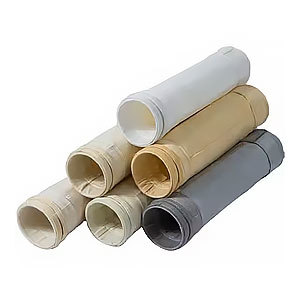
1. Normal working conditions: carbon steel skeleton+polyester/polypropylene filter bag, low cost, strong adaptability, suitable for overseas small and medium-sized machinery and grain processing industries.
2. Medium temperature working condition: 304 stainless steel frame+PPS/Fumes filter bag, suitable for overseas chemical and metallurgical industries, to avoid rusting and wear of the frame filter bag.
3. High temperature working conditions: 316L stainless steel skeleton+PTFE/fiberglass filter bag, suitable for harsh working conditions such as large-scale chemical and waste incineration overseas, with high temperature and corrosion resistance.
4. Wet working conditions: Galvanized/spray coated carbon steel frame+waterproof and oil proof filter bag, suitable for wet scenes in overseas mines and building materials, to prevent filter bag condensation and blockage and skeleton rust.
Tip: Prioritize selecting the skeleton based on the material of the filter bag. The temperature and corrosion resistance level of the skeleton should not be lower than that of the filter bag to ensure synchronous service life and reduce operation and maintenance costs.
(2) Size matching: precise control of errors, no looseness in fitting
Size matching is the foundation, combined with overseas practical standards, the core details are as follows:
1. Diameter matching: The difference between elastic filter bags is 2-3mm, and the difference between rigid filter bags is 3-5mm, ensuring that the filter bags are tightly fitted without looseness or wrinkles, and can shrink normally during dust cleaning and smoothly peel off dust.
2. Length matching: The two have exactly the same length, and after installation, they are flush without tension or sagging, avoiding damage or wrinkling of the filter bag.
3. Installation size matching: The top structure of the skeleton should correspond to the installation method of the filter bag to avoid installation difficulties or dust leakage. The size should be checked before mass installation overseas.
(3) Structural matching: Adapt to dust cleaning methods and optimize operational performance
The skeleton structure needs to be adapted to filter bags and cleaning methods to reduce wear and improve cleaning efficiency. Common matching logic overseas:
1. Pulse jet cleaning: Venturi tube type skeleton+pleated/conventional filter bag, uniform airflow, thorough dust stripping, suitable for overseas high concentration dust scenes.
2. Anti blowing dust cleaning: horn shaped skeleton+conventional filter bag, easy disassembly and assembly of filter bag, low friction, suitable for low concentration and coarse dust scenes overseas.
3. Mechanical vibration dust cleaning: Flat mouth skeleton+thick material filter bag, uniform force distribution, anti damage, suitable for overseas small intermittent operation scenarios.
(4) Detail matching: Avoiding small mistakes and extending the adaptation life
In overseas operations and maintenance, neglecting details can easily lead to adaptation issues, with a focus on three points:
1. Surface smoothness: The skeleton connection should be polished smooth without burrs, especially suitable for thin material filter bags, to prevent damage and dust leakage.
2. Filter bag tension: It fits tightly but not tightly, avoiding a decrease in elasticity and increased friction, and extending the lifespan of both.
3. Batch consistency: When installing large equipment in batches, it is necessary to ensure that the specifications of the skeleton and filter bag are consistent to avoid individual adaptation errors affecting the overall operation.
3、 Common Adaptation Misconceptions and Avoidance Methods (Key Points for Avoiding Pits in Overseas Practice)
Based on overseas operation and maintenance experience, summarize four common adaptation misconceptions, clarify hazards and avoidance methods, and reduce operation and maintenance costs:
Misconception 1: Focusing on size over material - Harm: Using carbon steel frame with PPS filter bag for high temperature conditions can easily deform, rust, and accelerate filter bag loss; Avoidance: Prioritize matching materials before determining dimensions.
Avoidance method: When selecting, prioritize matching materials, determine the temperature and corrosion resistance levels of the filter bag and skeleton according to the working conditions, and then match the size.
Misconception 2: Excessive skeleton diameter - hazards: loose filter bags, increased friction, wrinkles and dust accumulation, reducing dust removal efficiency; Avoidance: Control the diameter difference according to the material of the filter bag, with an error not exceeding ± 2mm.
Avoidance method: Strictly control the diameter difference, adjust according to the material of the filter bag, and the error should not exceed ± 2mm.
Misconception 3: Inadequate surface treatment - Hazards: rusting of carbon steel frame, wear of filter bag causing dust leakage; Avoidance: Select surface treatment according to working conditions and inspect quality before installation.
Avoidance method: Choose the appropriate surface treatment method according to the working conditions, check the surface treatment quality before installation, and avoid detachment and exposure of the substrate.
Misconception 4: Neglecting the matching of dust cleaning and structure - Hazards: Pulse spraying with flat mouth skeleton, uneven airflow, and easy damage to filter bags; Avoidance: Select the corresponding skeleton structure according to the cleaning method.
Avoidance method: Select the corresponding skeleton structure according to the dust cleaning method, with pulse blowing prioritizing the Venturi tube type and reverse blowing prioritizing the horn mouth type.
The core of matching the skeleton and filter bag of a bag filter is "working condition adaptation and precise fit", without the need to pursue high-end materials and complex structures. It focuses on combining overseas working condition parameters, controlling the details of material, structure, and size matching, and avoiding common misunderstandings. The adaptation quality of the two directly determines the stability, dust removal efficiency, and operation and maintenance costs of the equipment. Overseas practitioners follow the techniques in this article and combine them with local working conditions to achieve precise adaptation, extend component life, ensure long-term stable operation of the equipment, and meet environmental emission requirements.
Hot Tags:


Contact Us
Tel:
WeChat:
WhatsApp:
E-mail:
Address:
338 National Road South, Longfengdian Village, Botou City, Hebei Province, China
JiuznTomine is expertly delivering technically complicated projects in markets & provides custom solutions for their customized need.


CONTACT INFO
Tel: +86 18531710311
WeChat: +86-18531710311
338 National Road South, Longfengdian Village, Botou City, Hebei Province, China