











Comparison and Technical Analysis of Dust Cleaning Methods for Bag Dust Collectors
Feb 02,2026

As the core equipment for industrial waste gas treatment, bag filter has a direct impact on the emission compliance rate and equipment life due to its dust cleaning efficiency. The current mainstream dust cleaning technologies include four categories: mechanical vibration, reverse airflow, pulse blowing, and acoustic cleaning, each of which has applicable scenarios and performance boundaries. This article conducts comparative analysis from three dimensions: technical principles, application effects, and economy, providing technical references for working condition adaptation.
1、 Mechanical vibration dust removal: a breakthrough in the limitations of traditional processes
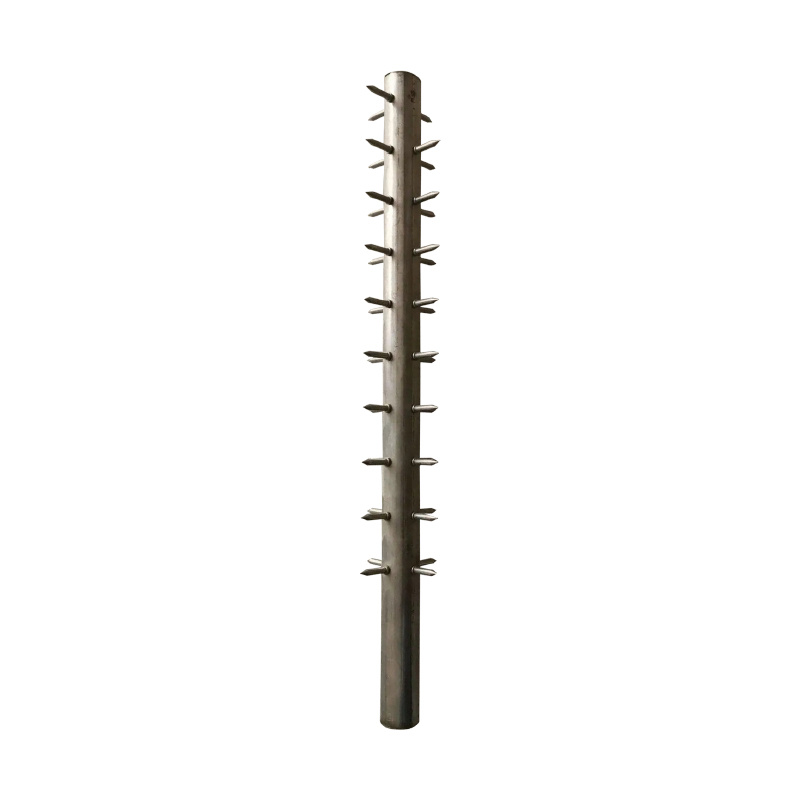
Mechanical vibration cleaning applies periodic impact to the filter bag by driving the vibration rod with a motor, and uses inertial force to peel off the dust layer. This technology has a simple structure, consisting of a vibration motor, transmission shaft, and vibration rod. Its cost is 30% -40% lower than other methods, and it is suitable for low concentration conditions such as small boiler flue gas purification. For example, a textile factory used a top vibration device to treat cotton dust, with an initial investment of only 80000 yuan. However, after two years of operation, the filter bag damage rate reached 15%, mainly due to uneven vibration strength causing tearing at the bag mouth connection.
The technical shortcomings are significantly reflected in three aspects: firstly, the cleaning strength is negatively correlated with the service life of the filter bag. When the vibration frequency exceeds 25 times/second, the service life of the filter bag is shortened by 40%; Secondly, if the removal rate of viscous dust is less than 60%, it is necessary to cooperate with the pre coating process to improve the effect; Thirdly, the offline dust cleaning mode requires equipment to be shut down in separate rooms, resulting in a fluctuation of up to 15% in the system's air volume processing. At present, this technology is only reserved for intermittent production scenarios with limited budgets.
2、 Reverse airflow blowing for dust removal: a balanced choice for medium concentration conditions
Reverse airflow blowing causes star shaped deformation of the filter bag through reverse airflow, utilizing deformation stress to peel off dust. This technology is divided into two forms: reverse blowing and reverse suction. A certain cement plant uses a reverse blowing system to treat kiln tail dust, with a cleaning cycle of 60 minutes, which is three times longer than mechanical vibration, and the service life of filter bags is increased to three years. Its core advantage lies in a uniform airflow distribution of 92% and a damage rate of less than 5% for glass fiber filter bags.
The technical bottleneck focuses on equipment complexity and energy consumption control: a dedicated anti hair dryer needs to be configured, with an initial investment increase of 25%; The cleaning intensity is limited by the air flow pressure, and when dealing with high concentration dust, the cleaning cycle needs to be shortened to 30 minutes, resulting in a 40% increase in compressed air consumption. In practical applications, this technology is more suitable for fields such as electronics and medicine that require strict integrity of filter bags. A semiconductor company adopts a pulse back blowing combined system to ensure zero damage to the filter bags while controlling the emission concentration below 0.05mg/m ³.
3、 Pulse jet cleaning: the benchmark for efficiency under high concentration conditions
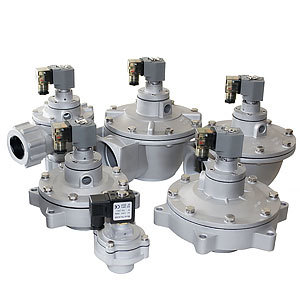
Pulse blowing technology induces secondary air flow by releasing high-pressure airflow within 0.2 seconds, forming a pulse pressure wave that causes the filter bag to rapidly expand and contract. A certain steel plant adopts a gas box pulse system to process converter gas, with a filtered air speed of 1.2m/min, which is 60% higher than the reverse blowing system. In addition, the online ash cleaning mode ensures that the continuous operation rate of the system exceeds 99%. Its technological breakthroughs are reflected in three aspects: the dust cleaning intensity reaches 5000Pa, which can handle extreme working conditions with dust concentrations exceeding 1000g/m ³; When using polyester coated filter material, the emission concentration remains stable below 5mg/m ³; Modular design reduces equipment footprint by 40%.
But this technology has strict requirements for the supporting system: a stable gas source of 0.6-0.8MPa needs to be configured, and the energy consumption of the air compressor accounts for 25% of the total energy consumption of the system; When the injection pressure exceeds 0.3 MPa, the wear rate of the filter bag increases exponentially. A certain power company has optimized the structure of the spray pipe and accurately controlled the spray pressure at 0.25MPa, extending the lifespan of the filter bag from 18 months to 36 months and reducing annual maintenance costs by 1.2 million yuan.
4、 Acoustic cleaning: innovative breakthrough in special working conditions
Acoustic cleaning generates micro vibrations in filter bags through low-frequency sound waves (60-300Hz). A chemical enterprise uses this technology to treat tar containing dust, with a cleaning efficiency of 85%, which is 30% higher than mechanical vibration, and zero damage to filter bags. Its technological advantages are reflected in the non-contact dust cleaning, which has no mechanical damage to the filter bag and is particularly suitable for handling viscous and easily consolidated dust. But this technology has obvious limitations: the energy consumption of the sound wave generator accounts for 15% of the total energy consumption of the system; The cleaning force is weak, and the removal rate of dust with a particle size greater than 10 μ m is less than 70%; The initial investment is 50% higher than that of the pulse system, and the payback period exceeds 5 years. At present, large-scale applications have only been achieved in fields such as tobacco and food that are sensitive to cross contamination.
5、 Key decision-making elements for technology selection
The adaptation of working conditions requires comprehensive consideration of four dimensions: in terms of dust characteristics, pulse blowing is preferred for high concentration and viscous dust, and reverse airflow is suitable for light dust; When the air volume exceeds 500000 m ³/h, the compactness advantage of pulse blowing equipment is significant; In terms of operating costs, the unit energy consumption cost of acoustic cleaning is 2.3 times that of pulse blowing; In terms of maintenance convenience, the component replacement cycle for mechanical vibration cleaning is the shortest (6 months), but the automation level of pulse blowing is the highest (supporting remote control).
The current technological development trend presents two directions: one is the deep integration of pulse blowing and intelligent control, which adjusts the blowing parameters in real time through pressure sensors. A pilot project has achieved a 40% extension in the life of filter bags; The second is the rise of composite dust cleaning technology, such as the pulse sound wave combined system, which reduces the emission concentration by 60% compared to a single technology when processing ultrafine dust. With the popularization of new filter materials such as polytetrafluoroethylene microporous membranes, the efficiency boundary of dust cleaning technology will continue to expand, providing key support for industrial green transformation.
Hot Tags:
PREVIOUS:

Contact Us
Tel:
WeChat:
WhatsApp:
E-mail:
Address:
338 National Road South, Longfengdian Village, Botou City, Hebei Province, China
JiuznTomine is expertly delivering technically complicated projects in markets & provides custom solutions for their customized need.


CONTACT INFO
Tel: +86 18531710311
WeChat: +86-18531710311
338 National Road South, Longfengdian Village, Botou City, Hebei Province, China