












Structural design and adaptability to working conditions of cyclone dust collector
Feb 02,2026

As one of the most widely used gas-solid separation equipment in the industrial field, the core value of cyclone dust collector lies in achieving efficient separation of dust and gas through centrifugal force. The structural design needs to take into account separation efficiency, pressure drop control, and operational stability, while the adaptability to operating conditions determines whether the equipment can continue to perform in complex environments.
1、 The core elements of structural design: evolution from classic to intelligent
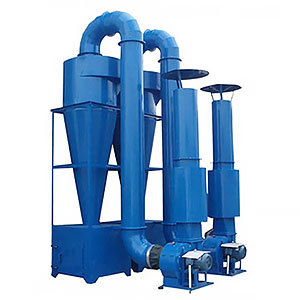
The classic cyclone dust collector consists of five major components: an intake pipe, a cylindrical body, a conical body, an exhaust pipe, and an ash hopper. Its working principle is based on a three-dimensional double helix airflow motion model: the dusty gas enters the cylindrical body at a tangential speed of 15-30m/s, forming a downward rotating external vortex. The dust collides with the cylinder wall under centrifugal force and slides down to the ash hopper; After reaching the bottom of the cone, the airflow turns to form an upward internal vortex, and the purified gas is discharged through the exhaust pipe. This design makes the device volume only one-third of similar devices, but the separation efficiency for 5-10 μ m particles can reach over 85%.
Structural optimization presents three major technological paths:
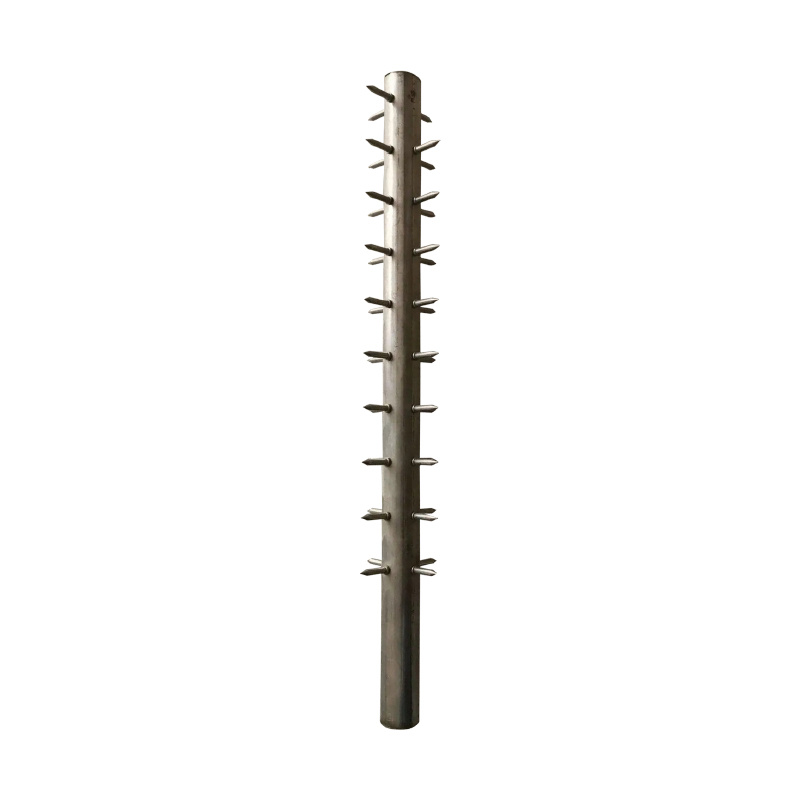
1. Flow field control technology: Through innovative features such as volute inlet design and non full length drag reducing rods, the short-circuit flow ratio has been reduced from 15% to 8%, resulting in a 92% increase in the separation efficiency of 10 μ m particles in a certain cement plant's Φ 3m cyclone dust collector.
2. Multi stage coupling design: The dual stage vortex type achieves a total efficiency of 96% for particles larger than 5 μ m by connecting two cyclone units in series; The ceramic multi tube cyclone dust collector adopts 32 Φ 200mm cyclone tubes in parallel, with a processing air volume of 100000 m ³/h and an efficiency of 85% for 3 μ m particles.
3. Material Revolution: Silicon carbide ceramic lining extends equipment lifespan from 5 years to 15 years, and increases corrosion resistance by three times in the waste incineration industry; In a test conducted at an aluminum plant, the wear of high chromium alloy cyclone components was reduced by 70% compared to carbon steel components.
2、 The key dimension of working condition adaptability: from parameter matching to system integration
There are significant differences in the performance requirements of cyclone dust collectors in different industrial scenarios, and the optimal solution needs to be achieved through precise matching of structural parameters and operating strategies
1. Adaptation of dust characteristics
Particle size distribution: For coarse particles with d ₅₀>50 μ m (such as mining crushing conditions), a single tube small cyclone dust collector (D<800mm) is used, with an inlet wind speed controlled at 16-20m/s, and a separation efficiency of over 90%; For medium and fine particles with d ₅₀ ≤ 30 μ m (such as chemical granulation conditions), a volute inlet and long cone structure should be used to increase efficiency to 85% by extending the particle settling path.
Dust properties: For viscous dust (such as cement raw materials), the inlet humidity should be controlled to be ≤ 60%, and a cylinder cleaning device should be installed; Flammable and explosive dust (such as coal powder) must be equipped with anti-static grounding (resistance ≤ 10 Ω) and nitrogen purging system. A steel plant has reduced the risk of explosion by 90% through this scheme.
2. Control of airflow parameters
Airflow matching: Modular design is adopted for high airflow conditions (Q ≥ 10000m ³/h), integrating 10-50 cyclone elements, and ensuring that the flow velocity deviation of each unit is less than 5% through an isobaric box type intake distribution system; For medium and low air flow conditions (5000 ≤ Q<10000m ³/h), a two-stage series structure is preferred to reduce the dust concentration at the outlet to below 30mg/m ³.
Temperature tolerance: High temperature flue gas (such as coal-fired boilers) requires ceramic lining or water-cooled sleeves. A certain power plant uses a combination of air cooling and ceramic cyclone to stabilize the separation efficiency at over 85% under 500 ℃ conditions.
3. System collaborative optimization
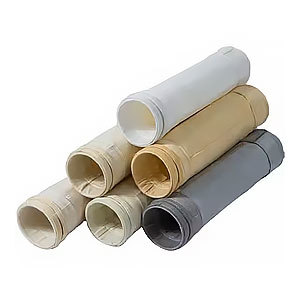
Preprocessing combination: In high concentration dust scenarios such as cement grinding and coal-fired boilers, the "cyclone+bag" composite system can reduce the subsequent bag load by more than 50%, extending the life of the filter bag to 3 years; In the tail gas treatment of a sintering machine in a certain steel plant, this combination achieved a total system efficiency of 99.8% and an emission concentration of<5mg/m ³.
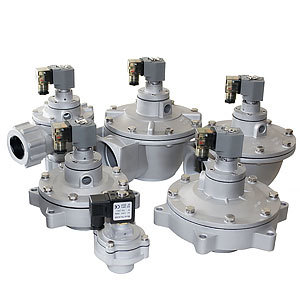
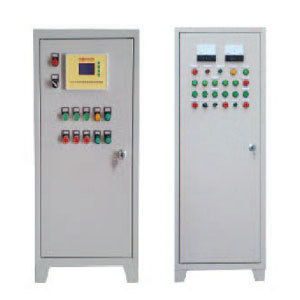
Intelligent control: By linking the pressure sensor with the pulse blowing system, the thickness of ash accumulation in the ash hopper is controlled within 50mm; After optimizing the application of digital twin technology in a certain chemical enterprise, the continuous operation time of the equipment has been extended from 72 hours to 300 hours.
3、 Future Trends: From Functional Devices to Ecological Units
With the advancement of carbon neutrality goals, cyclone dust collectors are evolving from single separation equipment to energy recovery systems:
Waste heat utilization: The cyclone dust collector with integrated heat exchange module can recover waste heat from flue gas, and a steel plant has measured that it saves 1200 tons of standard coal annually;
Resource recycling: Mobile cyclone dust collectors on construction sites use a closed conveying system to directly recycle the recovered dust for concrete production, achieving PM10 emission reduction and resource utilization in a closed-loop manner;
Digital twin: CFD simulation technology shortens the design cycle from 6 months to 2 months. A virtual cyclone dust collector developed by a research institution can optimize structural parameters in real time, reducing pressure drop by 25% while improving efficiency by 5%.
The technological evolution of cyclone dust collectors, from the first prototype of a British coal mine in 1885 to the current ecological unit integrating intelligent control and energy recovery, confirms a truth: the simplest physical principles can always solve the most complex gas-solid separation problems through structural innovation and system integration. In the era of Industry 4.0, this' centrifugal force 'will continue to provide fundamental support for green manufacturing.
Hot Tags:

Contact Us
Tel:
WeChat:
WhatsApp:
E-mail:
Address:
338 National Road South, Longfengdian Village, Botou City, Hebei Province, China
JiuznTomine is expertly delivering technically complicated projects in markets & provides custom solutions for their customized need.


CONTACT INFO
Tel: +86 18531710311
WeChat: +86-18531710311
338 National Road South, Longfengdian Village, Botou City, Hebei Province, China