












Classification of Dust Removal Bag Materials and Selection Guide for Polyester and Fumes
Jan 23,2026

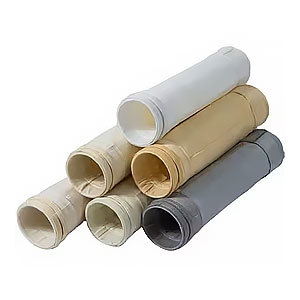
As the core filtering element of bag filter, the material selection of dust bag directly determines the filtration efficiency, service life, and system operation stability. Different materials of cloth bags have significant differences in temperature resistance, corrosion resistance, and filtration accuracy, and require precise selection based on specific working conditions. This article first sorts out the classification logic of dust bag materials, and then focuses on analyzing the adaptation scenarios of the characteristics of two mainstream materials, polyester and fluoromethane, to provide scientific selection references.
1、 Core dimensions of material classification for dust removal bags
The material classification of dust removal bags should be based on the core requirements of the working conditions, with key dimensions including temperature resistance range, chemical stability, filtration accuracy, mechanical strength, and price cost. According to temperature resistance performance, it can be divided into room temperature type (≤ 130 ℃), medium temperature type (130-200 ℃), and high temperature type (≥ 200 ℃); According to chemical characteristics, it can be divided into acid and alkali resistant type, anti-static type, flame retardant type, etc; According to the structure of the filter material, it can be divided into short fiber needle punched felt, long fiber needle punched felt, laminated filter material, etc.
Among them, polyester and fluoromethane are representatives of room temperature and medium temperature filter materials, respectively. Their application scenarios cover multiple industries such as metallurgy, chemical industry, building materials, and wood processing. They are the two most widely used and adaptable materials in industrial dust removal. The rationality of their selection is crucial for controlling the operation and maintenance costs of dust removal systems.
2、 Polyester dust bag: a cost-effective choice for ambient temperature conditions
(1) Core Features and Material Segmentation
Polyester (polyester) filter material has the advantages of high mechanical strength, good wear resistance, excellent filtration accuracy, and affordable price. Its conventional temperature resistance range is -20 ℃ to 130 ℃, and its instantaneous temperature resistance can reach 150 ℃. It has good filtering effect on dry dust at room temperature. According to the working conditions, polyester bags can be divided into the following three categories:
1. Ordinary polyester needle punched felt bag: a basic filter material with uniform fiber density and high dust holding capacity, suitable for non corrosive, room temperature dry dust scenes, such as wood processing, grain processing, cement grinding and other industries. It is the most cost-effective basic selection.
2. Anti static polyester bag: Mixing conductive fibers into polyester fibers, with a surface resistance of ≤ 10 ⁹ Ω, can effectively release static electricity generated by dust accumulation, avoid the risk of explosion caused by sparks, and adapt to flammable and explosive dust conditions such as coal powder, flour, plastic powder, etc.
3. Waterproof and oil resistant polyester bag: By impregnating or coating the filter material with PTFE, it has hydrophobic and oil repellent properties, which can prevent oil containing and wet dust from adhering to the filter bag and causing bag sticking. It is suitable for oil mist and high humidity scenarios such as mechanical processing, welding dust, and kitchen waste treatment.
(2) Key points for adapting to working conditions and selecting models
The core of selecting polyester bags is to control the operating temperature and the corrosiveness of the medium, in order to avoid overheating or chemical erosion that may cause aging and damage to the filter bags. The applicable working conditions must meet: temperature ≤ 130 ℃, no strong acid-base medium (pH value 6-8), and dust humidity ≤ 80%.
Extra attention should be paid when selecting: when the dust particle size is ≤ 10 μ m, it is recommended to use a laminated polyester cloth bag to improve filtration accuracy and dust removal effect; For high concentration dust conditions (inlet concentration ≥ 50g/m ³), thick polyester needle punched felt is preferred to enhance dust holding capacity; There is slight abrasive dust present, and surface strengthened polyester filter bags can be used to extend their service life.
3、 Fumes dust bag: adaptation scheme for medium temperature corrosive working conditions
(1) Core characteristics and material composition
FMS filter material is a mixed fiber needle punched felt, mainly made by mixing polyester, polypropylene, aramid and other fibers in proportion. Some high-end models will add PTFE fibers to improve corrosion resistance. The conventional temperature range is 150 ℃ to 200 ℃, and the instantaneous temperature resistance can reach 220 ℃. It has the comprehensive advantages of temperature resistance, corrosion resistance and tensile resistance, filling the working condition gap between polyester and high-temperature filter materials.
Compared with polyester, the core advantage of Flumes lies in its stability in medium temperature environments, with a certain tolerance to weak acid and weak alkali media, and higher mechanical strength. It is not easily deformed due to high temperature shrinkage and is suitable for long-term operation under complex working conditions; But the price is higher than that of polyester filter bags, and the cost and performance need to be balanced according to the working conditions.
(2) Key points for adapting to working conditions and selecting models
Fumes cloth bag is suitable for dust scenes with medium temperature, slight corrosion, and high humidity. Typical applications include sintering dust in the metallurgical industry, drying tower dust in the chemical industry, kiln tail dust in the building materials industry, etc. The working conditions need to meet: temperature of 130-200 ℃, weak acid and weak alkali medium (pH value 5-9), and dust humidity ≤ 90%.
When selecting, attention should be paid to: for sulfur-containing dust, it is recommended to use a fluoromethane cloth bag containing PTFE components to improve sulfur corrosion resistance; For working conditions with high temperature and high humidity, it is necessary to choose Fumes filter bags that have undergone anti condensation treatment to avoid dust clumping and sticking to the bags; If the operating temperature frequently approaches 200 ℃, it is necessary to confirm the fiber ratio with the filter material manufacturer in advance to ensure temperature stability and avoid short-term aging.
4、 Comparison and General Principles of Polyester and Fumes Bag Selection
(1) Comparison of core parameters
1. Temperature resistance range: Polyester (-20-130 ℃) < Fumes (150-200 ℃);
2. Corrosion resistance: Both are suitable for weak acids and bases. Fumes (including PTFE) has slightly better corrosion resistance than polyester;
3. Price cost: Polyester<Flumes (about 1.5-2 times that of polyester);
4. Adaptation scenarios: Polyester is suitable for room temperature dry and non corrosive working conditions, while Flumes is suitable for medium temperature mild corrosion working conditions.
(2) General selection principles
1. Temperature priority judgment: If the operating temperature is ≤ 130 ℃, polyester cloth bags are preferred (with higher cost-effectiveness); Temperature range of 130-200 ℃, it is necessary to choose a fluoromethane cloth bag, and it is forbidden to use polyester (which is prone to overheating and aging); If the temperature is above 200 ℃, it needs to be upgraded to high-temperature filter materials such as PPS and PTFE, which cannot be adapted to Flumes.
2. Adaptation of medium characteristics: In the presence of flammable and explosive dust, anti-static polyester is selected; Oil and moisture containing dust, choose waterproof and oil resistant polyester; Mild corrosion+medium temperature, choose Flumex (including PTFE).
3. Cost performance balance: When there is no special working condition requirement, polyester bags are preferred; Only when the temperature or corrosiveness exceeds the tolerance range of polyester, consider fluoromethane to avoid blindly upgrading the material and increasing costs.
4. Filter material structure supplement: For fine dust and high emission requirements (emission concentration ≤ 10mg/m ³), it is recommended to use coated polyester or coated fluoromethane to improve filtration accuracy and dust removal efficiency, and reduce maintenance frequency.
5、 Common selection misconceptions and avoidance methods
Misconception 1: Blindly choosing fluoromethane instead of polyester, pursuing "high performance". Under normal temperature conditions, the temperature resistance advantage of Flumes cannot be fully utilized. Instead, the higher price increases procurement costs, and the filtration accuracy is not significantly different from that of polyester. Avoidance method: Strictly judge the material according to temperature, and give priority to polyester under normal temperature conditions.
Misconception 2: Ignoring humidity and oil mist in working conditions, choose ordinary polyester cloth bags. High humidity and oil containing conditions can easily lead to a sudden drop in filtration efficiency of ordinary polyester paste bags. Avoidance method: Waterproof and oil resistant polyester should be used for such working conditions, rather than simply upgrading to Flumes.
Misconception 3: Fumes can be adapted to strong corrosion conditions. Fumes can only tolerate weak acids and weak bases. Under strong acid-base conditions (pH<5 or>9), PTFE filter bags should be used, otherwise they will quickly corrode and break. Avoidance method: First check the acidity and alkalinity of the medium, and then match the corresponding corrosion-resistant material.
The selection core of polyester and Flumes dust removal bags is a comprehensive balance of operating temperature, medium characteristics, emission requirements, and cost budget. There is no absolute "superiority or inferiority" distinction, only differences in "adaptation or not". Under normal temperature and non corrosive conditions, polyester bags have become the preferred choice due to their high cost-effectiveness; Under mild corrosion conditions at medium temperatures, Flumes cloth bags are a reasonable choice that balances performance and cost. When selecting, it is necessary to abandon the misconception of "high-end means high-quality" and focus on operating parameters, combined with the subdivision of filter material types and structures, in order to achieve the optimal balance between filtration effect, service life, and operation and maintenance costs.
Hot Tags:


Contact Us
Tel:
WeChat:
WhatsApp:
E-mail:
Address:
338 National Road South, Longfengdian Village, Botou City, Hebei Province, China
JiuznTomine is expertly delivering technically complicated projects in markets & provides custom solutions for their customized need.


CONTACT INFO
Tel: +86 18531710311
WeChat: +86-18531710311
338 National Road South, Longfengdian Village, Botou City, Hebei Province, China