












Key points for installing bag filter: sealing treatment and airflow distribution
Jan 21,2026

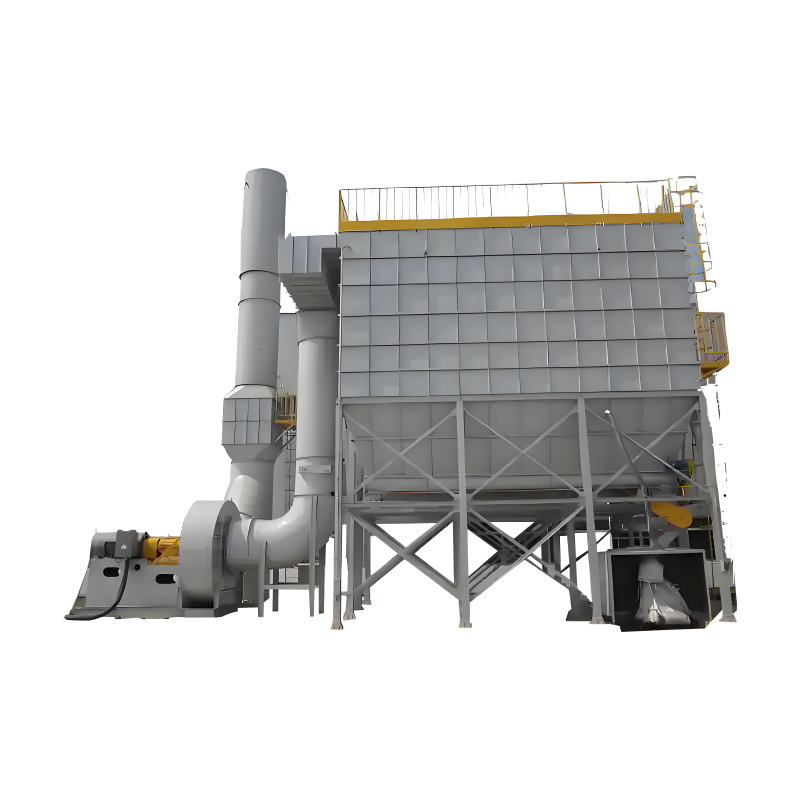
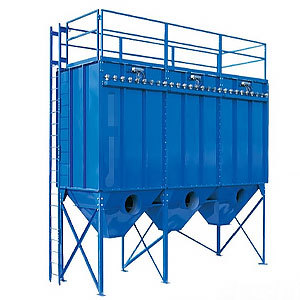
Bag filters are widely used in industrial fields such as metallurgy, chemical engineering, and building materials due to their efficient filtration performance. The installation quality directly determines the dust removal efficiency, operational stability, and service life. Among them, sealing treatment and airflow distribution are the core points of the installation process. Improper treatment can easily cause problems such as air leakage, filter bag wear, and reduced dust removal efficiency.
1、 Sealing treatment: eliminate air leakage and ensure filtering effect
The sealing performance of bag filter directly affects the dust removal efficiency and operating energy consumption of the equipment. Air leakage not only reduces the negative pressure inside the equipment, leading to a decrease in dust capture ability, but also may cause condensation and sticking of the filter bag due to the exchange of hot and cold air, shortening the service life of the filter bag. Sealing treatment should cover the entire scene of equipment body, pipeline connection, maintenance structure, etc., with a focus on the following areas:
(1) Equipment body sealing
The shell of the dust collector is mostly a spliced structure, and the spliced area is a high-risk area for air leakage. When installing, it is necessary to first check the flatness and interface accuracy of the shell plate to ensure that the docking gap is uniform and free of deformation. For flange connection parts, suitable sealing gaskets should be selected. Common materials include rubber gaskets, asbestos gaskets, polytetrafluoroethylene gaskets, etc. The corresponding materials should be selected according to the working temperature and corrosiveness - asbestos gaskets are preferred for high temperature working conditions, and polytetrafluoroethylene gaskets can be used for corrosive environments. The sealing gasket should be laid flat, without wrinkles or damage. When tightening the bolts, a diagonal uniform tightening method should be used to ensure that the flange surface is tightly fitted and avoid local uneven stress that may cause sealing failure. At the same time, airtightness testing should be carried out at the welding seam of the shell, and welding defects, pinholes, and other issues should be repaired in a timely manner. After welding, re testing should be carried out until there is no air leakage.
(2) Filter bag and flower board sealing
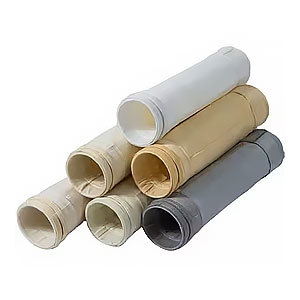
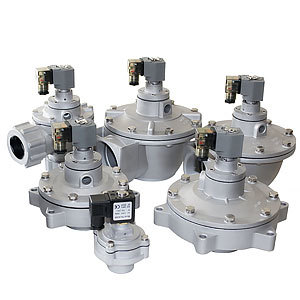
The flower plate is the installation carrier of the filter bag, and the sealing accuracy between the flower plate hole and the filter bag mouth directly affects the filtration effect. Before installation, it is necessary to clean the burrs and welding slag on the surface of the flower board to ensure that the edges of the flower board holes are smooth and avoid scratching the filter bag. When installing the filter bag, it is necessary to accurately insert the elastic ring of the filter bag mouth into the flower plate hole, press it in place, and ensure that the elastic ring is tightly attached to the flower plate hole without looseness or gaps. For pulse jet type bag filter, it is also necessary to check the alignment accuracy between the jet pipe and the flower plate. The jet port should be facing the center of the filter bag to avoid displacement of the jet airflow caused by misalignment. At the same time, the connection between the jet pipe and the flower plate should be sealed to prevent airflow leakage from affecting the jet cleaning effect.
(3) Sealing of maintenance door and observation hole
The sealing of moving parts such as maintenance doors and observation holes is easily overlooked, and it is necessary to use elastic sealing strips. The integrity of the sealing strips should be checked regularly, and if there are problems such as aging, cracking, deformation, etc., they should be replaced in a timely manner. When installing the maintenance door, ensure that the door body is tightly attached to the shell, the door lock is evenly stressed, and avoid poor sealing due to door deformation. Under some working conditions, sealant can be added on the outside of the sealing strip to further enhance the sealing effect.
(4) Pipeline connection sealing
The connection parts between the inlet and outlet pipes and the dust collector housing, as well as the joints between the pipes, need to be sealed with sealing gaskets and tightened with bolts. During pipeline installation, coaxiality should be ensured to avoid uneven stress on the interface caused by pipeline offset, which can lead to air leakage. At the same time, pipeline supports need to be installed firmly to prevent pipeline vibration from damaging the sealing structure during equipment operation. After installation, pressure drop method or smoke method can be used for air tightness testing to ensure that the overall sealing performance meets the standard.
2、 Airflow distribution: Uniform distribution of air, extending the lifespan of filter bags
The uniform distribution of airflow inside a bag filter directly affects the stress state of the filter bag, dust filtration efficiency, and service life. If the airflow distribution is uneven and the local airflow velocity is too high, it will exacerbate the wear and sticking of the filter bag; If the airflow speed is too low, it will cause dust to accumulate at the bottom of the casing, affecting the normal operation of the equipment. To achieve uniform airflow distribution, it is necessary to start from three aspects: installation of airflow distribution devices, arrangement of filter bags, and setting of flow guiding structures.
(1) Installation of airflow distribution device
Most bag filters will install an airflow distribution plate (porous plate) at the air inlet to buffer the airflow and disperse dust. During installation, it is necessary to ensure the levelness and verticality of the distribution board, fix it firmly, and avoid vibration displacement during equipment operation. The aperture and spacing of the distribution board must strictly follow the design parameters. An aperture that is too large can lead to uneven airflow distribution, while an aperture that is too small can increase airflow resistance. At the same time, it is necessary to clean the debris and welding slag on the surface of the distribution board to ensure smooth opening. For large bag filters, guide vanes can be added behind the distribution plate to further optimize the airflow direction and avoid direct airflow towards the filter bag.
(2) Filter bag arrangement and spacing control
The arrangement and spacing of filter bags should comply with the laws of airflow, usually using a matrix arrangement. The spacing between adjacent filter bags should be reasonably set according to the diameter of the filter bags and the airflow velocity, generally not less than 1/2 of the diameter of the filter bags. Too small spacing can cause mutual interference of airflow, forming local eddies and exacerbating filter bag wear; If the spacing is too large, it will waste the housing space and reduce the filtering area of the equipment. When installing the filter bag, it is necessary to ensure that the filter bag is suspended vertically, without tilting or bending, to avoid contact between the filter bag and components such as the shell and spray pipe, and to prevent friction and damage during operation.
(3) Optimization of diversion and ash accumulation areas
The dead corners inside the dust collector housing are prone to generate airflow vortices, leading to dust accumulation. During installation, a guide plate can be installed at the corner of the housing to guide the airflow smoothly and reduce vortex generation. At the same time, it is necessary to ensure that the slope of the bottom ash hopper of the shell meets the design requirements, generally not less than 60 °, to avoid dust accumulation in the hopper and affect the smoothness of ash discharge. For working conditions where large particles of dust are mixed in the dusty airflow, a pre-treatment device can be added at the air inlet to intercept the large particles of dust and reduce the impact of the airflow on the filter bag.
3、 Post installation testing and debugging
After the sealing treatment and optimization of airflow distribution are completed, systematic testing and debugging are required to ensure that the equipment operates up to standard. Air tightness testing can be carried out by closing the inlet and outlet of the equipment, introducing compressed air into the shell, maintaining a certain pressure, and observing changes in pressure drop. If the pressure drop meets the standard within the specified time, the sealing performance is qualified. The detection of airflow distribution can be achieved by installing anemometers in the filter bag area to measure the airflow velocity at different locations. A deviation controlled within ± 10% is considered qualified. At the same time, start the equipment for no-load trial operation, observe the operation status and airflow stability of the filter bag, check for abnormal vibration, air leakage and other problems, and adjust and optimize them in a timely manner.
The sealing treatment and airflow distribution of bag filter are the core links to ensure the efficient and stable operation of the equipment. It is necessary to strictly follow the installation specifications and optimize the detailed design based on the characteristics of the working conditions. Good sealing performance can prevent efficiency decline caused by air leakage, and uniform airflow distribution can effectively extend the life of filter bags and reduce operating energy consumption. In the actual installation process, it is necessary to pay attention to the quality control of each link, carry out post installation testing and debugging, and lay the foundation for the long-term reliable operation of the equipment.
Hot Tags:
PREVIOUS:


Contact Us
Tel:
WeChat:
WhatsApp:
E-mail:
Address:
338 National Road South, Longfengdian Village, Botou City, Hebei Province, China
JiuznTomine is expertly delivering technically complicated projects in markets & provides custom solutions for their customized need.


CONTACT INFO
Tel: +86 18531710311
WeChat: +86-18531710311
338 National Road South, Longfengdian Village, Botou City, Hebei Province, China