











Practical Guide for Common Troubleshooting and Rapid Repair and Replacement of Electromagnetic Pulse Valve
Jan 14,2026

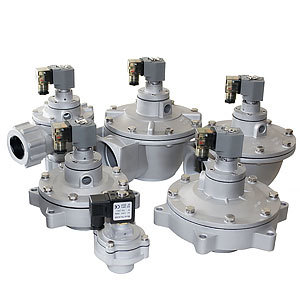
The electromagnetic pulse valve is the core executing component of the pulse bag filter, which controls the injection of compressed air through periodic on-off control to achieve filter bag cleaning, directly determining the filtration efficiency, filter bag service life, and system operation stability of the dust collector. In industrial dust removal conditions, electromagnetic pulse valves are often subjected to high-pressure, high-frequency on-off, and dust erosion environments for a long time, which can lead to malfunctions such as non blowing, weak blowing, and air leakage, resulting in clogged filter bags, soaring equipment resistance, and decreased processing air volume.
1、 The core working principle and fault impact of electromagnetic pulse valve
The core working logic of the electromagnetic pulse valve relies on the magnetic force of the electromagnetic coil after being energized to drive the valve core to move and achieve rapid opening and closing of the valve port. In the power-off state, the valve core closes the valve port under the action of spring elasticity, blocking the compressed air channel; When powered on, the coil generates magnetic force to overcome the resistance of the spring, and the valve core shifts to open the valve port. Compressed air is sprayed at high speed through the spray pipe to the filter bag, completing the cleaning process. Its working performance depends on the coordinated cooperation of core components such as electromagnetic coils, valve cores, springs, and seals. The failure of any component will directly affect the normal operation of the valve.
When the electromagnetic pulse valve malfunctions, the most direct impact is incomplete cleaning of the filter bag: the dust that is not cleaned in time will continue to accumulate on the surface of the filter bag, causing an increase in equipment operating resistance and fan energy consumption; In severe cases, the filter bag may become stuck or damaged due to excessive blockage, which not only reduces dust removal efficiency but may also cause dust leakage, posing environmental compliance risks. Therefore, quickly and accurately identifying and resolving electromagnetic pulse valve faults is a key step in ensuring the continuous and stable operation of pulse bag filters.
2、 Common troubleshooting: first determine and then locate, accurately find the root cause
The troubleshooting of electromagnetic pulse valves should follow the principle of "external first, internal second, electrical first, mechanical second", and gradually locate the problem based on equipment operating parameters and intuitive phenomena. Common faults and troubleshooting methods are as follows:
(1) Fault type 1: No blowing after power on
Core phenomenon: After the pulse controller sends a signal, the electromagnetic pulse valve does not move, there is no compressed air injection, and there is no sound of dust cleaning airflow in the filter bag area.
Troubleshooting steps:
1. Check the electrical circuit: First, use a multimeter to measure the voltage at both ends of the electromagnetic pulse valve coil. If the voltage is 0, it means that the signal has not been transmitted to the valve body. It is necessary to check whether the output port of the pulse controller is faulty, whether the connecting wires are loose or open, and whether the wiring terminals are oxidized and have poor contact; If the voltage is normal, turn to check the valve body itself.
2. Check the coil status: Disconnect the power supply, remove the coil connection wire, and measure the coil resistance value with a multimeter. If the resistance value is infinite, it indicates that the coil is open circuit; If the resistance value is close to 0, it indicates that the coil is short circuited, and in both cases, the coil needs to be replaced. At the same time, observe the appearance of the coil. If there are signs of burning, bulging, cracking, etc., it can be directly judged as coil damage.
3. Check the compressed air supply: If there is no problem with the electrical circuit, it is necessary to confirm whether the compressed air pressure meets the equipment requirements, whether the compressed air pipeline is blocked, and whether the pressure reducing valve is malfunctioning; Open the valve inlet and observe if there is a stable airflow output. If the airflow is weak or non-existent, clear the pipeline and inspect the pressure reducing device.
4. Check for valve sticking: If all the above checks are normal, it is highly likely that the valve core is stuck by impurities or the spring has failed. Disconnect the compressed air and power supply, disassemble the valve body, check whether the valve core moves flexibly, whether the spring is deformed or broken, clean the impurities inside the valve, and reassemble for testing.
(2) Fault type 2: Weak blowing and poor dust cleaning effect
Core phenomenon: Although the electromagnetic pulse valve operates, the blowing airflow is weak, and the dust on the surface of the filter bag cannot be completely removed, resulting in a slow increase in equipment resistance.
Troubleshooting steps:
1. Prioritize checking compressed air parameters: Measure the compressed air pressure. If the pressure is below 0.2 MPa, adjust the pressure reducing valve to increase the pressure; Check if the compressed air dryer is malfunctioning. If there is a large amount of moisture or oil in the air, it can cause the valve core to seal poorly and move slowly. It is necessary to inspect the dryer and replace the filter element.
2. Check the internal channels and seals of the valve: Disassemble the valve body, inspect the sealing surfaces of the valve port and valve core for wear or blockage by impurities, and check whether the sealing gasket is aging or deformed, causing air leakage; If the seal is damaged, it will cause compressed air leakage, resulting in insufficient blowing pressure, and the sealing gasket needs to be replaced.
3. Check the spraying pipeline: Check whether the spraying pipeline connected to the outlet of the electromagnetic pulse valve is blocked, whether the nozzle is blocked by dust, and if there is blockage, disassemble the pipeline for cleaning to ensure smooth airflow.
(3) Fault type 3: Valve body leakage, continuous exhaust
Core phenomenon: In the power-off state, the electromagnetic pulse valve still has continuous airflow discharged from the nozzle or exhaust port; After blowing with electronic fuel injection, the valve port cannot be completely closed, resulting in continuous air leakage.
Troubleshooting steps:
1. Check the seals: This is the most common reason. Disassemble the valve body and check whether the valve core gasket and valve seat sealing surface are worn, aged, deformed, or have impurities attached. If the sealing gasket loses elasticity and scratches appear on the surface, it is necessary to directly replace it with a sealing component of the same specification and clean the impurities on the sealing surface.
2. Check the valve core and spring: observe whether the valve core is deformed or worn, and whether the spring has insufficient elasticity or is broken. The deformation of the valve core will result in a loose fit with the valve seat, and the failure of the spring will prevent the valve core from fully resetting, requiring the replacement of corresponding components.
3. Check the valve body assembly: If there is a leak after repair, it may be due to improper assembly of the valve body after disassembly, such as incorrect installation direction of the valve core or uneven bolt tightening, resulting in unbalanced force on the valve seat. It needs to be disassembled again and assembled according to standard procedures.
(4) Fault type 4: Frequent misoperation, self blowing when there is no signal
Core phenomenon: When the pulse controller signal is not received, the electromagnetic pulse valve randomly undergoes blowing action, resulting in waste of compressed air and excessive cleaning of the filter bag, which poses a risk of damage.
Troubleshooting steps:
1. Check for electrical interference: Industrial equipment such as frequency converters and motors are prone to electromagnetic interference, which can cause pulse controllers to output signals incorrectly or coils to trigger incorrectly. Check if the control line is laid in parallel with the power line. If there is a need to rewire, separate the control line from the power line by at least 30cm or replace the shielded wire.
2. Check the pulse controller: Disconnect the connection wire of the electromagnetic pulse valve coil and observe whether there is still abnormal signal output from the controller. If there is, it is judged as a controller fault and needs to be repaired or replaced.
3. Check the insulation of the coil: Use a multimeter to measure the insulation resistance between the coil and the valve body shell. If the insulation resistance is too low, it indicates that the insulation layer of the coil is damaged and prone to leakage triggering misoperation, and the coil needs to be replaced.
3、 Key points for rapid maintenance: targeted handling to reduce downtime
Based on the troubleshooting results, targeted maintenance will be carried out on the repairable electromagnetic pulse valve. The core maintenance points are as follows:
(1) Electrical component maintenance
1. Coil replacement: Select a coil with the same specifications as the original valve. When removing the old coil, pay attention to recording the wiring method. After installing the new coil, tighten the wiring terminals to ensure good contact; After replacement, insulation testing is required to avoid leakage.
2. Line repair: If there is a broken wire or oxidized terminal, the damaged part needs to be cut, the terminal needs to be re crimped, or the oxidized terminal needs to be sanded with sandpaper and coated with conductive paste; For shielded wires, it is necessary to ensure that the shielding layer is properly grounded to reduce electromagnetic interference.
(2) Mechanical component maintenance
1. Seal replacement: Purchase compatible products according to the original seal gasket specifications, clean the impurities on the sealing surface during replacement, and ensure that the seal gasket is installed in place without deviation; During assembly, tighten the bolts evenly to avoid uneven stress on the sealing surface.
2. Valve core and spring maintenance: If the valve core is slightly worn, it can be polished smooth with fine sandpaper before continuing to be used; If there is severe wear or deformation, the valve core of the same model needs to be replaced; If the spring fails, replace it directly to ensure that the elasticity coefficient of the new spring is consistent with the original specifications.
3. Impurity cleaning: Use compressed air to blow the inner cavity of the valve body, or soak and clean the valve core and seat with kerosene to remove dust, oil stains and other impurities; For blocked spray pipelines, high-pressure airflow can be used for blowing or disassembly followed by rinsing with clean water, air drying, and reinstallation.
(3) Post repair testing
After the repair is completed, first connect the compressed air and check if there is any air leakage in the valve body; Reconnect the power supply and send a signal through the pulse controller to observe whether the valve body is sensitive and whether the spraying is normal; Finally, monitor the operating resistance of the dust collector and confirm that the cleaning effect has been restored before it can be put into normal operation.
4、 Standardized replacement process: efficient operation, ensuring installation quality
When the electromagnetic pulse valve has irreparable faults, it needs to be replaced as a whole. The replacement process should follow the steps of "safe power-off and gas cut-off - precise disassembly - standardized installation - debugging and verification":
(1) Preliminary preparation
1. Safety protection: Wear safety helmets, protective gloves, protective goggles and other labor protection equipment; Notify the relevant positions in advance to suspend the operation of the dust collector, disconnect the power circuit corresponding to the electromagnetic pulse valve, close the compressed air pipeline valve, and release the residual pressure in the pipeline to avoid high-pressure airflow or electric shock risks.
2. Spare parts confirmation: Prepare electromagnetic pulse valves that are exactly the same as the original valve model, as well as auxiliary tools and consumables such as wrenches, screwdrivers, gaskets, and raw tape.
(2) Dismantle the old valve
1. Dismantle electrical connections: Record the wiring position of the old valve coil, loosen the wiring terminals with a screwdriver, and remove the connecting wires; If the connecting wire is integrated with the coil, the wire can be directly cut off.
2. Dismantle mechanical connections: Use a wrench to loosen the connecting nut between the electromagnetic pulse valve inlet and the compressed air pipeline, as well as the connecting parts between the outlet and the spray pipe; If there is a fixed bracket, the bracket bolts need to be removed first, and then the old valve should be removed as a whole.
3. Cleaning the installation surface: Use a cloth or sandpaper to clean the sealing surface of the pipeline connection port, remove residual sealant, impurities, or rust, ensure that the installation surface is flat and clean, and avoid affecting the sealing effect of the new valve.
(3) Install a new valve
1. Sealing treatment: Apply an appropriate amount of sealant on the sealing surface of the new valve inlet and outlet, or install new sealing gaskets; If a threaded connection is used, a tape can be wrapped around the thread to enhance sealing.
2. Fixing the valve body: Align the new valve with the pipeline interface, adjust the installation direction, first tighten the connecting nut by hand, and then tighten it moderately with a wrench; If there is a fixed bracket, it needs to be installed synchronously and the bracket bolts need to be tightened.
3. Restore electrical connection: According to the disassembly record, connect the connecting wire to the wiring terminal of the new valve coil, ensuring that the wiring is firm and the polarity is correct; If the length of the wire is insufficient, a new wire can be connected, and the connection should be tightly wrapped with insulating tape to avoid short circuits.
(4) Debugging and verification
1. Ventilation test: Slowly open the compressed air pipeline valve and observe whether there is any air leakage in the new valve; Apply soapy water to the connection interface. If bubbles appear, it indicates that the seal is not tight and needs to be re tightened or replaced with a new seal.
2. Power on test: Connect the power supply and send a test signal through the pulse controller to observe whether the new valve is sensitive and whether the blowing airflow is strong; Conduct 3-5 consecutive tests to confirm no jamming or abnormal noise.
3. System trial operation: Start the dust collector, monitor the operating resistance of the equipment, fan current and other parameters, observe the cleaning effect of the filter bag, confirm that the new valve is running normally, and complete the replacement process.
5、 Security Tips and Maintenance Suggestions
1. Safety operation bottom line: All maintenance and replacement operations must be carried out after "power off, gas cut off, and pressure relief", and live or pressurized operations are strictly prohibited; When working at heights, it is necessary to build a safety platform and fasten safety belts to avoid the risk of falling.
2. Daily operation and maintenance points: Regularly check the quality of compressed air to ensure dryness and cleanliness, and avoid oil and moisture from entering the valve body; Conduct a comprehensive inspection of the electromagnetic pulse valve once a month, recording the action status, whether there is any air leakage, and other situations; Disassemble 1-2 valve bodies every quarter for internal inspection, clean impurities, and prevent malfunctions in advance.
3. Spare parts management: Based on the model and quantity of electromagnetic pulse valves on site, reserve a certain amount of commonly used spare parts to avoid prolonged downtime due to a lack of spare parts in the event of a malfunction.
The core of troubleshooting, repairing, and replacing electromagnetic pulse valves lies in "precise positioning, rapid processing, and standardized operation". Operation and maintenance personnel need to be familiar with its working principle, master the troubleshooting logic of common faults, strictly follow the practical operation process, which can not only shorten the fault handling time, ensure the stable operation of the dust collector, but also extend the service life of the electromagnetic pulse valve and reduce the overall operation and maintenance cost. By establishing a normalized operation and maintenance mechanism to prevent faults in advance, the operational reliability of pulse bag filters can be further improved, providing continuous support for industrial dust control.
Hot Tags:


Contact Us
Tel:
WeChat:
WhatsApp:
E-mail:
Address:
338 National Road South, Longfengdian Village, Botou City, Hebei Province, China
JiuznTomine is expertly delivering technically complicated projects in markets & provides custom solutions for their customized need.


CONTACT INFO
Tel: +86 18531710311
WeChat: +86-18531710311
338 National Road South, Longfengdian Village, Botou City, Hebei Province, China