


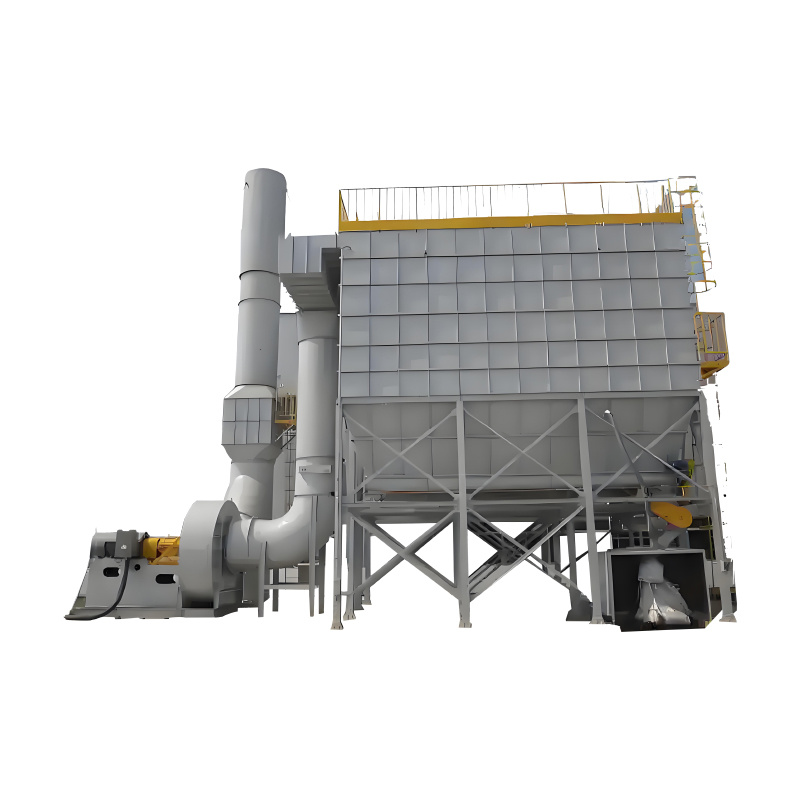
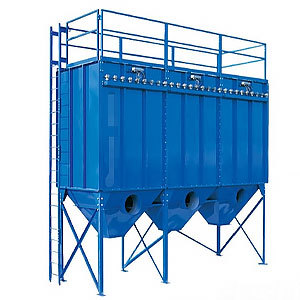
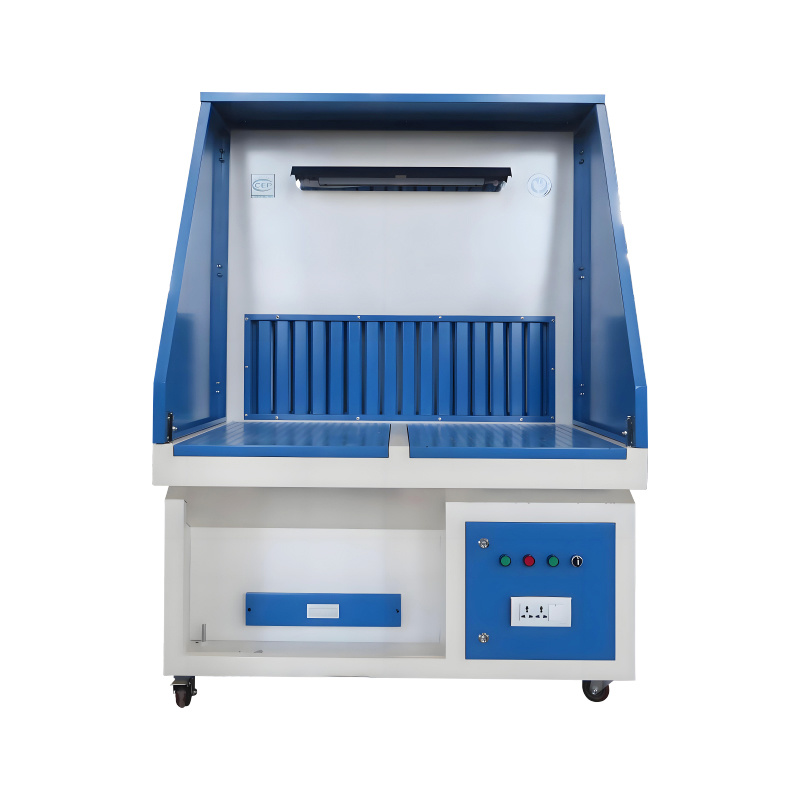
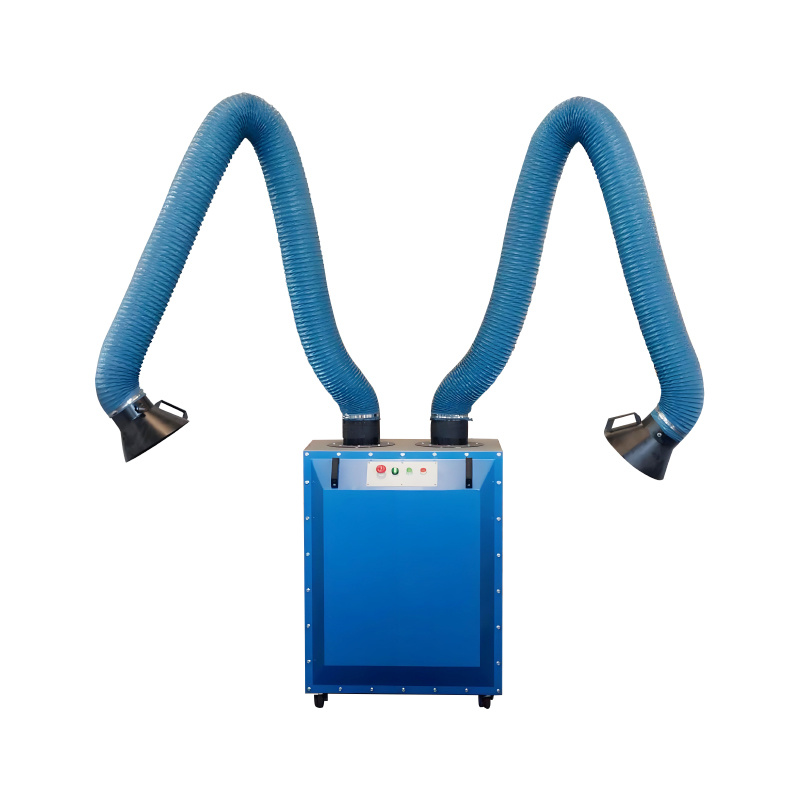









Analysis of the core performance advantages and acid-alkali corrosion resistance characteristics of sintered plate dust collectors
Jan 13,2026

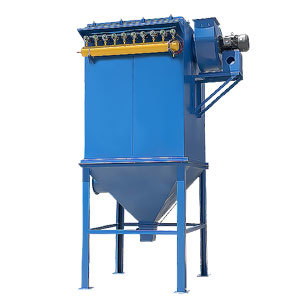
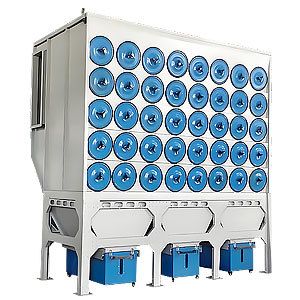
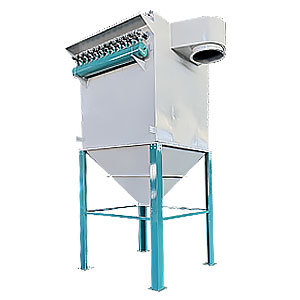
In the field of dust control in industrial production, certain scenarios demand not only efficient dust removal but also the ability to tackle complex working conditions such as acid-base dust and corrosive flue gas. As a dust removal equipment tailored for harsh working conditions, the sintered plate dust collector exhibits notable advantages in terms of acid-base corrosion resistance and stable operation, thanks to its unique filter material structure and material characteristics. It is widely used in industries involving corrosive media, such as chemical, metallurgical, and electroplating.
I. Core performance advantages of sintered plate dust collector
The sintered plate dust collector utilizes rigid porous sintered plates as the core filtering element. Compared to traditional bag-type and cartridge-type dust collectors, it has achieved multi-dimensional optimization in structural design and performance. Its core advantages are mainly reflected in the following aspects:
1. High filtration accuracy and stable purification effect
The sintered plate filter material is made of high molecular polymers through a special sintering process, forming a uniform microporous structure internally with a concentrated pore size distribution. It can precisely capture fine dust particles with a diameter of 0.1μm or larger, maintaining a stable filtration efficiency of over 99.99%. Unlike flexible filter materials, which are susceptible to airflow impact and thus affect filtration accuracy, the rigid structure of the sintered plate ensures the stability of the filtration channels. Even when dealing with high-concentration, fine dust particles, it can avoid dust penetration, and the emission concentration can easily meet stringent environmental standards.
2. Low operating resistance and more economical energy consumption
The surface of the sintered plate has undergone special treatment, exhibiting a smooth dust-repelling characteristic. Dust is less likely to adhere and only forms a thin dust layer on the surface of the filter material. This "surface filtration" mode significantly reduces the resistance to airflow, with an initial operating resistance of only 600-1000Pa, far lower than that of traditional bag filters. At the same time, the rapid formation and stable state of the dust layer result in minimal fluctuations in equipment resistance during long-term operation, eliminating the need for frequent adjustment of fan load. This effectively reduces the energy consumption of fan operation and is suitable for industrial scenarios involving long-term continuous operation.
3. High ash removal efficiency and low maintenance cost
Based on the smooth surface of the filter material and the rigid structure, when the sintered plate dust collector adopts the pulse jet dust cleaning method, high-pressure airflow can quickly strip the surface dust layer, ensuring thorough dust cleaning without residue. This avoids issues such as "paste bag" and "condensation and dust adhesion" that occur with traditional filter bags. The long dust cleaning cycle and low frequency not only reduce the consumption of compressed air but also reduce the wear of filter material and extend its service life. Typically, the service life of sintered plate filter material can reach 3-5 years, far exceeding that of traditional filter bags, significantly reducing the frequency of filter material replacement and maintenance costs.
4. Compact structure, adaptable to complex venues
The rigid structure of the sintered plate filter material allows for a dense arrangement, with a filtration area per unit volume significantly exceeding that of flexible filter materials. This results in a compact overall size for the dust collector, with a footprint only 1/2-1/3 of that of traditional bag filters. The equipment can be installed vertically, horizontally, or in a combined manner according to the actual site conditions, adapting to complex layout requirements such as small and medium-sized workshops and narrow spaces. It is particularly suitable for dust removal retrofits of existing production sites.
II. Core Analysis of the Acid and Alkali Corrosion Resistance Characteristics of Sintered Plate Dust Collectors
In industries such as chemical engineering, electroplating, metallurgy, and phosphate fertilizer manufacturing, dust often accompanies acidic or alkaline media. Traditional metal filters or ordinary polymer filters are prone to corrosion, leading to shortened equipment lifespan and reduced filtration efficiency. The acid and alkali corrosion resistance of sintered plate dust collectors makes them an ideal choice for such harsh working conditions. The core principles and advantages are as follows:
1. The chemical stability of the filter material is the core foundation
The core filter material of the sintered plate is primarily made of high-performance polymer, and for certain special applications, corrosion-resistant modifiers are added for sintering and molding. These polymer materials inherently possess excellent chemical stability and exhibit strong resistance to corrosive media such as acids, alkalis, and salts.
2. Enhance adaptability through anti-corrosion design of the overall structure
The sintered plate dust collector not only features corrosion-resistant filter materials, but also adopts an anti-corrosion design for the overall structure of the equipment: the equipment housing can be made of stainless steel, fiberglass reinforced plastic, or lined with anti-corrosion coating according to the working conditions, to prevent the erosion of corrosive gases or dust on the housing; the nozzles, pipelines, and other components of the pulse jet system are made of corrosion-resistant materials to ensure stable operation of the dust removal system in corrosive environments; the sealing parts are made of corrosion-resistant rubber or polytetrafluoroethylene materials to prevent leakage of corrosive media and ensure the tightness and operational stability of the equipment.
3. Performance stability advantage under corrosive conditions
In corrosive working conditions, the filter material of traditional dust collectors is prone to corrosion and damage, leading to dust leakage and equipment failure. However, the plastic sintered plate filter material can maintain structural integrity and filtration performance for a long time in a corrosive environment. Experimental data shows that after continuous operation for 1000 hours in a 20% hydrochloric acid mist environment, the filtration efficiency of polypropylene plastic sintered plates remains above 99.9%, with a resistance change rate of no more than 5%. In a 15% sodium hydroxide dust environment, its service life can be 3-4 times that of traditional filter bags. This stable performance avoids frequent downtime and replacement due to corrosion and damage of the filter material, ensuring the continuity of production.
III. Typical application scenarios of acid and alkali resistant sintered plate dust collectors
Based on its excellent acid and alkali corrosion resistance and comprehensive performance, the sintered plate dust collector is widely used in the following industrial scenarios where corrosive media are present:
1. Chemical industry: acid-base dust treatment in fertilizer production, corrosive flue gas purification during the synthesis of chemical raw materials, and chemical dust collection in pesticide production;
2. Electroplating industry: treatment of waste gas from electroplating baths, purification of hydrochloric acid mist and sulfuric acid mist in acid pickling processes, and collection of electroplating waste residue dust;
3. Metallurgical industry: purification of acidic flue gas during non-ferrous metal smelting, and recovery of smelting dust;
4. Other scenarios: acid flue gas treatment in waste incineration power plants, alkaline dust purification in the printing and dyeing industry, and lead dust and acid gas treatment in battery production.
Sintered plate dust collectors occupy an important position in the field of industrial dust control due to their core performance advantages, such as high-precision filtration, low-resistance operation, easy maintenance, and compact structure. Their acid and alkali corrosion resistance, based on high-performance polymer filter materials and overall anti-corrosion design, has solved the pain points of traditional dust collectors, such as short lifespan and unstable performance under corrosive conditions, providing reliable dust control solutions for industries such as chemical, electroplating, and metallurgy. For industrial production scenarios involving corrosive media, the application of sintered plate dust collectors not only ensures emission compliance but also reduces equipment maintenance costs and enhances production continuity, demonstrating significant technical value and application significance.
Hot Tags:

Contact Us
Tel:
WeChat:
WhatsApp:
E-mail:
Address:
338 National Road South, Longfengdian Village, Botou City, Hebei Province, China
JiuznTomine is expertly delivering technically complicated projects in markets & provides custom solutions for their customized need.


CONTACT INFO
Tel: +86 18531710311
WeChat: +86-18531710311
338 National Road South, Longfengdian Village, Botou City, Hebei Province, China