











Summary of common fault causes and quick solutions for dust removal frameworks
Jan 13,2026

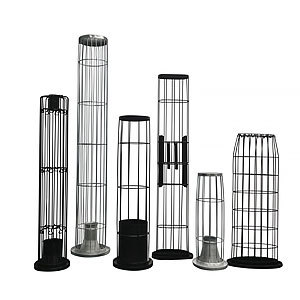
As the core supporting component of a bag filter, the performance stability of the dust removal frame directly affects the filtration efficiency, service life, and overall operational efficiency of the filter bag. During long-term operation in industrial production, due to various factors such as material selection, working conditions, installation, and maintenance, the dust removal frame is prone to malfunctions such as deformation, corrosion, and weld failure, which in turn lead to issues such as filter bag damage and dust leakage.
1. Common fault 1: frame deformation
1. Fault cause
Deformation of the dust removal framework is one of the most common malfunctions, primarily caused by three factors:
Firstly, the material selection is improper, the selected steel is of insufficient strength, or thin-walled pipes are used to reduce costs, which cannot withstand the tension after the installation of filter bags and the impact of airflow;
Secondly, there are defects in the manufacturing process. During welding, the perpendicularity and roundness of the framework are not ensured, or the spacing between the longitudinal and transverse reinforcements of the framework is too large, leading to poor structural stability;
Thirdly, improper transportation and installation can lead to deformation of the framework due to collision during transportation without proper protective measures; during installation, forcibly inserting the filter bag or misaligning the installation position can result in uneven local stress;
Fourthly, there is the impact of operating conditions. Under high temperature and high humidity conditions, steel undergoes severe thermal expansion and contraction, making it prone to plastic deformation after long-term use.
2. Quick solution
For a slightly deformed frame, mechanical correction methods can be employed: tools such as jacks and wrenches are used to gradually correct the deformed parts. During the correction process, a level and a tape measure are required for real-time measurement to ensure that the verticality error of the frame is ≤3mm/m and the roundness error is ≤2mm. After correction, the frame should be reinforced, and additional horizontal bar supports can be added to the deformed parts. If the frame is severely deformed and cannot be restored through correction, it is necessary to replace it with a new frame. When replacing, products that match the filter bag and meet the material strength requirements should be selected. Additionally, subsequent transportation protection and installation processes need to be optimized to avoid forced installation.
II. Common fault 2: frame corrosion
1. Fault cause
Corrosion failures often occur under working conditions involving acids and alkalis, high humidity, and corrosive gases. The main causes are:
Firstly, the anti-corrosion material was not selected according to the working conditions, and the ordinary carbon steel framework is prone to electrochemical corrosion in corrosive environments;
Secondly, the anti-corrosion treatment on the surface of the framework is inadequate, such as insufficient thickness of the galvanized layer and peeling of the electrophoretic coating, which cannot effectively isolate corrosive media;
Thirdly, the working environment is harsh, where high temperature and humidity accelerate the oxidation of steel. Acid-base dust or gas directly contacts the steel framework, damaging the surface anti-corrosion coating and causing deep corrosion;
Fourthly, the poor sealing performance of the equipment allows external rainwater and corrosive gases to penetrate into the interior of the dust collector, exacerbating the corrosion of the framework.
2. Quick solution
When minor corrosion is found on the frame, the corroded area can be polished first to remove rust, and then repainted with anti-corrosion coating or undergo re-galvanizing treatment. If the frame is severely corroded, it needs to be replaced immediately. When replacing, anti-corrosion material frames should be selected according to the working conditions, such as 304 stainless steel, 316L stainless steel frames, or carbon steel frames with enhanced electrophoresis and plastic spraying treatment on the surface. At the same time, the sealing performance of the dust collector needs to be checked, and aging seals need to be replaced to prevent the infiltration of external corrosive media. In high humidity conditions, a dehumidification device can be added to reduce the humidity inside the equipment.
III. Common fault 3: Weld failure and fracture
1. Fault cause
Weld failure and fracture directly affect the stability of the structural support. The main causes of these failures include:
Firstly, the welding quality is unqualified. During welding, there are issues such as incomplete penetration, insufficient soldering, and solder skips. The weld strength is inadequate, and under the long-term influence of filter bag tension and airflow vibration, the weld is prone to cracking;
Secondly, material fatigue occurs when the framework operates under high temperature and vibration conditions for a long time, causing fatigue damage to the steel and gradually leading to fracture;
Thirdly, the load is too large, and the filter bag is not cleaned in time after being blocked, resulting in an excessive pressure difference between the inside and outside of the filter bag. The pressure borne by the frame exceeds its load limit, causing it to break;
Fourthly, there was an installation error. During installation, the frame did not match the hole position of the flower plate, and forced installation led to localized stress concentration, resulting in fracture after long-term operation.
2. Quick solution
When the frame is found to be welded open, it is necessary to first shut down the machine and disassemble the frame. Repair welding should be carried out on the welded-open part, using welding rods that match the material of the frame to ensure that the weld is full and free of cold solder joint. After repair welding, the weld should be polished smooth to avoid scratching the filter bag. If the frame is fractured, a new frame needs to be replaced. During replacement, it is necessary to check the size of the holes in the perforated plate to ensure that the frame matches the holes precisely and avoid forced installation. At the same time, it is necessary to investigate the problem of filter bag blockage, optimize the ash removal parameters, and avoid excessive pressure difference in the filter bag. For working conditions with severe vibration, a cushion can be added at the connection between the frame and the perforated plate to reduce vibration impact.
IV. Common fault 4: Surface coating peeling
1. Fault cause
The detachment of the coating (electrophoretic coating, spray coating) on the surface of the frame will cause the frame to lose its anti-corrosion protection, accelerating corrosion. The main causes are:
Firstly, there are defects in the coating production process. The substrate surface is not cleaned thoroughly before coating, resulting in poor coating adhesion. The coating thickness is uneven, with some areas being too thin, making it prone to wear and peeling off;
Secondly, mechanical damage during installation and use, such as scratching and peeling of the coating due to friction and collision between the filter bag and the frame during installation, or improper operation during disassembly;
Thirdly, the operating temperature exceeds the standard, and the selected coating has insufficient temperature resistance, resulting in softening and peeling of the coating under high-temperature operating conditions.
2. Quick solution
For the framework with locally peeled-off coating, the peeled-off area can be polished first to remove residual coating and rust. After cleaning, a matching anti-corrosion coating should be reapplied. If the coating is peeled off over a large area and cannot be restored to its protective effect through local repair, it is necessary to replace the framework with a new one. When replacing, products with qualified coating processes should be selected to ensure proper substrate pretreatment and uniform coating thickness. At the same time, the installation and disassembly processes should be optimized to avoid excessive friction between the filter bag and the framework; the operating temperature should be checked, and a coating framework with matching temperature resistance should be selected.
V. Common fault 5: Installation misalignment, unable to match filter bag
1. Fault cause
The malfunctions of misplaced installation or incompatibility with filter bags often stem from early selection or manufacturing errors. The specific causes include:
Firstly, there is a mismatch between the frame size and the filter bag size, such as the frame length and diameter not matching the filter bag, or the frame grid plate interface size not matching the equipment grid plate hole position;
Secondly, the insufficient precision in the production of the framework, uneven arrangement of longitudinal bars, and overall bending of the framework result in the inability to smoothly fit the filter bag or install it onto the ceiling;
Thirdly, the installation personnel made operational errors by blindly installing without verifying the dimensions, resulting in a misalignment of the framework.
2. Quick solution
If the mismatch is due to errors in the frame size, it is necessary to contact the manufacturer to replace the frame with a precise size. Before replacement, the length, diameter, interface type, and equipment plate hole size of the filter bag should be carefully checked to ensure consistency of parameters. If the installation misalignment is due to insufficient manufacturing accuracy of the frame, the frame can be slightly corrected to ensure that it can be smoothly fitted into the filter bag and installed without deviation. If the correction is ineffective, a new frame needs to be replaced. At the same time, a strict size verification process should be established before installation to avoid blind installation.
VI. Key points of fault prevention
Compared to repairing after a failure, early prevention can significantly reduce the failure rate of the dust removal framework:
Firstly, precise selection involves choosing a frame with suitable material, anti-corrosion coating, and dimensions based on parameters such as operating temperature, humidity, corrosivity, and dust characteristics;
Secondly, strict quality control is implemented, selecting products with firm welding, uniform coating, and high manufacturing precision;
Thirdly, standardize installation and transportation to avoid operations such as collisions and forced installation;
Fourth, conduct regular maintenance, inspect the state of the framework periodically, promptly clean the surface dust, and address minor faults in a timely manner to prevent the faults from escalating;
Fifthly, optimize the operating conditions, set the ash removal parameters reasonably, avoid excessive pressure difference across the filter bag, and reduce the load and wear on the frame.
The malfunctions of the dust removal framework are often related to improper selection, manufacturing, installation, operating conditions, and maintenance. Common malfunctions such as deformation, corrosion, and weld failure not only affect the lifespan of the filter bag but also reduce the operational efficiency of the dust collector. By precisely analyzing the causes of malfunctions, adopting targeted and rapid solutions, and taking preventive measures in advance, the stable operation of the dust removal framework can be effectively ensured, thereby enhancing the reliability and economy of the entire dust removal system. For equipment maintenance personnel, mastering the aforementioned troubleshooting methods allows for quick response to malfunction needs and reduces downtime losses.
Hot Tags:
PREVIOUS:

Contact Us
Tel:
WeChat:
WhatsApp:
E-mail:
Address:
338 National Road South, Longfengdian Village, Botou City, Hebei Province, China
JiuznTomine is expertly delivering technically complicated projects in markets & provides custom solutions for their customized need.


CONTACT INFO
Tel: +86 18531710311
WeChat: +86-18531710311
338 National Road South, Longfengdian Village, Botou City, Hebei Province, China