












Guidelines for Daily Maintenance and Structural Stability Guarantee of Dust Removal Skeleton
Jan 12,2026

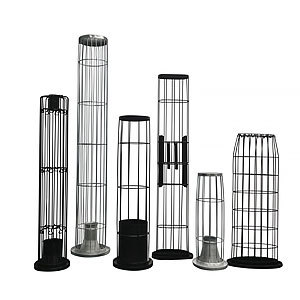
As the core supporting component of the bag filter, the performance stability of the dust removal skeleton directly affects the filtration efficiency, service life, and operational safety of the entire dust removal system of the filter bag. In industrial dust control scenarios, the dust removal framework is subjected to the weight of filter bags, dust impact, and airflow pressure for a long time, which can easily lead to problems such as rust, deformation, and weld cracking, resulting in dust removal system failures. This article will provide scientific and actionable maintenance guidelines from two dimensions: daily maintenance points and structural stability assurance strategies, to help enterprises improve the reliability of dust removal system operation.
1、 Core points for daily maintenance of dust removal skeleton
The core goal of daily maintenance is to timely detect and solve early hidden dangers in the skeleton, avoiding small problems from escalating into structural failures. It is necessary to establish a regular inspection and maintenance mechanism based on the operating conditions of the dust removal system, such as dust type, temperature, and humidity. The specific points are as follows:
1. Regular cleaning to avoid dust accumulation and corrosion hazards
Dust adhesion is one of the main reasons for the corrosion and jamming of dust removal skeletons, especially for sticky and corrosive dust. Long term accumulation can damage the surface protective layer of the skeleton. It is recommended to develop a weekly or monthly cleaning plan based on the amount and characteristics of dust emissions: for dry, non corrosive dust, compressed air blowing can be used to evenly blow from the inside of the skeleton outward to remove attached dust; For viscous or corrosive dust, it is necessary to disassemble the skeleton, soak it in neutral cleaning agent for cleaning, rinse it with clean water, and finally dry it thoroughly before installation and use. Attention should be paid to avoid using hard tools to scratch the surface of the skeleton during the cleaning process, in order to prevent damage to protective coatings such as galvanizing and spraying.
2. Conduct a comprehensive inspection to identify potential visual and structural hazards
Inspection is a key part of daily maintenance, and the following areas need to be inspected with emphasis:
① Surface condition: Observe whether there is rust, coating peeling, deformation, indentation, etc. on the skeleton, especially on the longitudinal and transverse bars, as well as the upper and lower ports and other stressed parts of the skeleton;
② Weld quality: Check whether there are cracks, detachment, virtual welding and other problems at each welding point. The weld is a stress concentration area, and once damaged, it can easily lead to overall instability of the skeleton;
③ Connecting components: Check whether the connection between the skeleton, flower board, and filter bag is firm, and whether the positioning pins, buckles, and other components are complete and not loose. Minor rust discovered during the inspection process can be promptly sanded with sandpaper and coated with protective paint. For serious problems such as deformation and weld cracking, the machine should be stopped immediately to replace the skeleton.
3. Lubrication and maintenance to ensure the flexibility of moving parts
For dust removal skeletons with functions such as lifting and vibration, their connecting shafts, bearings, and other components need to be regularly lubricated and maintained. It is recommended to apply a special lubricant that is resistant to high temperature and dust to the moving parts once every quarter to avoid component jamming or failure due to friction and wear. Before lubrication, it is necessary to clean the dust on the surface of the components to ensure that the lubricant can fully adhere; At the same time, avoid using excessive lubricants to prevent the formation of sludge after adsorbing dust, which can affect the operation of the skeleton.
4. Collaborative inspection of filter bags to reduce additional load on the skeleton
The filter bag is tightly attached to the skeleton, and any abnormal state of the filter bag will indirectly increase the load-bearing pressure of the skeleton. In daily maintenance, it is necessary to synchronously check whether the filter bag is blocked, damaged, or installed incorrectly. If the filter bag is blocked, it will increase the airflow resistance and indirectly squeeze the skeleton; If the filter bag is damaged, dust will directly wash away the surface of the skeleton, accelerating wear. When problems are found with the filter bag, it should be replaced or adjusted in a timely manner to avoid deformation or damage to the skeleton due to additional loads.
2、 Stability guarantee strategy for dust removal skeleton structure
Structural stability is the core of the long-term reliable operation of the dust removal framework, which needs to be comprehensively guaranteed from the aspects of installation specifications, working condition adaptation, regular testing, etc., to avoid the paralysis of the dust removal system caused by structural failure.
1. Standardize the installation process and avoid potential hazards during initial installation
Improper installation is the main cause of early deformation and uneven stress on the skeleton. During the installation process, the following specifications must be followed:
① Accurate positioning: Ensure that the skeleton is installed vertically on the flower board, avoiding tilting. The connection between the skeleton and the flower board should be tightly sealed to prevent dust from entering and washing the skeleton through gaps;
② Uniform force distribution: When installing the filter bag, avoid excessive stretching or squeezing of the filter bag, ensure that the filter bag is tightly attached to the skeleton without additional tension, and prevent excessive local force on the skeleton;
③ Batch installation verification: For multi unit dust removal systems, it is necessary to check the installation height and verticality of each skeleton one by one to ensure overall force balance and avoid individual skeletons bearing additional loads due to deviations.
2. Adapt to the characteristics of the working conditions, optimize the skeleton material and structural design
The dust characteristics, temperature, and humidity vary greatly in different industrial scenarios, requiring targeted selection of skeleton materials and structures to ensure stability from the source
① Material adaptation: Stainless steel skeleton can be selected for high temperature scenarios (temperature>120 ℃); Galvanized, spray painted or stainless steel frame should be selected for corrosive dust scenes, and the integrity of the protective coating should be checked regularly; Carbon steel spray coating skeleton can be used for dry and room temperature dust scenes;
② Structural optimization: For the skeleton of large-diameter filter bags, it is necessary to increase the number of longitudinal bars or adopt reinforced bar design to enhance the deformation resistance of the skeleton; In areas with strong dust impact, wear-resistant protective covers can be added to the windward side of the skeleton to reduce direct erosion of the skeleton by dust.
3. Regular special inspections to promptly detect structural damage
In addition to daily inspections, it is recommended to conduct a special structural inspection every six months or one year, especially for dust removal systems with harsh operating conditions:
① Dimensional accuracy testing: Use tools such as tape measures and calipers to measure key dimensions such as the height, diameter, and spacing between longitudinal bars of the skeleton. If the deviation exceeds 5mm, it should be corrected or replaced in a timely manner to avoid uneven stress on the filter bag due to dimensional deviation;
② Load bearing capacity test: For the dust removal skeleton in the core production process, the deformation of the skeleton can be tested by simulating the weight of the filter bag loaded with dust. If the deformation exceeds 3%, it indicates that the structural strength of the skeleton is insufficient and needs to be replaced or upgraded;
③ Corrosion depth detection: For the skeleton under corrosive working conditions, a coating thickness gauge is used to detect the thickness of the protective coating, and an ultrasonic thickness gauge is used to detect the thickness of the skeleton substrate. If the coating damage area exceeds 20% or the substrate corrosion depth exceeds 1mm, the skeleton needs to be replaced immediately.
4. Establish and maintain archives to achieve full lifecycle management
To accurately grasp the operational status of each batch and skeleton, it is recommended to establish a comprehensive maintenance file that records the following information: the procurement batch, material, installation time, problems and solutions discovered during daily inspections, cleaning and lubrication records, and special testing results of the skeleton. By using archival data, the service life of the skeleton can be predicted, and a replacement plan can be developed in advance to avoid the impact of sudden skeleton failure on production.
3、 Common problem handling and precautions
1. Quick solutions for common problems
① Slight corrosion: Polish the corroded area with sandpaper until the substrate is exposed, clean the floating dust, and apply the same type of protective paint as the original coating. After drying, install and use it again;
② Local deformation: For slightly deformed skeletons, mechanical correction can be used to restore dimensions. After correction, the welds need to be checked for integrity, and if necessary, welding reinforcement should be carried out; If the deformation is severe (such as bending or indentation exceeding 10mm), the skeleton needs to be replaced directly;
③ Weld cracking: First, clean the dust and rust around the weld seam, and use welding rods of the corresponding material for repair welding. After repair welding, the weld seam needs to be polished to a flat surface to avoid stress concentration;
④ Coating peeling: For small areas of peeling, protective paint can be applied. For large areas of peeling, galvanizing or spraying treatment needs to be carried out again, otherwise it will accelerate the corrosion of the skeleton.
2. Safety precautions for maintenance
① Shutdown operation: All maintenance work must be carried out after the dust removal system is shut down or powered off to avoid personnel injury caused by airflow impact or mechanical movement;
② Protective measures: When handling corrosive dust or using cleaning agents, protective equipment such as gloves and masks should be worn to avoid chemical damage;
③ High altitude operation protection: For the dust removal framework installed at high altitude, a safety platform should be erected or safety belts should be fastened during maintenance to prevent falling from high altitude;
④ Component storage: The disassembled skeleton should be stored properly to avoid compression and collision. The storage environment should be dry and ventilated to prevent rusting.
The daily maintenance and structural stability guarantee of the dust removal skeleton are key links in improving the operational efficiency of the dust removal system and reducing operation and maintenance costs. Enterprises need to establish a full process maintenance mechanism of "daily inspection+regular cleaning+special testing" based on their own production conditions, and ensure the long-term stable operation of the skeleton through standardized installation, working condition adaptation, and timely problem handling. At the same time, a comprehensive maintenance archive can achieve full lifecycle management of the skeleton, providing data support for optimizing subsequent maintenance strategies and helping the industrial dust control system to continue to function efficiently.
Hot Tags:


Contact Us
Tel:
WeChat:
WhatsApp:
E-mail:
Address:
338 National Road South, Longfengdian Village, Botou City, Hebei Province, China
JiuznTomine is expertly delivering technically complicated projects in markets & provides custom solutions for their customized need.


CONTACT INFO
Tel: +86 18531710311
WeChat: +86-18531710311
338 National Road South, Longfengdian Village, Botou City, Hebei Province, China