












Common causes and targeted preventive measures for dust bag damage
Jan 06,2026
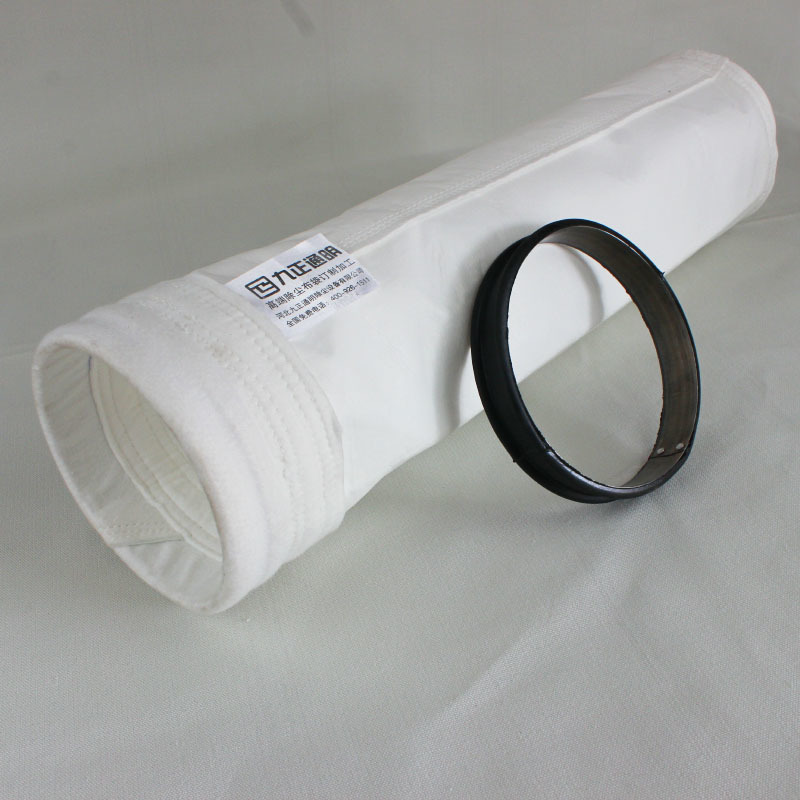
In industrial dust removal systems, the dust bag is the core filtering element, and its operating status directly affects the dust removal efficiency, equipment stability, and operating costs. Damaged cloth bags can lead to dust leakage, which not only pollutes the environment and affects production compliance, but may also cause equipment failure. This article will analyze in detail the common causes of dust bag damage and propose targeted scientific preventive measures, providing reference for enterprise equipment operation and maintenance.
1、 Common causes of dust bag damage
The damage of dust removal bags is not caused by a single factor, but is often related to multiple aspects such as adapting to working conditions, operating standards, and equipment maintenance. The common reasons are mainly divided into the following categories:
(1) The filtering wind speed is too high
The filtering wind speed is a key parameter that affects the lifespan of the bag. If the wind speed setting exceeds the bearing range of the bag material and working conditions, the scouring force of the dust containing gas on the bag fibers will significantly increase. Long term high load scouring will cause wear and breakage of the bag surface fibers, ultimately resulting in holes. Especially when dealing with high concentration and coarse particle dust, excessive wind speed can exacerbate this loss. Usually, when the wind speed exceeds 1.2m/min, the risk of wear will significantly increase.
(2) Inappropriate adaptation of dust characteristics
The dust characteristics vary greatly under different working conditions. If the bag material does not match the dust properties, it is highly likely to cause damage:
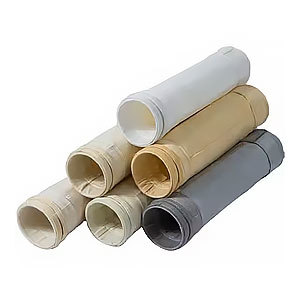
One is high-temperature dust. If the temperature resistance limit of the selected bag is lower than the actual flue gas temperature, it will cause the bag fibers to soften, shrink, carbonize, and the strength to decrease, resulting in damage;
The second type is corrosive dust, which can react chemically with bag fibers, damaging the fiber structure and causing bag brittleness and cracking;
The third type is hard particulate dust, such as metal shavings, quartz sand, etc. These types of dust have high hardness and can have a strong grinding effect on cloth bags, leading to local damage due to long-term accumulation.
(3) Installation and operation are not standardized
The negligence in the installation process is a common cause of early damage to the cloth bag:
Firstly, if the cloth bag is not fully unfolded during installation or does not fit tightly with the flower board or skeleton, the airflow will pass through the gaps at high speed during operation, forming local eddies that can wash away the cloth bag and cause damage;
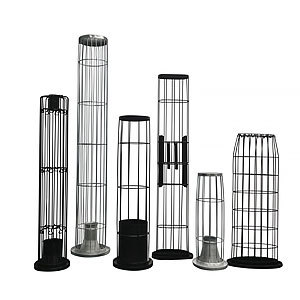
Secondly, the skeleton may have burrs, deformations, and other issues, which can directly scratch the inner wall of the cloth bag;
Thirdly, improper operation, such as not pre spraying before starting up or not cleaning the dust in a timely manner during shutdown, can cause dust to clump in the bag. When restarting, the airflow can impact and clump, causing damage to the bag;
In addition, unreasonable parameter settings for the dust cleaning system, such as excessive pulse pressure and fast dust cleaning frequency, can lead to excessive vibration of the bag, fiber fatigue, and shorten its service life.
(4) The impact of equipment component failure
Malfunctions of other components in the dust removal system can indirectly lead to bag damage:
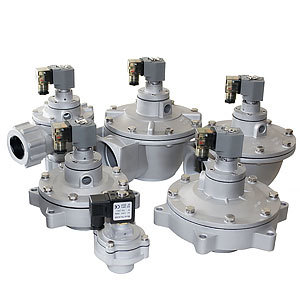
One is the malfunction of the pulse valve, such as blockage or leakage, which can cause uneven dust cleaning, excessive dust accumulation in some areas, and increase the load on the bag. At the same time, the high-speed airflow generated by the leakage will wash the bag;
Secondly, the deformation and corrosion of the flower board result in sharp edges of the flower board holes and wear on the bag mouth;
The third issue is the damage to the flue gas diversion device, uneven distribution of airflow, and high wind speed in some areas, which exacerbates the wear of the bag.
2、 Targeted preventive measures
In response to the above-mentioned reasons for damage, preventive measures need to be taken from multiple dimensions such as working condition adaptation, installation standards, and operation and maintenance management to extend the service life of dust removal bags
(1) Scientifically set filtering wind speed to adapt to working conditions and requirements
Based on parameters such as dust concentration, particle size, and bag material, set the filtration wind speed reasonably: for fine particles and low concentration dust, the wind speed can be controlled between 0.8-1.0m/min; For coarse particles and high concentration dust, the wind speed should be reduced to below 0.6-0.8m/min. At the same time, the processing air volume can be increased by increasing the filtering area, avoiding simply increasing the wind speed to meet the demand. In addition, regularly monitor the system resistance, and when the resistance increases abnormally, promptly check whether the wind speed exceeds the standard to ensure that the system operates within a reasonable wind speed range.
(2) Accurately match bag material and optimize pre-treatment process
Select the appropriate bag material based on the characteristics of the dust: polyester needle punched felt or acrylic felt can be used for processing high-temperature flue gas; High temperature flue gas can be treated with aramid felt or PPS felt; For highly corrosive flue gas, PTFE coated cloth bags can be used; When dealing with hard particulate dust, surface coated or wear-resistant cloth bags can be used. At the same time, optimize the dust pretreatment process, such as adding a cyclone dust collector before the flue gas enters the dust removal system to remove large particles and high hardness dust first; Install cooling devices for high-temperature flue gas to ensure that the flue gas temperature is below the temperature limit of the bag; Add neutralizing agents to the flue gas to reduce the corrosiveness of corrosive dust.
(3) Standardize the installation process and optimize operational standards
Strict quality control is required during the installation process
One is to ensure that the bag is fully unfolded and tightly adhered to the skeleton, with the bag opening firmly connected to the flower board and well sealed;
The second is to inspect the skeleton before installation, remove burrs, correct deformations, and ensure that the surface of the skeleton is smooth;
The third is to establish standardized operating procedures, pre spray the bag before starting up, form an initial dust layer, and avoid direct filtration causing bag blockage; Clean the dust promptly after shutdown to avoid long-term accumulation of dust in the bag.
In addition, optimize the parameters of the dust cleaning system, adjust the pulse pressure and cleaning frequency according to the dust accumulation situation, and avoid excessive or insufficient dust cleaning.
(4) Strengthen equipment maintenance and timely troubleshooting
Establish a regular operation and maintenance mechanism:
One is to regularly inspect the cleaning components such as pulse valves and spray pipes to ensure their normal operation, and replace pulse valves that are blocked or leaking in a timely manner;
The second is to inspect components such as flower boards and skeletons, correct or replace deformed or corroded flower boards, and regularly clean the dust and debris inside the flower board holes;
The third is to check the flue gas diversion device to ensure even distribution of airflow;
The fourth is to regularly inspect the operation status of the cloth bag, by observing the chimney emissions and monitoring changes in system resistance, etc., to promptly detect and replace damaged cloth bags to avoid the expansion of damage.
In addition, establish operation and maintenance files to record information such as bag replacement cycles and changes in operating parameters, providing data support for optimizing operation and maintenance plans in the future.
The damage of dust removal bags is often the result of various factors such as improper adaptation to working conditions, non-standard operation, and untimely maintenance. Enterprises need to take targeted preventive measures from multiple aspects such as material selection, parameter setting, installation operation, and daily operation and maintenance based on their own production conditions, in order to effectively extend the service life of the bag, ensure the stable and efficient operation of the dust removal system, and reduce production and operation costs.
Hot Tags:


Contact Us
Tel:
WeChat:
WhatsApp:
E-mail:
Address:
338 National Road South, Longfengdian Village, Botou City, Hebei Province, China
JiuznTomine is expertly delivering technically complicated projects in markets & provides custom solutions for their customized need.


CONTACT INFO
Tel: +86 18531710311
WeChat: +86-18531710311
338 National Road South, Longfengdian Village, Botou City, Hebei Province, China