












Reasons for deformation and damage of dust removal skeleton and key points for maintenance and replacement
Jan 06,2026

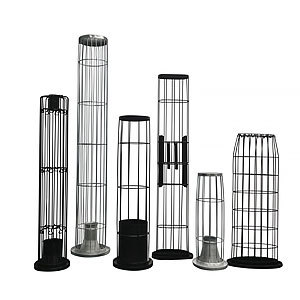
In industrial dust removal systems, the dust removal skeleton (also known as the filter bag skeleton) serves as the core component supporting the dust removal bag, and its structural stability directly determines the filtration form, reasonable airflow distribution, and service life of the bag. If the skeleton undergoes deformation, damage, or other issues, it may not only cause uneven stress on the bag and increased local wear, but also lead to chain failures such as bag detachment and dust leakage, affecting the normal operation of the dust removal system. This article will systematically analyze the common causes of deformation and damage to dust removal skeletons, and elaborate on corresponding maintenance strategies and replacement points, providing professional reference for enterprise equipment operation and maintenance.
1、 Common causes of deformation and damage to dust removal skeleton
The deformation and damage of the dust removal skeleton are not accidental, and are closely related to material selection, manufacturing process, installation operation, working environment, and operation and maintenance management. The specific causes can be summarized into the following categories:
(1) Improper material selection and adaptation to working conditions
Material is the basis for determining the load-bearing capacity and environmental resistance of the skeleton, and selection errors can easily lead to early damage:
Firstly, there is a deviation in the adaptation of high-temperature working conditions. If the temperature resistance limit of materials such as carbon steel and ordinary stainless steel used is lower than the actual temperature of the flue gas, the skeleton will experience excessive thermal expansion and contraction due to high temperature, leading to bending and deformation, and in severe cases, weld cracking may occur;
Secondly, there is insufficient adaptation to the corrosive environment. In flue gas conditions with high acidity, alkalinity, and humidity, if corrosion-resistant materials are not selected, the skeleton will rust, which will weaken the strength of the components and ultimately lead to deformation or even fracture of the skeleton;
Thirdly, the material specifications are insufficient, the diameter of the skeleton members is too thin, the spacing is too large, or the selected steel strength grade does not meet the standard, which cannot withstand the impact pressure and dust accumulation weight during bag cleaning, and is prone to overall deformation.
(2) There are defects in the manufacturing process
The manufacturing accuracy of the skeleton directly affects its structural stability, and process defects are inherent damage hazards:
One is poor welding quality, such as weak welding points, incomplete penetration of welds, and the existence of virtual welding and leakage. When the skeleton is subjected to force or vibration, the welds are prone to cracking, leading to local structural failure;
Secondly, there is a deviation in the molding process. During skeleton processing, the straightness of the rod does not meet the standard, the overall roundness error is too large, or the perpendicularity deviation between the skeleton mouth ring and the rod cannot be accurately adhered to the bag after installation, resulting in local stress concentration during operation and deformation;
The third issue is inadequate surface treatment, such as incomplete rust removal, uneven or peeling coating thickness, which makes the skeleton susceptible to environmental corrosion and accelerates damage.
(3) Installation and operation are not standardized
The non-standard installation and operation process is an important cause of skeleton deformation and damage:
Firstly, the installation process was rough, and the framework was not handled gently during installation. The framework was forcibly inserted into a cloth bag or docked with a flower board, resulting in bending of the framework members and deformation of the mouth ring;
Secondly, there is a deviation in installation positioning, as the skeleton does not fully adhere to the flower board and cloth bag after installation, resulting in issues such as offset and tilt. During operation, the impact of airflow and the shrinkage of the cloth bag can cause uneven forces on the skeleton, leading to long-term accumulation and deformation;
Thirdly, if the operating parameters are unreasonable, the pulse pressure of the cleaning system is too high, and the cleaning frequency is too fast, it will cause the bag to contract violently and repeatedly impact the skeleton. Long term high-frequency impact can easily lead to fatigue deformation of the skeleton;
In addition, the failure to pre spray before starting up and the failure to clean the dust in a timely manner after shutting down resulted in dust clumping in the bag. When restarting, the airflow impacted the clumping, indirectly causing impact loads on the skeleton and resulting in damage.
(4) Lack of working environment and operation and maintenance
Poor working conditions and delayed operation and maintenance can accelerate skeleton damage:
One is that the flue gas contains too many impurities. If the flue gas contains a large number of hard particles, these particles will impact the skeleton with the airflow, and at the same time, they will rub against the skeleton during the ash cleaning process, causing wear and tear of the skeleton members, thinning of the wall thickness, and deformation after the strength decreases;
The second issue is excessive system vibration. If components such as fans and motors vibrate abnormally during the operation of dust removal equipment, the vibration will be transmitted to the skeleton. Long term high-frequency vibration can easily cause loosening of the skeleton welds and fatigue deformation of the rods;
The third issue is the lack of operation and maintenance management, where the skeleton is not regularly inspected and maintained, making it difficult to detect early rusting, deformation, weld cracking, and other problems in a timely manner. Small faults gradually expand, ultimately leading to complete damage to the skeleton.
2、 Key points for maintenance and replacement of dust removal skeleton
In response to the above causes, targeted measures need to be taken from the entire process of selection, installation, operation and maintenance, and replacement to ensure the stable operation of the dust removal framework:
(1) Scientific selection, adapting to working conditions and requirements
Accurate selection based on actual working conditions is the foundation for extending the lifespan of the skeleton
One is to select materials based on the flue gas temperature, and ordinary carbon steel spray painted skeleton can be used for normal temperature conditions (<120 ℃); High temperature resistant stainless steel frame is selected for medium temperature conditions (120-200 ℃); High temperature working conditions (>200 ℃) should use high-temperature alloy material skeleton;
Secondly, for corrosive working conditions, corrosion-resistant materials such as 316L stainless steel and fiberglass are selected, or special anti-corrosion treatment is applied to the skeleton;
The third is to determine reasonable specifications, select suitable skeleton with appropriate rod diameter and spacing based on bag size, filtering wind speed, and dust weight, to ensure that the skeleton's load-bearing capacity meets the requirements of working conditions;
The fourth priority is to choose high-quality skeletons that are firmly welded and have uniform surface treatment.
(2) Standardize installation and control operation details
The installation and operation process must strictly follow standardized procedures:
Firstly, standardize the installation process, check the appearance of the skeleton before installation (without deformation, burrs, weld cracking, etc.), handle it gently during installation, ensure that the skeleton is smoothly inserted into the cloth bag, accurately docked with the flower board, firmly fixed, and avoid deviation and tilt;
Secondly, calibrate the installation accuracy, and check the straightness, roundness, and perpendicularity of the skeleton to the flower board after installation to ensure that the skeleton is completely in contact with the cloth bag and subjected to uniform force;
Thirdly, optimize the operating parameters, set the cleaning pulse pressure and cleaning frequency reasonably according to the characteristics of dust and the type of bag, and avoid excessive impact of the bag on the skeleton; At the same time, strict adherence to the operating procedures of pre spraying during startup and timely cleaning during shutdown is required to reduce the impact of dust agglomeration on the skeleton.
(3) Regular maintenance and timely investigation of hidden dangers
Establish a normalized operation and maintenance mechanism to promptly identify and address early issues:
One is to conduct regular inspections, with a comprehensive check of the skeleton at least once a month, focusing on whether there is deformation, rust, weld cracking, and wear of the members. At the same time, check the fit of the skeleton with the flower board and cloth bag;
The second is targeted maintenance, timely rust removal and repainting treatment for slightly corroded skeletons; Re weld and reinforce the skeleton with loose welds; Correct the slightly deformed skeleton to ensure its structural stability;
The third is to optimize the working environment by adding pre-treatment devices before the flue gas enters the dust removal system to remove large particle impurities and water vapor, reducing the impact and corrosion on the skeleton;
The fourth is to record operation and maintenance data, establish skeleton operation and maintenance files, record the installation time, inspection situation, maintenance content, and replacement cycle of the skeleton, and provide data support for subsequent operation and maintenance optimization.
(4) Clear standards and standardized replacement process
When the skeleton encounters the following situations, it needs to be replaced in a timely manner:
One is that the skeleton has obvious deformation (such as bending or exceeding the ellipticity limit), which cannot be corrected or cannot be used normally even after correction;
Secondly, the skeleton members are severely corroded and worn, with a wall thickness reduction of more than 30%, or experiencing fractures and large-scale cracking of welds;
Thirdly, the coating on the surface of the skeleton has peeled off extensively, accelerating the corrosion rate and affecting its service life;
Fourthly, the compatibility between the skeleton and the cloth bag or flower board decreases, resulting in frequent damage and detachment of the cloth bag.
The replacement process should follow:
① Shutdown and clean the dust to ensure that there is no residual dust in the dust removal system;
② Dismantle the damaged skeleton and corresponding cloth bag;
③ Install a new skeleton to ensure that the installation accuracy meets the requirements;
④ After replacing the bag with a new one, perform a pre spray operation before starting up and check the system's operating status.
When replacing, it is important to note that the material and specifications of the new skeleton should be consistent with the original skeleton, or selected based on optimized parameters according to the working conditions to ensure compatibility with the dust removal system.
The deformation and damage of the dust removal skeleton are the result of multiple factors such as material, process, operation, and environment. Its stable operation is the fundamental guarantee for the efficient operation of the dust removal system. Enterprises need to start with precise selection, standardized installation, regular maintenance, and timely replacement based on their own production conditions, and implement targeted operation and maintenance measures. This not only extends the service life of the dust removal skeleton, but also reduces bag wear and system operation and maintenance costs, ensuring the long-term stable and compliant operation of the dust removal system.
Hot Tags:


Contact Us
Tel:
WeChat:
WhatsApp:
E-mail:
Address:
338 National Road South, Longfengdian Village, Botou City, Hebei Province, China
JiuznTomine is expertly delivering technically complicated projects in markets & provides custom solutions for their customized need.


CONTACT INFO
Tel: +86 18531710311
WeChat: +86-18531710311
338 National Road South, Longfengdian Village, Botou City, Hebei Province, China