













Key points for maintenance and upkeep of dust removal framework to avoid deformation affecting operation
Dec 30,2025

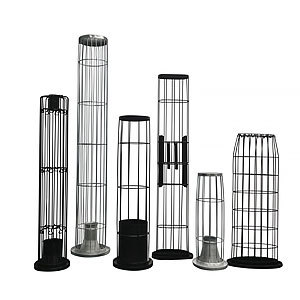
The dust removal skeleton, as the core supporting component of the bag filter, runs through the inside of the filter bag. Its main function is to maintain the stable shape of the filter bag, ensure sufficient filtering area, and provide support for the dust cleaning process, ensuring smooth dust removal. If the dust removal skeleton undergoes deformation, corrosion, fracture, and other problems, it will directly lead to the collapse and damage of the filter bag, thereby reducing the dust removal efficiency, increasing equipment resistance, and even causing chain failures.
1、 Firstly, clarify the core reason why the dust removal framework is prone to deformation
To achieve precise maintenance and upkeep, it is necessary to first understand the common causes of deformation in the dust removal framework and avoid risks from the source:
1. Improper material selection: Failure to select suitable materials according to the working conditions resulted in rapid corrosion and decreased strength of the skeleton during use, leading to deformation;
2. Improper installation/disassembly: Forcefully squeezing or knocking the skeleton during installation, or violently pulling and pulling during disassembly, resulting in uneven local stress on the skeleton, bending, twisting, and deformation;
3. High temperature impact: When dealing with high-temperature flue gas, the heat resistance of the skeleton material is insufficient, or insulation protection measures are not taken, resulting in uneven thermal expansion of the skeleton and deformation;
4. Dust impact and accumulation: A large amount of large particles of dust in the dusty airflow impact the skeleton at high speed, or the dust accumulates in the gap between the skeleton and the filter bag for a long time, generating sustained pressure and causing deformation of the skeleton;
5. Delayed maintenance: Failure to clean and inspect the skeleton for a long time leads to increased corrosion and wear, ultimately resulting in insufficient strength and deformation.
2、 Daily maintenance points: Must be done daily/weekly to promptly identify potential hazards
Daily maintenance is the foundation for avoiding skeleton deformation, and it is necessary to develop the habit of regular inspections, with a focus on the following:
1. Appearance inspection
1. Through the dust collector inspection door, visually observe whether the exposed part of the skeleton is bent, twisted, or if the welding points are detached; If conditions permit, 1-2 filter bags can be extracted along with the skeleton for a comprehensive inspection of the overall shape of the skeleton;
2. Check whether there are obvious corrosion and rust marks on the surface of the skeleton, especially paying attention to weak parts such as welding points and interfaces of the skeleton.
2. Installation status verification
1. Confirm whether the fit between the skeleton and the filter bag is smooth: the skeleton should be able to easily insert into the filter bag without any jamming or squeezing phenomenon; If insertion is difficult, it may be due to slight deformation of the skeleton or abnormal size of the filter bag;
2. Check the alignment between the top of the skeleton and the spray pipe: The top of the skeleton should be facing the nozzle of the spray pipe without obvious deviation, to avoid the impact of airflow on the skeleton during dust cleaning, which may cause long-term deformation.
3. Inspection of working condition correlation
1. Monitoring flue gas temperature: If dealing with high-temperature flue gas, it is necessary to record the flue gas temperature daily to ensure that it does not exceed the heat resistance limit of the skeleton material;
2. Check the characteristics of dust: If the dust contains large particles and has high hardness, observe whether there are traces of impact on the skeleton, and adjust the distribution of intake airflow if necessary to reduce the direct impact of dust on the skeleton.
3、 Regular maintenance focus: deepen according to the cycle, improve the stability of the skeleton
In addition to daily inspections, deep maintenance should be carried out according to a fixed cycle. Based on the differences in working conditions, it is recommended that the maintenance cycle be as follows (the cycle can be shortened for harsh working conditions):
1. Monthly maintenance: Cleaning and detailing reinforcement
1. Clean the surface of the skeleton: Blow the extracted skeleton with compressed air to remove any dust adhering to the surface; If the dust is compacted, it can be washed with low-pressure water;
2. Check the firmness of the welding points: Gently shake the skeleton ribs with your hand to check if the welding points are loose or detached; If there is any looseness, timely repair welding and reinforcement should be carried out.
2. Quarterly maintenance: comprehensive inspection and protection
1. Deformation detection: Use tools such as rulers and tape measures to measure key dimensions of the skeleton, such as length and diameter, and compare them with standard dimensions. If the deviation exceeds 3mm, it should be corrected or replaced in a timely manner;
2. Anti corrosion protection: For carbon steel skeletons, if the surface paint falls off, it is necessary to re polish and remove rust, and apply special paint that is resistant to high temperature and corrosion; For the skeleton under corrosive working conditions, the surface anti-corrosion coating can be checked for integrity, and any damaged areas should be repaired in a timely manner.
3. Annual maintenance: Batch inspection and replacement
1. Batch inspection: Conduct a comprehensive investigation of all skeletons, screen out skeletons with severe deformation, corrosion, and solder joint detachment, and replace them in batches (it is recommended to use skeletons of the same model and material as backup to ensure timely replacement);
2. Material review: Based on the annual working condition summary, review whether the skeleton material is suitable for the current working condition (if it is found that the original material is not heat-resistant or prone to corrosion, a more suitable material needs to be replaced to fundamentally avoid deformation).
4、 Core preventive measures: Avoid skeleton deformation from the source
Compared to post correction, source prevention is more effective in avoiding skeletal deformation, with a focus on the following three points:
1. Accurately select the skeleton material
1. Normal temperature condition (≤ 120 ℃), no corrosion: high-quality carbon steel skeleton is selected, and the surface is galvanized or sprayed with plastic treatment;
2. High temperature conditions (120-200 ℃): Use stainless steel frames such as 304 and 316L;
3. Corrosive working conditions: Use corrosion-resistant stainless steel skeleton or apply PTFE coating treatment on the surface of carbon steel skeleton.
2. Standardize installation and disassembly operations
1. During installation: Handle the frame gently, align it with the filter bag opening, and slowly insert it to avoid forced squeezing or rotation; If insertion is difficult, it is necessary to check whether the filter bag is damaged or there is a size deviation. Do not use force to operate it;
2. When disassembling: First remove the fixing device of the filter bag, then slowly extract the skeleton to avoid pulling the skeleton or filter bag and prevent deformation of the skeleton under stress.
3. Optimize the working environment
1. High temperature flue gas pretreatment: If the flue gas temperature fluctuates greatly or exceeds the limit, a cooling device (such as a cooler) should be added before the dust collector to stabilize the flue gas temperature;
2. Reduce dust impact: Install deflectors and buffering devices in the intake duct to reduce the velocity of dusty airflow and prevent large particles of dust from directly impacting the skeleton;
3. Control the humidity of flue gas: For high humidity flue gas, a dehydration device should be installed to prevent moisture from condensing on the surface of the skeleton, causing rust and deformation.
5、 Post deformation treatment method: Timely remedy to avoid the expansion of the fault
If slight deformation is found in the skeleton, the following remedial measures can be taken in a timely manner; If the deformation is severe, it needs to be replaced directly to avoid damaging the filter bag:
1. Slight bending deformation: Remove the deformed skeleton and slowly correct it with tools such as jacks and wrenches; After correction, use a ruler to check the size to ensure compliance with the standard, and at the same time, weld and reinforce the welding points;
2. Local rusting and deformation: If the local strength decreases and deforms due to rusting, it is necessary to thoroughly remove rust and repair the anti-corrosion coating first; If the rust area is too large and the strength cannot be guaranteed, it needs to be replaced directly;
3. Replacement precautions: When replacing the skeleton, it is necessary to choose a product that is consistent with the original model and material, to ensure that it matches the internal structure of the filter bag and dust collector; After installation, check the installation status again to avoid the new skeleton from deforming again due to improper installation.
6、 Maintenance safety precautions
1. Before maintenance, the power supply of the dust collector and related equipment must be cut off, the intake valve must be closed, and warning signs must be hung to prevent accidental start-up;
2. When removing/inserting the skeleton, protective gloves and helmets should be worn to avoid being scratched by sharp edges or welding points of the skeleton;
3. When handling the skeleton under high temperature and corrosive working conditions, it is necessary to take measures to prevent burns and corrosion;
4. During the maintenance process, avoid tools and debris falling into the dust collector to prevent damage to other components.
In summary, the core of maintenance for the dust removal framework lies in "early detection through daily monitoring, strong performance through regular maintenance, and prevention of deformation at the source". Through standardized maintenance operations, not only can deformation of the skeleton be effectively avoided, but the service life of the skeleton and filter bag can also be extended, ensuring the continuous and stable operation of the bag filter. For operation and maintenance personnel, mastering the above maintenance points can significantly reduce equipment failure rates and improve the operational efficiency of dust removal systems.
Hot Tags:


Contact Us
Tel:
WeChat:
WhatsApp:
E-mail:
Address:
338 National Road South, Longfengdian Village, Botou City, Hebei Province, China
JiuznTomine is expertly delivering technically complicated projects in markets & provides custom solutions for their customized need.


CONTACT INFO
Tel: +86 18531710311
WeChat: +86-18531710311
338 National Road South, Longfengdian Village, Botou City, Hebei Province, China