












Optimization methods for cyclone dust collector performance and key points for improving dust removal efficiency
Dec 24,2025

Cyclone dust collectors are widely used in dust removal systems in various industrial fields such as mining, building materials, chemical industry, and grain processing, due to their advantages of simple structure, low cost, convenient maintenance, and adaptability to high concentration dusty airflow. The core working principle is to use centrifugal force to separate and collect dust particles in the dusty airflow. However, in actual operation, the dust removal efficiency is prone to fluctuations due to factors such as equipment structural parameters, operating conditions, and maintenance levels.
1、 Optimize structural parameters and establish a solid foundation for efficiency
The structural parameters of a cyclone dust collector directly determine the trajectory of airflow and the magnitude of centrifugal force, and are the core factors affecting dust removal efficiency. Scientific optimization of key structural components can improve separation efficiency from the root.
1. Reasonably match the size of the cylinder
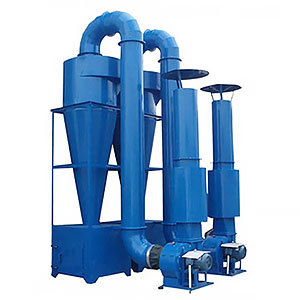
The diameter of the cylinder is a key parameter affecting centrifugal force: if the diameter is too small, although it can enhance centrifugal force and improve the efficiency of fine particle separation, it will lead to an increase in airflow resistance and a tendency for secondary dust reflux; If the diameter is too large, the centrifugal force will weaken, and fine particles will easily escape with the airflow, resulting in a decrease in dust removal efficiency. Usually, for working conditions with high air volume, a multi tube cyclone dust collector can be used to ensure separation efficiency and reduce overall resistance.
The height of the cylinder and the length of the cone section also need to be optimized in coordination: if the height of the cylinder is too long, it will increase the residence time of the airflow, but the improvement effect is limited and it will also increase the volume of the equipment; If the length of the cone segment is insufficient, it cannot effectively guide the dust to fall into the ash hopper, which can easily cause dust accumulation. It is generally recommended that the length of the cone section be 1.5-2.0 times the diameter of the cylinder, and the total height of the cylinder be controlled at 4-6 times the diameter of the cylinder to ensure smooth settling of dust under centrifugal force.
2. Optimize the design of import and export structures
Import structure: Common import forms include tangential inlet and axial inlet. Tangential inlet allows the dusty airflow to directly obtain rotational speed, resulting in a more uniform distribution of centrifugal force and better dust removal efficiency than axial inlet, making it suitable for most industrial conditions. The size of the imported section should match the processing air volume. It is recommended to control the inlet wind speed at 12-25m/s. If the wind speed is too low, it cannot generate sufficient centrifugal force, and if it is too high, it will aggravate equipment wear and increase resistance.
Export structure: The insertion depth and diameter of the exhaust pipe have a significant impact on dust removal efficiency. The exhaust pipe is inserted too shallowly, and some unseparated dust is prone to escape directly from the exhaust pipe; If inserted too deeply, it will interfere with the rotation of the airflow and increase resistance. Usually, the insertion depth of the exhaust pipe should be slightly lower than the lower edge of the inlet pipe, or 0.5-0.7 times the diameter of the cylinder. The smaller the diameter of the exhaust pipe, the higher the dust removal efficiency, but the greater the resistance, which needs to be balanced between the two. Generally, it is taken as 0.4-0.6 times the diameter of the cylinder.
3. Improve the ash hopper and ash discharge device
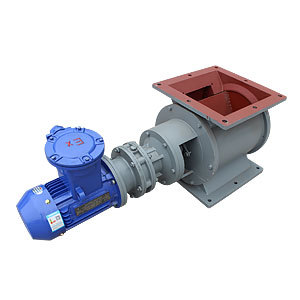
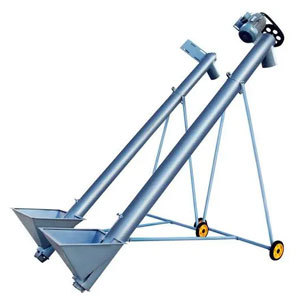
The ash hopper is a key component for collecting dust, and its cone angle design needs to be reasonable, generally ranging from 60 ° to 90 °. A cone angle that is too small can easily cause dust accumulation and blockage, while a cone angle that is too large can weaken the guiding effect of dust falling. At the same time, the ash hopper should be equipped with a well sealed ash discharge device (such as a star shaped unloader, screw conveyor, etc.) to prevent external air from entering the ash hopper and forming vortices, which can re draw settled dust into the airflow and cause secondary dust.
2、 Regulate operational parameters to ensure stable operation
Even if the structural parameters of the equipment are optimized properly, if the operating conditions are not reasonable, it will still lead to a decrease in dust removal efficiency. By precisely adjusting the core operating parameters, the equipment can be ensured to operate under optimal conditions.
1. Control the inlet wind speed and processing air volume
The inlet wind speed is the core operating parameter that determines the dust removal efficiency, and there is an optimal wind speed range (usually 12-25m/s): when the wind speed is lower than the optimal value, the centrifugal force on the dust is insufficient, and the separation effect is poor; When the wind speed exceeds the optimal value, the resistance of the equipment increases sharply, and the turbulence of the airflow intensifies, which can easily cause secondary escape of dust and lead to a decrease in dust removal efficiency.
The air volume should be matched with the rated air volume of the equipment to avoid overload operation. If the actual processing air volume is too large, it will cause the inlet wind speed to exceed the standard; If the air volume is too low, the wind speed will be insufficient. By installing air volume control valves, the air volume can be adjusted in real-time according to changes in operating conditions to ensure stable operation of the equipment within the optimal wind speed range.
2. Optimize the working conditions of dusty airflow
Dust concentration: Cyclone dust collectors are suitable for handling high concentration dusty airflow, but when the concentration is too high, dust particles are prone to collision and agglomeration, which may clog the equipment; If the concentration is too low, the centrifugal force is not significant and the efficiency decreases. For high concentration airflow, a pre dust removal device can be added; When the concentration is too low, the concentration can be appropriately increased through process adjustment, or an efficient cyclone dust collector model can be selected.
Gas temperature and humidity: An increase in gas temperature will result in a decrease in gas density and an increase in viscosity, leading to a reduction in centrifugal force on dust particles and a decrease in dust removal efficiency; If the gas humidity is too high, it is easy for dust to adhere to the inner wall of the equipment, causing blockage. Therefore, it is necessary to control the intake temperature within the tolerance range of the equipment. For high humidity airflow, a drying device can be added before the inlet, or anti adhesive equipment materials can be selected.
3. Reduce airflow short circuits and secondary dust
During operation, it is necessary to avoid the phenomenon of air flow short circuit: check the sealing performance of the equipment, repair the air leakage points of the inlet and outlet flanges, maintenance doors and other parts, and prevent external air from entering and interfering with the rotation of the air flow; Ensure that the exhaust pipe is coaxial with the cylinder to avoid short circuits caused by airflow deviating to one side. At the same time, the ash discharge speed should be reasonably controlled to avoid excessive accumulation of dust in the ash hopper and reduce secondary dust caused by dust being re rolled up by the airflow.
3、 Strengthen daily maintenance and extend efficient cycles
Inadequate daily maintenance can easily lead to equipment performance degradation. Through scientific maintenance measures, the efficient operation cycle of the equipment can be effectively extended, ensuring stable dust removal efficiency.
1. Regularly clean the dust inside the equipment
After long-term operation, dust is prone to accumulate on the inner wall, cone section, exhaust pipe and other parts of the cylinder, which not only reduces the effective flow cross-section of the equipment and increases resistance, but also interferes with the rotation of the airflow and reduces the dust removal efficiency. Regular shutdown is required to clean the accumulated dust, which can be done by using compressed air blowing, manual cleaning, etc., with a focus on cleaning the dust dead corners at the bottom of the cone section and the ash hopper. For working conditions that are prone to dust adhesion, anti sticking coatings can be applied to the inner walls of the equipment to reduce dust accumulation and adhesion.
2. Check and maintain key components
Regularly check the operation status of the ash discharge device: ensure that equipment such as star shaped unloaders and screw conveyors rotate flexibly, without jamming, and that the seals are intact; Check whether the exhaust pipe and inlet pipe are worn or deformed. If they are damaged, they should be repaired or replaced in a timely manner to avoid airflow leakage; For multi tube cyclone dust collectors, it is necessary to check the distribution of air flow in each branch to ensure even airflow distribution.
3. Establish a monitoring mechanism for operational parameters
Install monitoring equipment such as differential pressure gauges, anemometers, and temperature and humidity sensors to monitor real-time parameters such as inlet and outlet pressure differentials, inlet wind speeds, and inlet temperature and humidity. When the pressure difference suddenly increases, it may be due to equipment blockage; If the pressure difference is too low, there may be air leakage or insufficient air volume; When the temperature and humidity are abnormal, it is necessary to adjust the working conditions in a timely manner. By establishing a monitoring ledger, regularly analyzing the trend of parameter changes, predicting equipment failures in advance, and ensuring efficient operation.
4、 Auxiliary optimization measures to enhance overall effectiveness
For special working conditions, auxiliary optimization measures can be adopted to further improve dust removal efficiency.
1. Add pre dust removal or post dust removal devices: For working conditions where there is a large amount of large particle dust in the dusty airflow, add a gravity settling chamber or inertial dust collector as pre dust removal to reduce the wear and blockage of the cyclone dust collector caused by large particle dust; For working conditions that require strict control of emission concentration, high-efficiency dust removal equipment such as bag filters and electrostatic precipitators can be added after the cyclone dust collector to form a multi-stage dust removal system to ensure emissions meet standards.
2. Optimize equipment material selection: For high wear conditions, wear-resistant materials such as wear-resistant steel plates and ceramic liners can be used to make the cylinder and imported pipes, extending the service life of the equipment; For corrosive airflow, corrosion-resistant materials such as stainless steel and fiberglass are selected to avoid equipment corrosion damage.
3. Using a guiding device to optimize the airflow: adding guiding blades inside the cylinder to guide the dusty airflow to form a stable rotational motion, reducing airflow turbulence and eddies, and improving centrifugal separation efficiency; For large cyclone dust collectors, ash discharge deflectors can be installed in the cone section to promote smooth dust falling.
In summary, the performance optimization of cyclone dust collectors needs to start from three core dimensions: structural parameters, operating conditions, and daily maintenance. Combined with special operating conditions, auxiliary measures should be taken to achieve significant improvement in dust removal efficiency through the idea of "structural optimization to build a solid foundation, parameter regulation to ensure efficiency, and maintenance to enhance stability". In practical applications, it is necessary to flexibly adjust and optimize the plan according to specific working conditions (such as processing air volume, dust concentration, dust properties, etc.) to ensure efficient, stable, and economical operation of equipment, and provide reliable guarantees for environmental protection standards in industrial production.
Hot Tags:


Contact Us
Tel:
WeChat:
WhatsApp:
E-mail:
Address:
338 National Road South, Longfengdian Village, Botou City, Hebei Province, China
JiuznTomine is expertly delivering technically complicated projects in markets & provides custom solutions for their customized need.


CONTACT INFO
Tel: +86 18531710311
WeChat: +86-18531710311
338 National Road South, Longfengdian Village, Botou City, Hebei Province, China