











Selection guide for dust removal equipment and matching plan for enterprise production capacity
Dec 22,2025

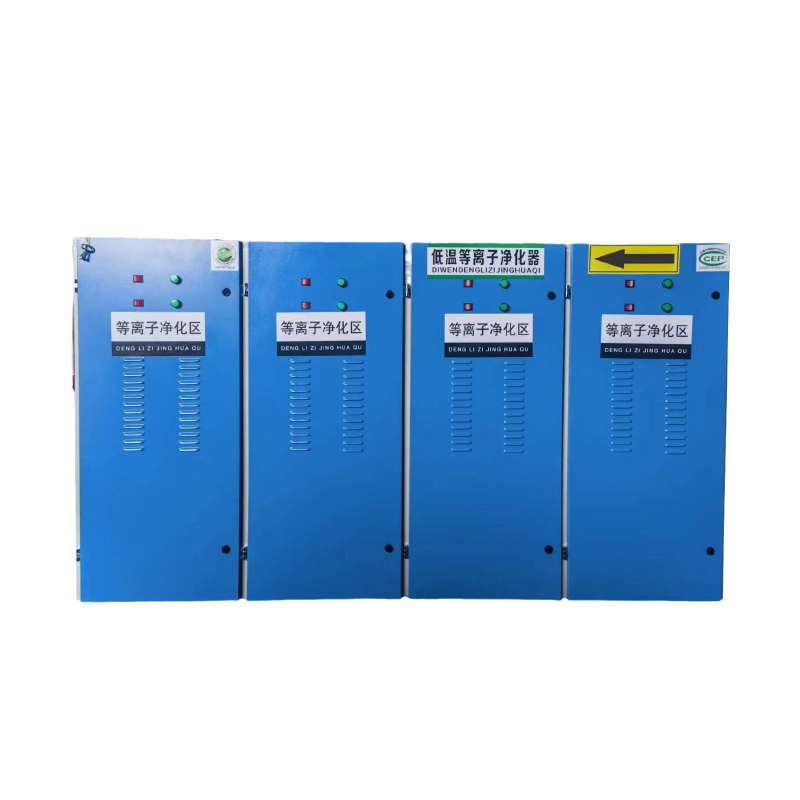
Dust removal equipment is the core equipment for controlling dust pollution, ensuring the production environment meets standards, and ensuring the normal operation of equipment in industrial production. The scientificity of selection and the accuracy of matching production capacity directly affect dust removal efficiency, operating costs, and production continuity. Enterprises with different industries and production capacities have significant differences in dust characteristics, emission requirements, and production conditions. Blind selection can easily lead to poor dust removal efficiency, high energy consumption, or equipment overload damage. This article provides objective and practical technical references for enterprises from the aspects of selection prerequisites, comparison of mainstream dust removal equipment characteristics, core logic of capacity matching, and practical solutions.
1、 Pre selection: Clarify core requirements and operating parameters
Before selecting, it is necessary to comprehensively sort out the production conditions and core requirements of the enterprise to avoid selection deviation caused by missing parameters. The following six key information should be clarified:
(1) Basic characteristics of dust
1. Dust type: Distinguish between inorganic dust, organic dust, or mixed dust, as different types of dust have significant differences in viscosity and explosiveness.
2. Dust concentration: Calculate the dust concentration at the inlet of the dust production point. For high concentration dust, priority should be given to pre-treatment devices to avoid direct entry into the core filtration equipment and blockage.
3. Dust particle size: Dust particle size distribution can be detected by screening or laser particle size analyzer. High efficiency filtration equipment should be selected for fine particles, and pre-treatment or low efficiency dust removal equipment can be used for coarse particles to reduce costs.
4. Dust stickiness: Sticky dust is prone to adhere to the interior of equipment, so it is necessary to choose equipment types that are resistant to adhesion and easy to clean.
(2) Smoke working condition parameters
1. Smoke temperature: Clarify the normal operating conditions and instantaneous peak temperature, and the temperature directly determines the selection of equipment materials.
2. Smoke humidity: High humidity smoke is prone to condensation, and anti-corrosion and anti paste bag equipment should be selected. If necessary, insulation or heating devices should be added.
3. Smoke composition: Check whether the smoke contains acidic, alkaline or toxic gases, and select corrosion-resistant materials and treatment processes accordingly.
(3) Core requirements of the enterprise
1. Emission requirements: Clearly define local environmental emission standards, focus on export dust emission concentration limits, and choose high-precision filtration equipment for efficient emission requirements.
2. Capacity scale: Calculate the dust production per unit time, production shifts, and annual operating time of the enterprise, determine the processing air volume, processing efficiency, and equipment redundancy of the dust removal equipment.
3. Site conditions: Consider the area, height, ventilation conditions, and surrounding environment of the installation site to constrain the selection of equipment types.
4. Operating costs: Estimate the subsequent energy consumption and maintenance costs of the equipment, balance initial investment and long-term operating costs.
2、 Comparison of mainstream dust removal equipment types and applicable scenarios
At present, commonly used dust removal equipment in industry mainly includes five types: cyclone dust collector, bag filter, pulse bag filter, electrostatic dust collector, and wet dust collector. Their core characteristics and applicable working conditions have significant differences, and enterprises need to match and choose according to their own needs:
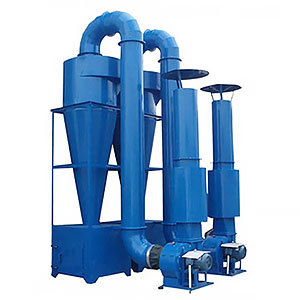
1. Cyclone dust collector
Core working principle: using centrifugal force to separate dust particles, suitable for coarse dust particles
Purification efficiency: High efficiency, low efficiency for PM2.5
Applicable working conditions: normal temperature, dry, non viscous coarse particle dust, such as mining crushing, pre-treatment of building materials; Can be used as a high concentration dust pretreatment equipment
Advantages: Simple structure, low cost, low energy consumption, easy maintenance, good temperature resistance (≤ 400 ℃)
Disadvantage: Low purification efficiency, unable to meet high-efficiency emission requirements; Poor treatment effect on fine particulate dust
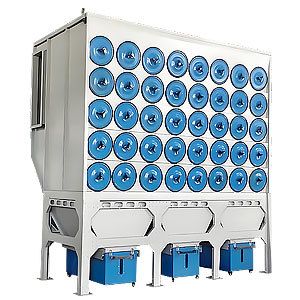
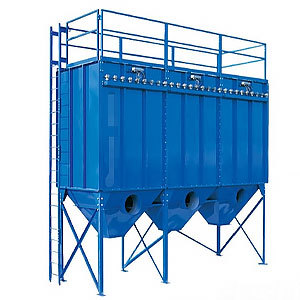
2. Bag filter
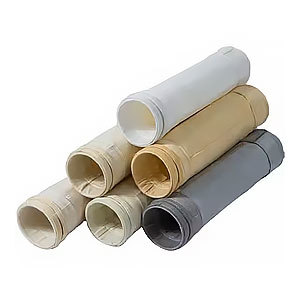
Core working principle: Dust is filtered through filter bags, and the dust adheres to the surface of the filter bags, and is regularly cleaned
Purification efficiency: Efficient (99% -99.9%), can meet the emission requirement of ≤ 10mg/m ³
Applicable working conditions: normal temperature, medium low temperature (≤ 130 ℃), dry dust, such as mechanical processing, grain processing, woodworking industry; Suitable for low to medium concentration dust
Advantages: High purification efficiency, wide range of applicable dust types, stable structure, simple operation
Disadvantages: Filter bags are prone to clogging and sticking; High temperature conditions require the replacement of high-temperature resistant filter materials, which increases costs; There is a significant fluctuation in resistance during the dust cleaning process
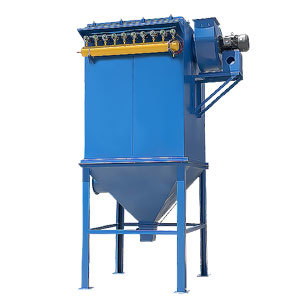
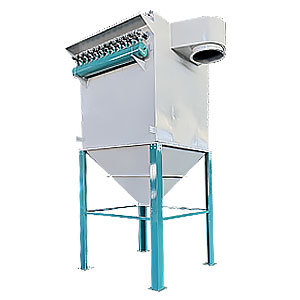
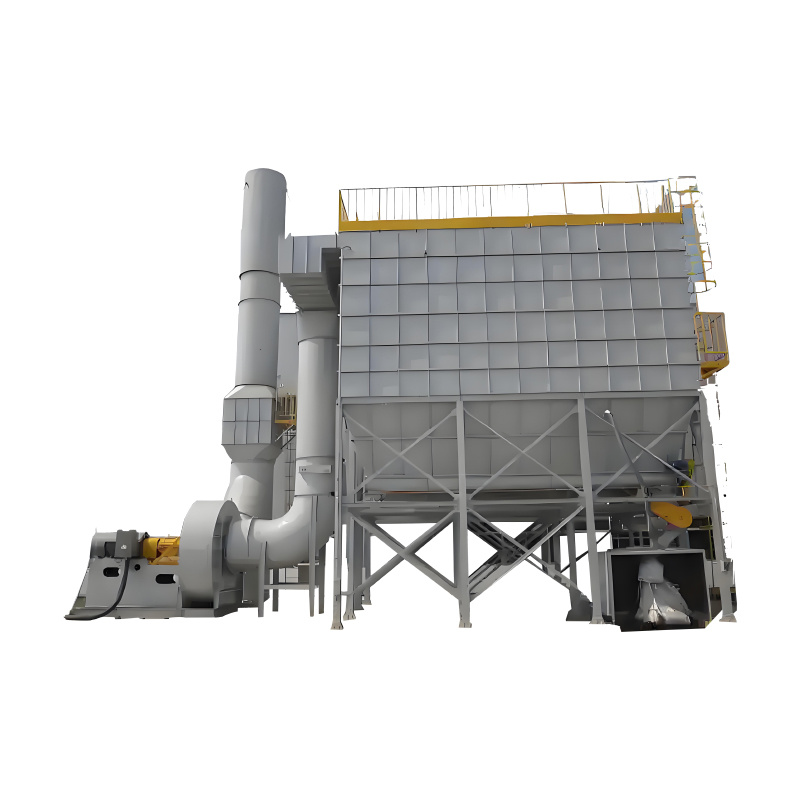
3. Pulse bag filter
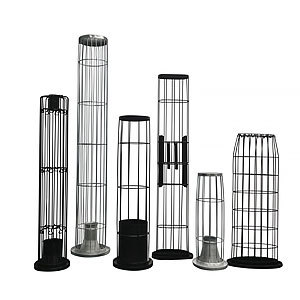
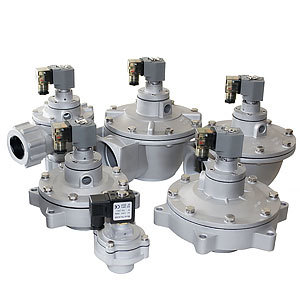
Core working principle: On the basis of bag type dust removal, a pulse jet cleaning system is added to efficiently remove dust on the surface of the filter bag
Purification efficiency: ultra-high (99.9% -99.99%), can meet the emission requirements of ≤ 5mg/m ³
Applicable working conditions: normal temperature to high temperature (≤ 260 ℃), dry or low viscosity dust, such as boiler flue gas treatment, metallurgical roasting, chemical powder processing; Suitable for medium to high concentration dust
Advantages: extremely high purification efficiency, good dust cleaning effect, long service life of filter bags, stable operating resistance, wide applicability
Disadvantage: High initial investment; Regular replacement of filter bags is required, with moderate maintenance costs; Easy to stick bags with high humidity and high viscosity dust
4. Electrostatic precipitator
Core working principle: Using high voltage static electricity to make dust charged, adsorbed on the electrode plate, and regularly vibrated to clean the dust
Purification efficiency: Efficient (99% -99.9%), capable of handling fine particulate dust
Applicable working conditions: high temperature (≤ 400 ℃), high flow rate, high concentration flue gas, such as power plant boilers, steel sintering machines, cement rotary kilns; Suitable for dry, low viscosity dust
Advantages: large air volume, low resistance, low energy consumption, high temperature resistance; Suitable for large-scale industrial production
Disadvantages: High initial investment and large land area; Sensitive to dust resistivity; Maintaining complexity; Not applicable to flammable and explosive dust
Core selection principle: If high-efficiency emissions (≤ 10mg/m ³) are required, pulse bag filter or electrostatic precipitator should be preferred; If dealing with flammable, explosive, and viscous dust, wet dust collectors are preferred; If it is for coarse particle dust pretreatment or low emission requirements, a cyclone dust collector can be selected; The pulse bag filter has the best cost-effectiveness for small and medium-sized enterprises under normal temperature and drying conditions.
3、 Core logic and practical solution for enterprise capacity matching
The core of capacity matching is "accurate correspondence between processing air volume and dust production", which means that the rated processing air volume of dust removal equipment needs to cover the amount of dust and exhaust gas generated in the production process of the enterprise, while reserving reasonable redundancy to avoid equipment overload or capacity waste. The specific matching process is as follows:
(1) Step 1: Calculate the actual processing air volume demand
The processing air volume is the core parameter of dust removal equipment (unit: m ³/h), which needs to be calculated based on the number of dust production points, the exhaust emissions of a single dust production point, and the design parameters of the gas collection hood. The core formula and explanation are as follows:
1. Calculation of air volume for dust treatment per unit area: Q=3600 × F × v (Q is the air volume for treatment, unit: m ³/h); F is the opening area of the gas collection hood, measured in square meters; V is the controlled wind speed at the opening of the gas collection hood, measured in meters per second
2. Selection reference for controlling wind speed (v): Determine based on the characteristics of the dust, with dry and non sticky dust v=0.5-1.0m/s; Viscous dust v=1.0-1.5m/s; Flammable and explosive dust v=1.2-2.0m/s.
3. Calculation of total processing air volume: Qtotal=∑ Qsingle+Q leakage air (Qsingle is the processing air volume of a single dust producing point); Q air leakage refers to the amount of air leakage in the system, usually taken as 10% -15% of the total air volume.
(2) Step 2: Match equipment models and quantities based on production capacity scale
Based on the enterprise's production capacity (small, medium, large) and total processing air volume, match the corresponding equipment models and quantities to avoid single equipment being too large or too small:
1. Small businesses (low production capacity, low dust production)
Features: Single shift production, ≤ 2 dust production points, total processing air volume ≤ 10000m ³/h.
Matching plan: Choose a single small pulse bag filter with a compact structure, small footprint, and easy maintenance; If it is coarse particle dust, a single cyclone dust collector can be selected to reduce costs.
2. Medium sized enterprises (with moderate production capacity and stable dust production)
Features: Production in two or three shifts, 3-5 dust production points, total processing air volume of 10000-50000m ³/h.
Matching scheme: Priority should be given to selecting a single medium-sized pulse bag filter. If the dust production points are scattered, the "dispersed treatment of multiple small equipment" or "centralized gas collection+single large equipment treatment" mode can be used; If it is high temperature and high flow flue gas, a small electrostatic precipitator can be selected.
3. Large enterprises (with high production capacity and large dust production)
Features: 24-hour continuous production, ≥ 6 dust production points, total processing air volume>50000m ³/h.
Matching scheme: Choose multiple large pulse bag filters to operate in parallel, or a single large electrostatic precipitator; If it is high concentration dust, a cyclone dust collector should be added as a pre-treatment device to reduce the load on core equipment; It is recommended to reserve one backup device to avoid the impact of a single device failure on production.
(3) Step 3: Determine equipment redundancy
To cope with fluctuations in production load and equipment maintenance needs, it is necessary to reserve reasonable equipment redundancy:
1. Handling air volume redundancy: The rated processing air volume of the equipment needs to be 10% -20% higher than the actual calculated total processing air volume.
2. Redundancy in equipment quantity: Large enterprises recommend reserving one backup equipment of the same model; Medium sized enterprises can reserve 20% of the installation space for filter bags in a single device for easy expansion in the future.
4、 Selection and Capacity Matching Precautions
1. Avoid "big horse pulling small car" or "small horse pulling large car": equipment with excessive rated processing air volume can lead to increased energy consumption and operating costs; Insufficient air volume can lead to a decrease in dust removal efficiency, excessive emissions, and even equipment overload and damage.
2. Emphasize material adaptability: choose equipment materials based on flue gas temperature and corrosiveness; The filter material should match the dust characteristics.
3. Compliance priority: Before selecting, confirm that the equipment meets local environmental standards and industry norms to avoid subsequent rectification.
4. Balance investment and operating costs: Small businesses can prioritize choosing equipment with high cost-effectiveness; Large enterprises can choose equipment with high initial investment but low long-term operating costs.
5. Consider later operation and maintenance: choose equipment types with simple structure, easy procurement of spare parts, and convenient maintenance; Large equipment requires reserved maintenance space and a complete monitoring system to facilitate daily operation and maintenance.
The core of selecting dust removal equipment and matching production capacity is "precise adaptation to working conditions and scientific accounting requirements". Enterprises need to first comprehensively sort out core parameters such as dust characteristics, flue gas conditions, emission requirements, and production capacity scale, and then select the most cost-effective equipment type based on the applicable scenarios of mainstream dust removal equipment; By accurately calculating and processing air volume, reasonably matching equipment models and quantities, and reserving redundancy, we achieve precise matching between dust removal efficiency and production capacity. At the same time, it is necessary to take into account equipment compliance, post operation and maintenance convenience, and operating costs to ensure the long-term stable operation of the dust removal system, which not only meets environmental requirements but also guarantees production continuity. In the actual selection process, it is recommended to combine third-party technical consultation and optimize the plan according to specific working conditions.
Hot Tags:


Contact Us
Tel:
WeChat:
WhatsApp:
E-mail:
Address:
338 National Road South, Longfengdian Village, Botou City, Hebei Province, China
JiuznTomine is expertly delivering technically complicated projects in markets & provides custom solutions for their customized need.


CONTACT INFO
Tel: +86 18531710311
WeChat: +86-18531710311
338 National Road South, Longfengdian Village, Botou City, Hebei Province, China