











Procurement of Dust Removal Skeleton: Guidelines for Structural Strength Core Testing Methods
Dec 17,2025

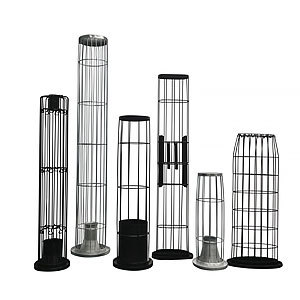
In industrial dust removal equipment, the dust removal skeleton serves as the core component supporting the filter bag, and its structural strength directly determines the service life of the filter bag, the stability of equipment operation, and maintenance costs. Especially for overseas buyers, insufficient skeleton strength can easily cause problems such as filter bag damage and dust leakage, and cross-border replacement of parts has a long cycle and high cost. Therefore, accurately mastering the method of structural strength testing in the procurement process is the key to avoiding procurement risks.
1、 Testing premise: Clarify the core influencing factors of structural strength
The structural strength of the dust removal skeleton is not a single indicator, but is determined by material specifications, welding processes, dimensional accuracy, and surface treatment. Before purchasing and testing, it is necessary to clarify the basic parameters: the material needs to match the working conditions, the wire diameter error should be ≤ ± 0.3mm, and the skeleton diameter deviation should not exceed ± 2mm. These basic parameters are the premise of strength testing. If the basic parameters do not meet the standards, even if the strength testing is qualified, it will be difficult to adapt to actual usage needs.
2、 Core detection dimensions and practical methods
Structural strength testing should focus on "key stress points+overall stability", combined with common on-site testing conditions in foreign trade procurement, and prioritize the selection of convenient, intuitive, and precision controllable methods.
1. Basic inspection of appearance and dimensional accuracy: eliminate obvious defects
Appearance and size are the fundamental guarantees of structural strength, and explicit issues such as deformation and misalignment can directly lead to uneven stress distribution. This step can be completed through "tool measurement+visual inspection", without the need for complex equipment, suitable for overseas on-site testing.
Testing method:
① Measure the diameter, length, and spacing between longitudinal bars of the skeleton using a tape measure or vernier caliper, with a focus on checking the concentricity between the flange and the skeleton body. Measure three different cross-sections and take the average value;
② Visually observe whether the skeleton is bent, twisted, or deformed. Place the skeleton upright on a horizontal ground and observe if the top is tilted;
③ Check whether the arrangement of longitudinal and ring bars is neat, without obvious misalignment or protrusions. The flange plates at both ends of the skeleton should be flat and free of warping.
Judgment criteria:
Diameter deviation ≤± 2mm, length error ≤± 3mm, uniformity error of longitudinal reinforcement spacing ≤ 10%;
No visible bending or twisting, with a flange flatness error of ≤ 1.5mm.
Foreign trade procurement reminder: Suppliers can be requested to provide size inspection reports and attach photos or videos of key parts as evidence.
2. Welding point strength testing: Lock in the weak points of the core stress
The welding point is the key to the stress of the skeleton, and the welding quality between the longitudinal reinforcement and the ring reinforcement, and between the skeleton and the flange directly determines whether the skeleton can withstand the pulse pressure and dust gravity during filter bag cleaning. This step requires a focus on checking the firmness and integrity of the welding points.
Testing method:
① Knock detection: Use a small iron hammer to lightly tap each welding point and listen to the sound to judge - a crisp metallic sound is qualified, while a dull or cloudy sound may indicate virtual welding;
② Tensile testing: For small skeletons, a tensile clamp can be used to clamp the welding joint between the longitudinal and ring bars, apply a tensile force of 50-100N, and hold for 30 seconds to observe whether it is loose;
③ Penetration testing: For the skeleton purchased under harsh working conditions such as chemical and high temperature, portable penetrant can be applied to the welding points and wiped clean after 10 minutes. If there are cracks, color marks will appear.
Judgment criteria:
There is no abnormal sound during tapping, no loose or detached welding points during tensile testing, and no crack marks during penetration testing;
Each welding point has a weld height of ≥ 3mm, and there is no leakage, weld bead, or undercutting phenomenon.
Foreign trade procurement reminder: During bulk procurement, 3% -5% of the skeleton can be randomly selected for destructive testing to confirm the ultimate strength value of the weld seam.
3. Overall bearing strength testing: simulating the stability of actual working conditions
The skeleton needs to withstand the weight of the filter bag, the weight of dust adhesion, and the instantaneous pressure during pulse cleaning during operation. The overall bearing strength directly affects the service life of the equipment. This step can be detected through a simple method of simulating working conditions.
Testing method:
① Static load test: Fix the skeleton upright and hang a heavy object equivalent to the filter bag and maximum dust load evenly inside the skeleton. After standing for 2 hours, measure the change in verticality of the skeleton, and the deviation should be ≤ 1mm;
② Dynamic pressure test: Use a compressed air spray gun to evenly spray along the circumference 50cm away from the skeleton for 30 seconds, observe whether the skeleton shakes or deforms, and whether the welding points are loose;
③ Impact resistance test: For skeletons used in rough dust conditions such as mining and building materials, a steel ball weighing 1kg can be freely dropped from a height of 1m to the middle of the skeleton to observe whether there are dents or cracks.
Judgment criteria:
There is no obvious bending after static loading, good stability during dynamic spraying, and no structural damage after impact resistance testing. Different working conditions have different load-bearing requirements. For example, in high-temperature working conditions, the load-bearing strength of the skeleton needs to be increased by 20%. When purchasing, the testing load standard should be clearly defined in advance.
4. Weathering and anti-corrosion strength testing: suitable for complex working conditions
In corrosive working conditions such as chemical and metallurgical industries, or in high temperature and high humidity environments, the anti-corrosion and weather resistance strength of the skeleton is an extension guarantee of the structural strength. Coating peeling or rusting will gradually weaken the strength of the skeleton.
Testing method:
① Coating adhesion test: Use a blade to draw a 1mm × 1mm square on the surface of the skeleton, stick 3M tape and quickly peel it off to observe the coating detachment. The detachment area is ≤ 5% to be qualified;
② Salt spray test: If conditions permit, the skeleton can be placed in a salt spray test chamber and tested continuously for 48 hours. If the corrosion area is ≤ 3%, it is considered qualified;
③ High temperature tolerance test: Place the skeleton in an oven and maintain a constant temperature for 2 hours according to the actual working conditions. After cooling, measure the dimensional deformation. A deviation of ≤ 0.5% is considered qualified.
Judgment criteria:
The coating has no significant peeling, and there is no obvious rust or deformation after salt spray or high temperature testing, which can adapt to the working environment of the target industry.
Foreign trade procurement reminder: Suppliers can be required to provide coating material reports and third-party weather resistance testing certificates, especially for markets with environmental requirements such as the European Union and the United States. It is necessary to confirm that the coating complies with RoHS, REACH and other standards.
3、 Special Scenarios for Foreign Trade Procurement: Testing Assistance Techniques
Overseas procurement often faces the problem of "inability to conduct comprehensive on-site testing". The following techniques can be used to improve the reliability of testing:
① Require suppliers to provide a 'video of the entire testing process', focusing on capturing key data for welding point testing and load-bearing testing;
② Clearly define the return and exchange terms for non-conforming products in the contract, and attach specific testing standards as the basis;
③ For bulk procurement, commission a third-party testing agency in the target market to conduct sampling and retesting to reduce cross-border rights protection costs.
The core of the structural strength testing of the dust removal skeleton is the comprehensive verification from basic parameters to actual working conditions. For overseas buyers, mastering these practical testing methods can not only accurately judge product quality, but also avoid subsequent production losses caused by skeleton strength issues. When purchasing, it is necessary to consider the working conditions and characteristics of the target industry, and select targeted testing items to ensure that the skeleton strength is efficiently adapted to the dust removal equipment and filter bags.
Hot Tags:


Contact Us
Tel:
WeChat:
WhatsApp:
E-mail:
Address:
338 National Road South, Longfengdian Village, Botou City, Hebei Province, China
JiuznTomine is expertly delivering technically complicated projects in markets & provides custom solutions for their customized need.


CONTACT INFO
Tel: +86 18531710311
WeChat: +86-18531710311
338 National Road South, Longfengdian Village, Botou City, Hebei Province, China