













Common problems and emergency handling of equipment failures in industrial dust collectors
Dec 17,2025

As a key environmental protection equipment in industrial production, industrial dust collectors are inevitably subject to abnormal or malfunctioning operation under high dust and high load conditions for a long time. Especially in overseas production scenarios, the shortage of professional operation and maintenance personnel, as well as long procurement cycles for accessories, will exacerbate the urgency of fault handling. Mastering the judgment methods and emergency response skills for common problems can effectively reduce the impact of faults on production and lower the risk of environmental violations.
1、 Core operational issues: judgment criteria and emergency response
The common problems of industrial dust collectors are mainly focused on core functions such as filtration efficiency and operational stability. These problems often have clear manifestations and can be quickly located through intuitive observation and simple detection.
1. The filtration efficiency drops sharply, and the concentration of emitted dust exceeds the standard
Common reasons: clogged filter material, damaged filter material, failure of ash cleaning system, and inadequate equipment sealing.
Emergency response steps:
The first step is to immediately check the dust concentration at the emission outlet. If it exceeds the standard severely, relevant production processes will be suspended to avoid environmental violations;
Step 2, investigate the causes one by one - first check the pressure gauge of the dust cleaning system. If the pressure is lower than 0.4MPa, adjust the air compressor pressure to 0.4-0.6MPa in a timely manner, manually trigger the dust cleaning program 2-3 times, and observe whether the efficiency improves;
Step three, if the dust cleaning is ineffective, open the inspection door to check the filter material. If any damage is found, use special sealing tape to temporarily seal it. If it is severely damaged, replace the spare filter material;
Step four, check the equipment flange and maintenance door gasket. If aging or deformation occurs, temporarily reinforce them with high-temperature resistant sealant to prevent air leakage.
2. Abnormal noise or severe vibration during equipment operation
Common causes: uneven dust accumulation on the fan impeller, worn or oil deficient motor bearings, loose equipment fixing bolts, and blockage of the discharge port due to dust clumping in the ash hopper.
Emergency response steps:
The first step is to immediately reduce the operating load of the dust collector. If vibration or abnormal noise persists, emergency shutdown is required;
Step 2: After cutting off the power supply of the equipment, check the ash hopper level gauge. If it shows full material, start the manual ash unloading device to clean the clumped dust;
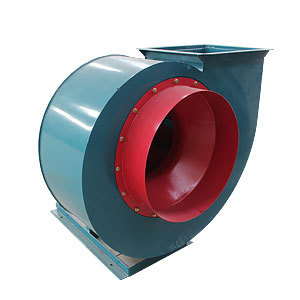
Step three, open the fan maintenance cover and use a special tool to remove the dust attached to the surface of the impeller, ensuring that the impeller is evenly stressed;
Step four, check the motor bearings. If there is any abnormal noise, add special lubricating grease. If the bolts are loose, use a torque wrench to tighten them to the standard torque. After processing, conduct a 5-minute no-load trial run and restore the load if there are no abnormalities.
3. Dust cleaning system malfunction, continuous accumulation of dust in the filter material
Common causes: blockage or damage of pulse valve, malfunction of solenoid valve, accumulation of water or impurities in gas supply pipeline, disorder of dust cleaning control program.
Emergency response steps:
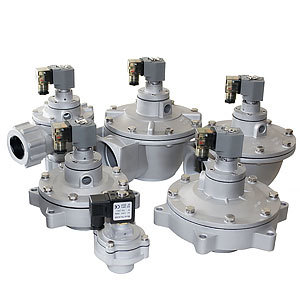
The first step is to switch the dust cleaning system to manual mode and test the working status of the pulse valves one by one. If one valve does not operate, close the main air source valve, disassemble the pulse valve for inspection, and use compressed air to blow away debris from the valve core. If it is damaged, replace the spare valve;
Step two, check the drain of the gas source pipeline, discharge accumulated water and impurities, and install a temporary filter screen at the air inlet;
Step three, if the solenoid valve fails, disconnect the power and replace it with a spare part of the same model;
Step four, when the control program is disrupted, restore the system to its factory settings and re-enter the basic dust cleaning parameters.
4. Insufficient exhaust volume of the fan leads to poor dust collection effect
Common reasons: severe blockage of filter material, blockage of fan inlet filter screen, accumulation of ash or blockage of pipeline bends, abnormal motor speed.
Emergency response steps:
The first step is to check the filter material and the inlet filter of the fan. If it is blocked, immediately clean the dust;
Step 2, turn off the device power, use an endoscope or pipeline inspection tool to check the air duct, and if dust is found, use compressed air to blow it in sections. If the bend is blocked, the detachable pipeline can be cleaned;
Step three, check the motor speed. If it is lower than the rated value, check the parameters of the variable frequency controller and reset the frequency. If the controller fails, switch to the power frequency operation mode.
2、 Safety Failure: Emergency Shutdown and Risk Control
Some faults involve safety risks, and emergency shutdown operations should be prioritized before troubleshooting and handling to avoid equipment damage or personnel injury.
1. Motor overheating alarm
Emergency response:
Immediately press the emergency stop button, cut off the motor power, check if the motor cooling fan is running properly, and clean the dust on the cooling fins;
Use an infrared thermometer to measure the temperature of the motor winding. If it exceeds 120 ℃, it needs to be naturally cooled to room temperature;
After cooling, check the wear of the motor bearings and the stability of the power supply voltage. If the voltage fluctuates too much, contact the power department for adjustment. After confirming that there are no problems, restart the equipment.
2. Equipment leakage or odor
Emergency response:
Immediately cut off the main power supply, strictly prohibit touching the metal parts of the equipment, contact a professional electrician to use a multimeter to test the insulation of the circuit, and focus on checking whether the wiring in the motor junction box and control box is aging or damaged;
If a burnt odor is found, check the electrical components such as contactors and relays, and replace damaged parts;
After repair, insulation testing is required to confirm safety before resuming operation.
3. Equipment tilting caused by blockage of ash hopper
Emergency response:
After emergency shutdown, set up warning signs to prohibit personnel from approaching the equipment;
Cleaning the clogged dust through the ash hopper inspection door can be assisted by a vibrating rod;
After cleaning, check whether the fixed foundation of the equipment is deformed, whether the bolts are loose, and if necessary, correct and reinforce them to ensure that the equipment is stable before attempting to operate again.
3、 Daily prevention: reduce the probability of failure occurrence
The core of emergency response to faults is "quick stop loss", and daily standardized operation and regular maintenance can reduce the occurrence of faults from the source. Overseas users can focus on the following points:
One is to establish a device operation ledger, recording daily parameters such as filtration efficiency, pressure, and motor temperature, and predicting anomalies in advance through data changes;
The second is to develop a filter material replacement plan according to the working conditions to avoid overdue use;
Thirdly, regularly clean the accumulated water and impurities in the gas source system, and inspect vulnerable parts such as motor bearings and pulse valves on a monthly basis; The fourth is to conduct simple troubleshooting training for overseas teams to ensure that on-site personnel can quickly identify basic problems.
The troubleshooting of industrial dust collectors should follow the principle of "first judging the appearance, then locating the cause, and finally handling it accurately". Overseas users do not need to overly rely on professional operation and maintenance teams when facing malfunctions. Through the methods outlined in this article, most common problems can be quickly resolved. At the same time, in accordance with the environmental regulations of the target market, timely detection of emission indicators is carried out after troubleshooting to ensure that the equipment meets local standards after resuming operation, achieving dual stability of environmental protection and production.
Hot Tags:
PREVIOUS:


Contact Us
Tel:
WeChat:
WhatsApp:
E-mail:
Address:
338 National Road South, Longfengdian Village, Botou City, Hebei Province, China
JiuznTomine is expertly delivering technically complicated projects in markets & provides custom solutions for their customized need.


CONTACT INFO
Tel: +86 18531710311
WeChat: +86-18531710311
338 National Road South, Longfengdian Village, Botou City, Hebei Province, China