












Dust bag customization: a core solution adapted to different working conditions
Dec 16,2025
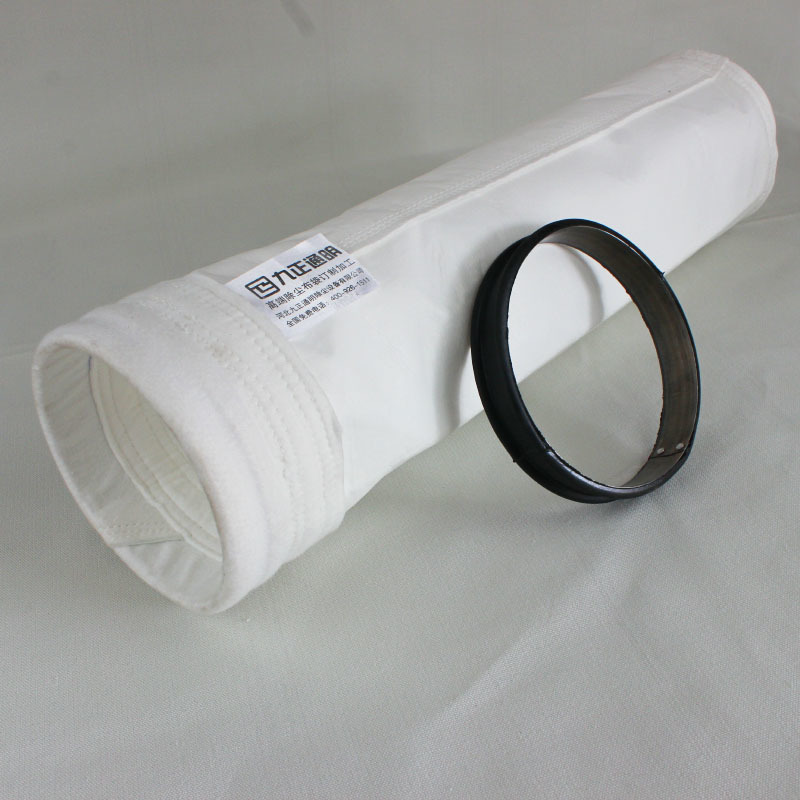
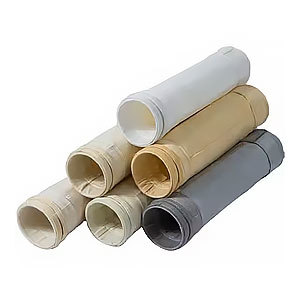
In industrial dust removal systems, the dust bag serves as the core filtering element, and its performance directly determines the dust purification efficiency and equipment operation stability. In the context of foreign trade, there are significant differences in operating conditions among different countries and industries - from high-temperature metallurgical flue gas to humid food dust, from corrosive chemical waste gas to high concentration building materials particles. Universal dust removal bags often struggle to balance filtration efficiency and service life. Customized solutions based on working conditions have become a key choice for overseas enterprises to avoid environmental risks and reduce operation and maintenance costs.
1、 Customized Core Logic: Anchoring Design Direction with Operating Parameters
The customization of dust removal bags is not simply a matter of size adjustment, but a systematic design based on precise analysis of core operating parameters. The core parameters cover three major dimensions:
One is the dust characteristics, including particle diameter, concentration, hardness, and viscosity, which directly affect the selection of filter material materials and surface treatment processes;
The second is the gas condition, which involves the flue gas temperature, humidity, corrosive components and oxygen content, and determines the temperature resistance, acid and alkali resistance and aging resistance of the filter material;
The third is the operating parameters, such as filtering wind speed, cleaning method, equipment pressure, etc., which are related to the structural design and strength requirements of the bag.
In foreign trade customization, it is also necessary to overlay the environmental emission standards of the target market to ensure that the filtration accuracy meets local regulatory requirements.
2、 Typical industry working condition adaptation: subdivision and implementation of customized solutions
The pain points of different industries' working conditions vary significantly, and the customized solution for dust removal bags needs to be targeted to solve the core problems. The following are common industry adaptation ideas in foreign trade scenarios:
1. Metallurgical industry: dual guarantee of high temperature resistance and wear resistance
The core operating conditions of the metallurgical industry are high temperature and high concentration metal dust, and the dust particles have high hardness, which can easily cause wear on the filter material. The customized solution needs to focus on breaking through high temperature resistance and wear resistance performance:
Glass fiber or aramid needle punched felt is preferred as the filter material. Glass fiber is suitable for conventional working conditions below 260 ℃, while aramid can withstand high temperature environments of 280 ℃ -320 ℃;
The surface is treated with PTFE film, which not only improves the dust stripping performance but also enhances the anti-wear ability of the filter material;
Structurally, it adopts a thickened base fabric design with a fracture strength of not less than 1500N/5cm. At the same time, the density of the bag stitching is optimized according to the pulse cleaning frequency to avoid stitching breakage caused by high-frequency cleaning.
2. Chemical industry: precise adaptation for corrosion resistance and anti bonding
The working conditions of the chemical industry are characterized by complex flue gas composition, often containing corrosive gases such as chlorine and sulfur, and some dust with strong viscosity, which can easily cause bag blockage. The core of customization lies in corrosion resistance and anti bonding performance:
The filter material is selected from PTFE (polytetrafluoroethylene) or PPS (polyphenylene sulfide), among which PTFE can withstand strong acids and alkalis and is suitable for strong corrosion conditions, while PPS has a higher cost-effectiveness in medium and low temperature corrosion environments;
Surface treated with water and oil repellent properties, using nano coating technology to reduce dust adhesion rate;
For viscous dust, the air velocity of the bag filter is controlled at 0.8-1.0m/min, and a trapezoidal cross-section bag body is designed to reduce the accumulation of dust at the bottom of the bag. In addition, it is necessary to comply with the restrictions on chemical substances under the EU REACH regulation to ensure that the filter material does not have harmful precipitation.
3. Food processing industry: hygiene grade and easy to clean core requirements
The dust in the food processing industry is mostly organic lightweight particles, which are non corrosive but must strictly avoid cross contamination and comply with food grade safety standards. Customized solutions focus on hygiene and ease of cleaning:
The filter material should be food grade polyester needle punched felt, which must be FDA certified and free of harmful substances such as fluorescent agents and heavy metals;
The surface is treated with hot pressing to reduce the probability of dust embedding into the pores of the filter material;
Structurally, it adopts a frameless design, and the seams of the bag body are welded by hot melt instead of stitching to avoid dust residue;
The size of the bag should match the equipment to ensure a tight seal after installation and prevent unfiltered air leakage.
4. Building materials industry: practical design for high concentration and anti condensation
The working conditions of the building materials industry are characterized by high dust concentration and high humidity, which can easily lead to dust condensation and blockage of cloth bags. The focus of customization is to improve dust holding capacity and anti condensation ability:
The filter material is made of polyester anti-static needle punched felt, and conductive fibers are added to the base cloth to prevent dust friction from generating static electricity and causing safety hazards;
The surface is treated with a pre coating to form an initial filtering layer, which improves the capture efficiency of high concentration dust;
The length of the bag should be controlled between 2-2.5m to shorten the cleaning path. At the same time, if a heating device is installed at the ash hopper, an anti scalding edge should be designed at the bottom of the bag to avoid high temperature damage;
The cleaning method is matched with pulse blowing, and the bag material needs to withstand a blowing pressure of 0.4-0.6MPa.
3、 Special considerations for foreign trade customization: detail design adapted to overseas scenarios
In addition to industry conditions, foreign trade customization also needs to combine the usage scenarios and regulatory requirements of overseas users to improve the details of the plan:
One is regulatory adaptation, which requires ensuring that the bag passes CE certification and the filtration efficiency meets EN 15211 standards for the EU market; The US market needs to meet EPA's limit requirements for particulate matter emissions, and some states also need to provide VOCs emission testing reports for filter media.
The second is transportation and installation. For long-distance overseas transportation, the bag is vacuum compressed and packaged to reduce volume and prevent moisture; Provide a multilingual installation manual to clarify the matching size tolerance between the cloth bag and the skeleton, in order to avoid installation misalignment.
The third is the convenience of operation and maintenance. For users who lack a professional operation and maintenance team, a snap on bag structure that can be quickly replaced is designed, and the service life of the filter material is marked to remind regular replacement.
4、 Verification of customized solutions: the core link to ensure adaptability
After the customized plan is determined, it needs to be verified twice to ensure practicality:
One is laboratory testing, which involves testing the core indicators such as temperature resistance, acid and alkali resistance, and filtration efficiency of customized cloth bags. For example, high-temperature resistance testing requires continuous operation at the target temperature for 72 hours without significant degradation of filter material performance;
The second is working condition simulation. For special working conditions, a small simulation system is built to test the changes in filtration resistance and dust capture effect of the bag under actual operating conditions. The verification data needs to be provided to overseas users in the form of a report as the basis for the reliability of the solution.
The customized nature of dust removal bags is the process of deeply integrating filter material technology with industry conditions. For overseas enterprises, precise customized solutions can not only ensure that the dust removal system meets environmental requirements, but also extend the service life of the bag, reduce the frequency of dust cleaning, and reduce operation and maintenance costs and downtime losses. The core value of customized solutions lies in transforming dust removal bags from "universal accessories" to "specialized components for specific working conditions", becoming a dual guarantee of environmental protection and efficiency in industrial production.
Hot Tags:
PREVIOUS:


Contact Us
Tel:
WeChat:
WhatsApp:
E-mail:
Address:
338 National Road South, Longfengdian Village, Botou City, Hebei Province, China
JiuznTomine is expertly delivering technically complicated projects in markets & provides custom solutions for their customized need.


CONTACT INFO
Tel: +86 18531710311
WeChat: +86-18531710311
338 National Road South, Longfengdian Village, Botou City, Hebei Province, China