











Double stage cyclone dust collector design: energy-saving and efficient, reducing industrial consumption
Oct 28,2025

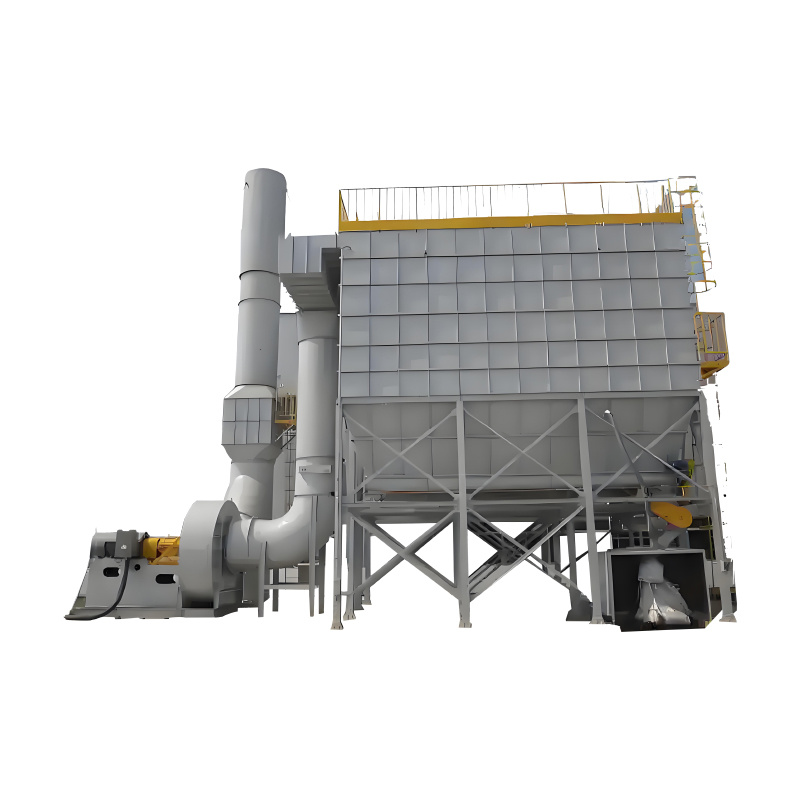
In overseas mining, building materials, chemical and other coarse dust treatment scenarios, traditional single-stage cyclone dust collectors often face problems such as "low efficiency requiring additional equipment" and "high power consumption due to fan overload". The dual stage cyclone dust collector, with its core design of "graded dust removal+optimized flow field", can not only improve dust removal efficiency but also significantly reduce energy consumption, making it the preferred coarse dust treatment equipment for foreign trade factories to "reduce costs and meet standards".
1、 Dual level design core: graded dust removal, load reduction and energy saving
The dual level design is not simply a superposition, but follows the logical division of labor of "removing coarse dust first, capturing fine dust later" to reduce energy consumption and waste from the source:
1. First level: Pre separation of coarse dust to reduce system load
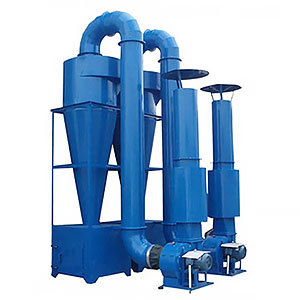
Using a large diameter cyclone tube (diameter ≥ 800mm) and utilizing high wind speeds (18-22m/s) to quickly separate over 80% of coarse dust particles larger than 10 μ m. The coarse dust is discharged in advance to avoid blocking the equipment in subsequent processes and reduce the energy consumption of the fan operating with heavy dust.
2. Second level: fine dust capture to improve overall efficiency
The second stage adopts a small diameter cyclone tube (diameter 300-500mm), optimizes the design of the inner flow plate, and increases the airflow rotation speed to 25-30m/s, accurately capturing 5-10 μ m fine dust. After two-level collaboration, the total dust removal efficiency reaches over 92%, which is 15% -20% higher than that of a single-stage cyclone dust collector, without the need for additional filter cartridges/bag equipment, reducing system energy consumption accumulation.
3. Flow field optimization: reduce resistance and lower fan power consumption
By simulating the CFD flow field, optimize the airflow guidance structure between the two stages to avoid resistance losses caused by airflow opposition. The overall resistance of the equipment is controlled at 800-1200Pa, which is 30% lower than traditional two-stage equipment, and the power of the supporting fan can be reduced by 15% -20%.
2、 Three practical values of energy conservation and efficiency
For overseas factories, the value of dual level design is directly reflected in "reducing consumption, reducing maintenance, and achieving stable standards":
1. Direct reduction of energy consumption: dual energy saving of fan and operation
Fan power reduction: Due to reduced resistance, smaller power fans can be selected;
No additional energy consuming components: no compressed air system or filter material replacement cost for pulse cleaning, only fan power consumption is required during operation, saving 40% energy compared to the "single-stage+filter cartridge" combination equipment.
2. Low maintenance cost: no vulnerable parts, minimal downtime
No vulnerable parts such as filter bags/cartridges, only need to clean the ash hopper every quarter, maintenance frequency is 80% lower than that of bag filters;
The cylinder wall is lined with wear-resistant ceramic, with a service life of 5-8 years, which is twice as long as ordinary carbon steel cylinder walls, reducing equipment replacement costs.
3. Stable compliance in coarse dust scenes
For scenarios dominated by coarse dust such as mining and building materials, the emission concentration can be stably controlled at 30-50mg/m ³, meeting the industrial dust emission standards in Southeast Asia, the Middle East, and other regions, without the need for additional precision treatment equipment.
3、 Foreign trade adaptation: meeting global working conditions requirements
According to the differences in working conditions in different regions overseas, the two-stage cyclone dust collector can be customized and adjusted to ensure that its energy-saving and high-efficiency characteristics are not compromised:
High humidity scenario (Southeast Asia): Install a heating device (temperature controlled at 50-60 ℃) on the ash hopper to prevent dust from absorbing moisture and clumping, avoiding blockage that leads to increased resistance and energy consumption;
High temperature scenario (Middle East): The cylinder wall is made of high-temperature resistant stainless steel (temperature resistant to 300 ℃), matched with high-temperature sealing gaskets to avoid high-temperature deformation affecting the stability of the flow field;
Compliance scenarios (Europe and America): Provide CE and ISO 9001 certification, support integration into factory MES systems, traceable energy consumption data, and meet EU ESG audit requirements;
Small Factory: Introducing modular dual level models that can be disassembled for transportation and assembled on-site in just 2-3 hours, suitable for narrow workshops in small mines and building materials factories in Southeast Asia.
For factories in overseas coarse dust treatment scenarios, the "graded design" of the two-stage cyclone dust collector is the key to achieving a win-win situation of "energy saving" and "efficiency". It relies on low resistance and fewer components to reduce energy consumption, and relies on two-stage collaboration to ensure dust removal meets standards, without the need to increase equipment investment to improve efficiency. In the trend of global industrial pursuit of "cost reduction and efficiency improvement", it can be regarded as a "high cost-effective solution" in the field of coarse dust treatment, suitable for the long-term operational needs of foreign trade factories.
Hot Tags:


Contact Us
Tel:
WeChat:
WhatsApp:
E-mail:
Address:
338 National Road South, Longfengdian Village, Botou City, Hebei Province, China
JiuznTomine is expertly delivering technically complicated projects in markets & provides custom solutions for their customized need.


CONTACT INFO
Tel: +86 18531710311
WeChat: +86-18531710311
338 National Road South, Longfengdian Village, Botou City, Hebei Province, China