












New strategy for industrial dust removal: multiple dust collectors collaborate to create efficient purification solutions
Jun 23,2025

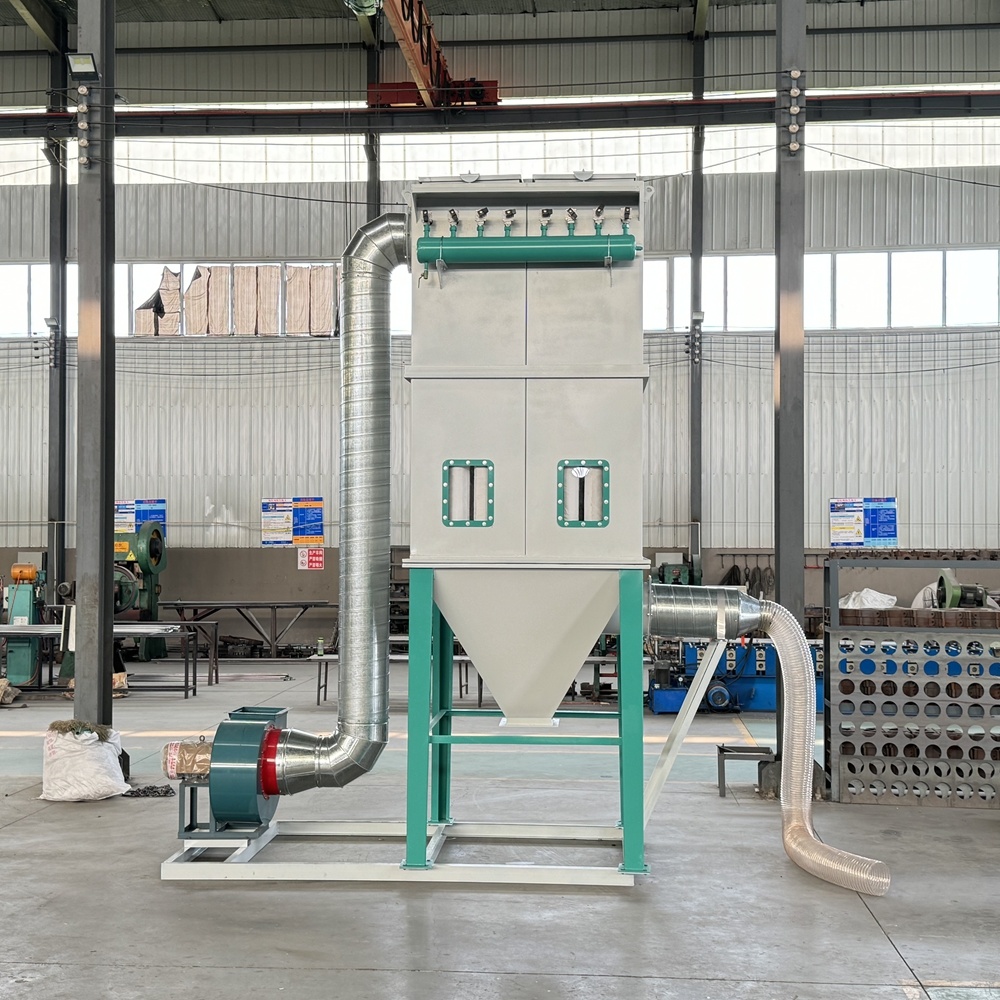
With the continuous upgrading of global industrial environmental standards, a single dust collector is no longer able to cope with complex and diverse industrial dust conditions. Multiple dust collectors can be used in combination to greatly improve dust removal efficiency and meet strict environmental requirements through complementary advantages. For global industrial enterprises, understanding this dust removal strategy is key to achieving green production and reducing operating costs.
The core advantage of collaborative dust removal
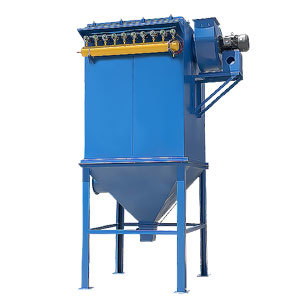
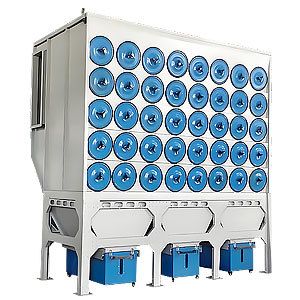
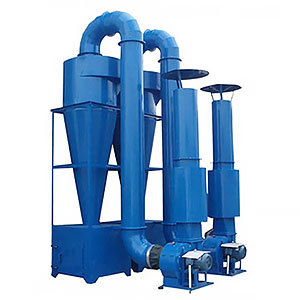
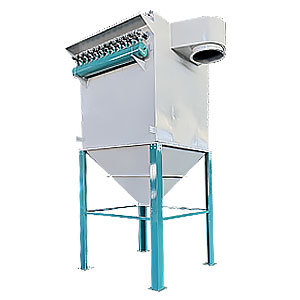
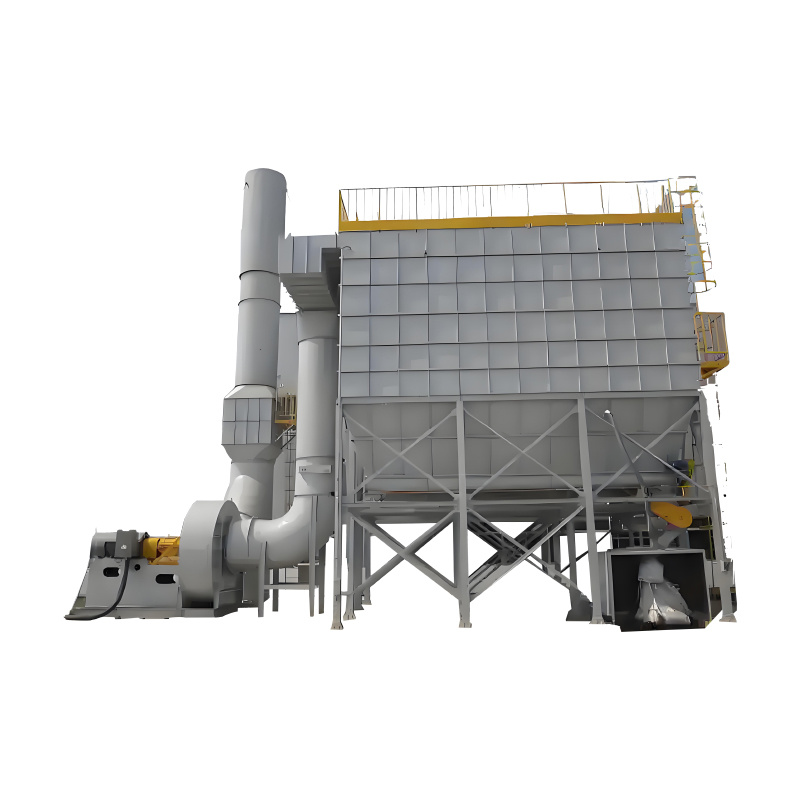
1. Efficient processing of complex dust: Different types of dust collectors have their own emphasis on dust processing capabilities. Multiple dust collectors can be used in combination to achieve precise processing in stages based on the characteristics of dust particle size, concentration, and properties. For example, the cyclone dust collector first separates large particle dust, and then the bag filter filters fine dust to achieve comprehensive purification from coarse to fine.
2. Reduce operating costs: By reasonable combination, the wear and energy consumption caused by long-term treatment of high concentration and large particle dust in a single high-efficiency dust collector can be reduced. If low-cost cyclone dust collectors are used in the primary stage, the load of subsequent high-precision dust collectors can be reduced, the service life of equipment can be extended, and maintenance and replacement costs can be reduced.
3. Flexible adaptation to multiple working conditions: Industrial production conditions are complex and varied, and various combinations of dust collectors can be flexibly adjusted according to actual needs. Whether it is special environments such as high temperature, high humidity, flammability and explosiveness, or dust changes at different production stages, effective responses can be achieved through combination schemes.
Common combinations of dust collectors
(1. Cyclone dust collector+bag filter
Applicable scenarios: Widely used in industries such as mining, cement, ceramics, etc., these industries generate a large amount of gas containing large particles of dust during the production process, and have high requirements for the emission of fine dust.
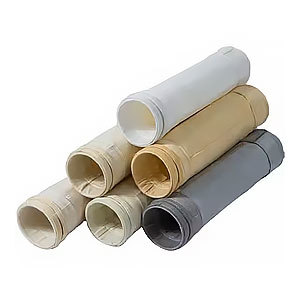
Workflow: The dusty gas first enters the cyclone dust collector, and uses centrifugal force to separate the dust with larger particle size (usually greater than 10 microns), reducing the dust concentration in the gas; After preliminary treatment, the gas enters the bag filter and is finely filtered by the filter bag to capture the remaining fine dust. The filtration efficiency can reach over 99%, ensuring that the emitted gas meets environmental standards.
(2. Electrostatic precipitator+wet dust collector
Applicable scenarios: Commonly used in industries such as thermal power generation and metallurgy, where the dust generated has characteristics such as high temperature, high concentration, and complex composition. Some dust may also contain harmful gases.
Workflow: Firstly, the electrostatic precipitator uses a high-voltage electric field to charge the dust, and then adsorbs it onto the electrode to collect most of the dust. The processing air volume is large and the energy consumption is low; Subsequently, the wet dust collector uses spraying, Venturi and other methods to fully contact the dusty gas with the liquid, further removing residual dust and absorbing harmful components in the gas, achieving the goal of deep purification.
(3. Cyclone dust collector+electrostatic precipitator+bag filter)
Applicable scenarios: Suitable for large-scale industrial projects with extremely complex dust conditions and high environmental requirements, such as large steel plants, waste incineration plants, etc.
Workflow: The dusty gas is first separated by a cyclone dust collector to remove large particles of dust; Then enter the electrostatic precipitator and use the electric field force to collect dust of equal particle size; Finally, the bag filter is used for ultimate filtration to intercept fine dust. This three-level combination method can achieve comprehensive treatment of dust with different particle sizes, ensuring that dust emissions meet strict international standards.
Scientific selection and customized solutions
When choosing multiple dust collector matching schemes, enterprises need to consider the following factors comprehensively:
1. Dust characteristics: Analyze the particle size distribution, humidity, chemical properties, concentration, etc. of dust as the basis for selecting the type and combination sequence of dust collectors.
2. Operating conditions: including temperature, pressure, spatial layout of the production environment, as well as equipment installation and operation requirements.
3. Environmental standards: Clarify the dust emission standards of the country or region where it is located to ensure that the combination scheme meets compliance requirements.
4. Supplier Strength: Choose suppliers with rich experience in industrial dust removal, the ability to provide customized solutions, and comprehensive after-sales service to ensure the stable operation and maintenance of equipment.
The combination of multiple dust collectors is an innovative trend in the field of industrial dust removal. Through scientific combination and precise selection, it can create efficient, economical, and environmentally friendly dust removal solutions for enterprises. Whether addressing current environmental challenges or laying out for future sustainable development, this collaborative dust removal strategy will become a wise choice for global industrial enterprises.
Hot Tags:

Contact Us
Tel:
WeChat:
WhatsApp:
E-mail:
Address:
338 National Road South, Longfengdian Village, Botou City, Hebei Province, China
JiuznTomine is expertly delivering technically complicated projects in markets & provides custom solutions for their customized need.


CONTACT INFO
Tel: +86 18531710311
WeChat: +86-18531710311
338 National Road South, Longfengdian Village, Botou City, Hebei Province, China