











Cyclone dust collector: a primary collection tool for coarse particulate dust
May 07,2026

Among the many aspects of industrial dust control, cyclone dust collectors always occupy an irreplaceable position in the face of high concentrations of coarse particulate dust, thanks to their unique physical separation principle and extremely high cost-effectiveness. It is usually used as a primary collection device and is widely applied in industries such as building materials, metallurgy, chemical engineering, woodworking, and grain processing. It is a crucial "first line of defense" in efficient dust removal systems.
Core principle: Physical separation of centrifugal force
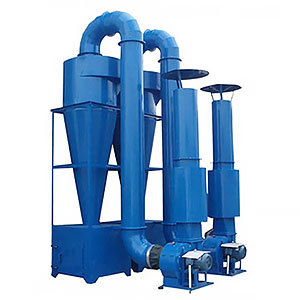
Cyclone dust collector is a dry mechanical dust removal equipment, which has no moving parts inside and relies entirely on the centrifugal force generated by the rotation of the airflow to achieve gas-solid separation. The workflow mainly includes the following steps:
1. Tangential intake and rotation: Dust laden gas enters the dust collector through the tangential inlet at a high speed (usually 12-20m/s) under the action of the fan. Under the constraint of a cylindrical shell, the airflow in linear motion is forced to transform into high-speed rotational motion, forming a strong external vortex.
2. Centrifugal sedimentation: During high-speed rotation, dust particles with much higher density than air are subjected to tremendous centrifugal force and quickly thrown towards the inner wall of the cylinder. Once in contact with the wall, the particles lose their kinetic energy and slide down the cone wall into the bottom ash hopper under the push of gravity and downward airflow.
3. Purification gas discharge: After the rotating airflow reaches the bottom of the cone, it will rotate in the opposite direction upwards to form an internal vortex. The initially purified gas is finally discharged through the central exhaust pipe at the top, completing the entire dust removal process.
Unique advantages in primary collection of coarse particles
The reason why cyclone dust collectors have become the preferred choice for collecting coarse particulate dust is mainly due to the following significant characteristics:
1. Efficient processing of large particles and high concentration dust: For coarse particle dust with a particle size greater than 10 microns (μ m), the separation efficiency of cyclone dust collectors is extremely high (usually up to 80% -95%). At the same time, it can withstand extremely high inlet dust concentrations (even up to 100g/m ³ or more), making it very suitable for pre-treatment at sources with high dust production.
2. Simple structure and stable operation: There are no complex filter materials or precision components inside the equipment, and the sturdy and durable structural design allows it to withstand the erosion of high hardness dust. The daily maintenance cost is extremely low, only requiring regular cleaning of the ash hopper.
3. High temperature resistance and spark resistance: Cyclone dust collectors can usually withstand high temperature flue gas above 400 ℃, and due to the absence of electrical components inside, they have extremely high safety when dealing with coarse particulate dust with sparks or flammable and explosive materials (such as wood chips and metal shavings).
Technical limitations and combined applications
Although cyclone dust collectors perform well in handling coarse particles, their efficiency in capturing fine dust particles smaller than 5 microns is significantly reduced due to physical principles. Therefore, it is usually not used separately as the final emission standard equipment.
In modern industrial dust removal systems, the most scientific solution is to adopt a combination process of "gradient purification": namely "cyclone dust collector (primary collection)+high-efficiency dust collector (such as bag or filter cartridge dust collector)". This combination can efficiently recover most of the coarse particulate materials using cyclone dust collectors, greatly reducing the load and wear of backend equipment, and accurately intercepting fine dust through backend equipment, thereby ensuring stable exhaust emissions that meet strict environmental standards while achieving material recovery.
Hot Tags:
PREVIOUS:
Contact Us
Tel:
WeChat:
WhatsApp:
E-mail:
Address:
338 National Road South, Longfengdian Village, Botou City, Hebei Province, China
JiuznTomine is expertly delivering technically complicated projects in markets & provides custom solutions for their customized need.


CONTACT INFO
Tel: +86 18531710311
WeChat: +86-18531710311
338 National Road South, Longfengdian Village, Botou City, Hebei Province, China