












Applicable exhaust gas types and treatment effects of spray towers
Apr 10,2026

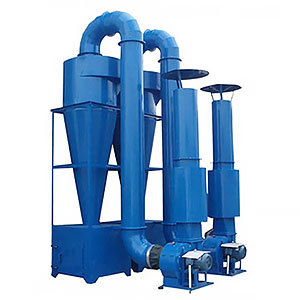
Spray tower is a commonly used wet treatment equipment in industrial waste gas treatment, which achieves waste gas purification through the contact reaction between spray agents and waste gas. Its applicable waste gas types and treatment effects are closely related to the characteristics of waste gas and the selection of agents. This article simplifies and analyzes the relevant core content, providing practical reference for foreign trade practitioners, equipment maintenance and selection personnel.
1、 The main types of exhaust gases suitable for spray towers
The spray tower is based on the core principle of wet absorption and is suitable for water-soluble waste gases that can react with chemicals. It can be stably treated without complex modifications. The common types of applications are as follows, taking into account different industrial scenarios:
1. Acidic waste gas: This is the most mainstream type of spray tower, including sulfuric acid mist, hydrochloric acid mist, nitric acid mist, hydrogen fluoride, etc. It is mostly produced in production processes such as chemical, electroplating, metallurgy, acid washing, etc. This type of waste gas has strong water solubility and can be neutralized by spraying alkaline agents to achieve efficient purification.
2. Alkaline waste gas: Suitable for alkaline waste gases such as ammonia, amines, and sodium hydroxide mist, commonly used in industries such as fertilizers, pharmaceuticals, and food processing. It can be neutralized by spraying acidic agents to reduce waste gas concentration.
3. Dust containing exhaust gas: Suitable for exhaust gas with low to medium concentration and large particle dust, such as dust exhaust gas generated in industries such as mechanical processing, building materials, and mining. The spray liquid can directly capture dust particles, achieving synchronous dust removal and exhaust gas purification. It is not suitable for high concentration and fine particle dust.
4. Partial organic waste gas: Only suitable for water-soluble organic waste gas, such as low molecular weight organic waste gas such as methanol, ethanol, acetone, etc., requiring special adsorption or oxidation agents. The treatment effect on non water soluble organic waste gas is limited and needs to be combined with other equipment.
2、 Core treatment effect and influencing factors of spray tower
The treatment effect of the spray tower is centered on meeting the emission standards for exhaust gas. There are differences in the treatment efficiency of different types of exhaust gas, and the overall characteristics are stable and easy to control. The core details are as follows:
1. Treatment efficiency: The treatment efficiency of acidic and alkaline waste gases can reach 90% -98%, which can stably meet the environmental standards for industrial waste gas emissions; The dust removal efficiency of low to medium concentration dusty exhaust gas can reach 85% -95%, which can effectively reduce dust emissions; The treatment efficiency of water-soluble organic waste gas is about 70% -85%, and the chemical ratio needs to be adjusted according to the concentration of the waste gas.
2. Key influencing factors: The core of the treatment effect depends on three points - the ratio of chemicals (which needs to be matched with the type of exhaust gas, such as using alkaline chemicals for acidic exhaust gas, and the concentration needs to be dynamically adjusted according to the exhaust gas concentration), the spray density (the higher the spray uniformity, the more complete the contact between exhaust gas and chemicals, and the better the treatment effect), and the residence time of exhaust gas (designing the tower size reasonably to ensure sufficient reaction between exhaust gas and spray liquid, avoiding short flow).
3. Limitations: Spray towers have poor treatment effects on non water soluble waste gas and high concentration fine particulate dust, and are prone to non-compliance with treatment standards; If the medication is not replaced in a timely manner and the spray system is blocked, it will directly lead to a decrease in treatment efficiency, which needs to be avoided through standardized operation and maintenance.
Summary: The core of the spray tower is adapted to acidic, alkaline, low to medium concentration dust containing and partially water-soluble organic waste gases, with stable treatment efficiency and easy operation and maintenance. Its treatment effect depends on the adaptation of chemicals and equipment operation and maintenance. When adapted to corresponding industrial scenarios, it can achieve efficient and low-cost waste gas purification, and is a cost-effective basic equipment in industrial waste gas treatment.
Hot Tags:


Contact Us
Tel:
WeChat:
WhatsApp:
E-mail:
Address:
338 National Road South, Longfengdian Village, Botou City, Hebei Province, China
JiuznTomine is expertly delivering technically complicated projects in markets & provides custom solutions for their customized need.


CONTACT INFO
Tel: +86 18531710311
WeChat: +86-18531710311
338 National Road South, Longfengdian Village, Botou City, Hebei Province, China