












Single tube vs multi tube cyclone dust collector, which one is more suitable for industrial scenarios
Apr 01,2026

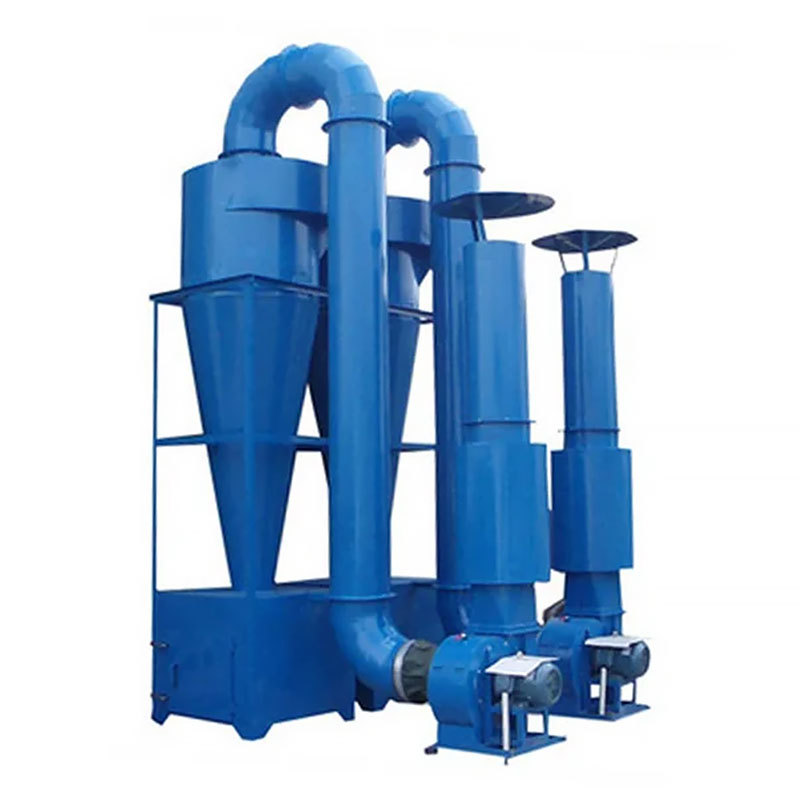
Cyclone dust collector is a basic and widely used dry equipment in industrial dust control. With its advantages of simple structure, temperature and wear resistance, and convenient maintenance, it is widely used in metallurgy, power, building materials and other fields. According to their structure, they can be divided into two types: single cylinder and multi cylinder. Both use centrifugal force to separate dust, but there are significant differences in processing capacity and dust removal efficiency.
1、 Core foundation: Structure and working principle of single tube and multi tube cyclone dust collectors
The core working logic of the two is consistent: after the tangential entry of the dusty airflow, it rotates at high speed, and the dust is thrown towards the wall by centrifugal force, falling into the ash hopper by gravity, and the purified airflow is discharged from the exhaust pipe. The core difference lies in the structural design:
1. Single tube cyclone dust collector
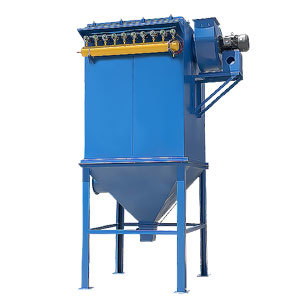
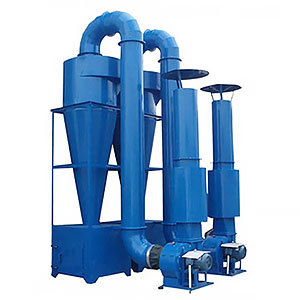
The structure is simple, consisting of a single cyclone body, ash hopper, volute (or wind cap) and exhaust pipe, without complex splicing. According to the air outlet method, it can be divided into horizontal air outlet (X-type, suitable for negative pressure) and upper air outlet (Y-shaped, suitable for positive and negative pressure), with integrated design, compact size, and low manufacturing and installation difficulty.
2. Multi tube cyclone dust collector
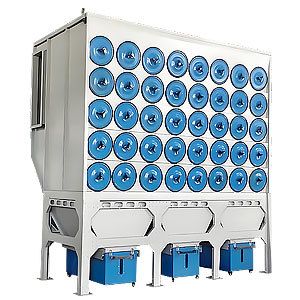
Composed of multiple cyclones with diameters of 100-250mm connected in parallel, divided into reflux and DC types. The overall system includes an exhaust box, a cylinder body, an ash hopper, and a main inlet and outlet. The cylinder body is equipped with a stepped plate and a guide device to ensure uniform distribution of airflow. Some models also add a secondary separation chamber to improve efficiency.
2、 Key difference comparison: single tube vs multi tube, core performance is clear at a glance
Based on the practical needs of overseas industries, the core differences between the two are as follows:
1. Handle the adaptability of air volume and load
Single tube: The air volume of a single tube is limited by the diameter of the tube, making it suitable for scenarios with small to medium air volume and low load fluctuations. For large air volume, multiple tubes need to be connected in parallel, increasing system complexity.

Multi tube: Multiple cyclones are connected in parallel, and the air volume can be linearly expanded. It has strong load adaptability and is suitable for small to large air volume scenarios. The efficiency is stable under high air volume, and the pressure drop fluctuation is ≤± 5% when there are more than 16 cyclones.
2. Dust removal efficiency
Single tube: Conventional models have a capture efficiency of ≥ 80% for coarse dust particles larger than 10 μ m, while special models can achieve over 95%. However, their capture efficiency for fine dust particles smaller than 5 μ m is low, making it difficult to meet high environmental requirements.
Multi tube: The cyclone has a small diameter and strong centrifugal force, with outstanding efficiency in capturing 5-10 μ m dust. The conventional version is ≥ 95% and can reach up to 98%, which easily meets environmental standards in most regions around the world and is suitable for fine dust scenarios.
3. Floor area and installation difficulty
Single tube: compact size, small footprint, easy installation, no need for complex airflow distribution, convenient transportation, suitable for cross-border transportation and fast installation needs of small overseas factories.
Multi tube: Large in volume and occupying a wide area, requiring installation space. The manufacturing and assembly accuracy of the cyclone requires high precision, ensuring sealing and uniform airflow. The installation difficulty is higher than that of a single tube.
4. Temperature resistance, wear resistance, and adaptability to working conditions
Single tube: Conventional carbon steel is suitable for<100 ℃ flue gas, and after laying refractory/wear-resistant lining, it can handle high temperature and high wear dust>500 ℃, but the adaptation conditions are relatively single.
Multi tube: The cyclone is made of wear-resistant cast iron, ceramic and other materials (thickness ≥ 6mm). The ceramic version has twice the wear resistance of cast iron and can withstand high temperatures of over 800 ℃ for a long time. It is suitable for high temperature and high wear conditions and can be replaced separately, with strong flexibility.
5. Operation and maintenance costs and difficulties
Single tube: With a simple structure and no complex components, it only requires cleaning the ash hopper and checking the seal on a daily basis, resulting in low operation and maintenance costs; When multiple units need to be connected in parallel for high air volume, the workload of operation and maintenance increases.
Multi tube: The maintenance difficulty is slightly higher, and it is necessary to regularly check the sealing and wear of the cyclone sub. However, the cyclone sub can be replaced separately without the need to replace the equipment as a whole. Long term operation and maintenance costs are more advantageous, and it is suitable for long-term continuous operation scenarios.
3、 Scenario adaptation guide: Which one is more suitable for your industrial scenario?
The core of selection is to match the working conditions, without blindly pursuing high performance. For common overseas scenarios, the following adaptation suggestions are recommended:
1. Priority menu for cyclone dust collectors
-Small and medium air volume: small workshops, single machine equipment, single machine can meet the demand;
-Limited space: The workshop is narrow and the installation conditions are simple, requiring quick installation and debugging;
-Coarse dust treatment: Dust particle size ≥ 10 μ m, dust removal efficiency requirement<95%, no high temperature and high wear requirements;
-Low cost operation and maintenance: limited budget, no professional operation and maintenance personnel, suitable for small factories or temporary dust removal scenarios.
2. Priority should be given to scenarios where multiple cyclone dust collectors are used
-High air volume: Large boilers, cement kilns, etc. cannot meet the demand with a single unit or cylinder;
-Fine dust and high environmental protection: containing a large amount of 5-10 μ m fine dust, requiring a dust removal efficiency of ≥ 95% (as per European and American environmental standards);
-High temperature and high wear: flue gas temperature>400 ℃ (such as in metallurgy and power industries), or containing high abrasive dust;
-Long term continuous operation: Large factories require stable equipment, low failure rates, and modular operation and maintenance for continuous production.
4、 Precautions for practical selection
1. Selection based on working conditions: Clarify the handling air volume, dust particle size, flue gas temperature, and environmental standards to avoid the misconception of selecting a single cylinder for high air volume and multiple cylinders for low air volume;
2. Consider installation and transportation: Overseas users need to combine cross-border transportation costs (single tube is more convenient and economical) with on-site space. If space is limited, priority should be given to selecting a single tube;
3. Taking into account long-term operation and maintenance: small factories, limited budget menu tubes; Large factories and long-term operation with multiple cylinders to reduce downtime and replacement costs;
4. Pay attention to material compatibility: choose multi tube ceramic/heat-resistant alloy models for high temperature and high wear conditions; Under normal operating conditions at room temperature, a single cylinder carbon steel version is sufficient.
There is no superiority or inferiority between single tube and multi tube, and the core lies in adapting to the scene. Single tube compact and convenient, low cost, suitable for small and medium air volume, coarse dust, and limited space scenarios; Multi tube high air volume, high efficiency, strong weather resistance, suitable for large industrial, fine dust, high temperature and high wear scenarios. Overseas industrial practitioners need to select based on their own working conditions, installation conditions, and operation and maintenance capabilities in order to achieve efficient, economical, and stable dust control, and help avoid selection errors.
Hot Tags:
PREVIOUS:
Contact Us
Tel:
WeChat:
WhatsApp:
E-mail:
Address:
338 National Road South, Longfengdian Village, Botou City, Hebei Province, China
JiuznTomine is expertly delivering technically complicated projects in markets & provides custom solutions for their customized need.


CONTACT INFO
Tel: +86 18531710311
WeChat: +86-18531710311
338 National Road South, Longfengdian Village, Botou City, Hebei Province, China