



































Industrial Dust Collector Selection Guide: Core Considerations
Mar 27,2026
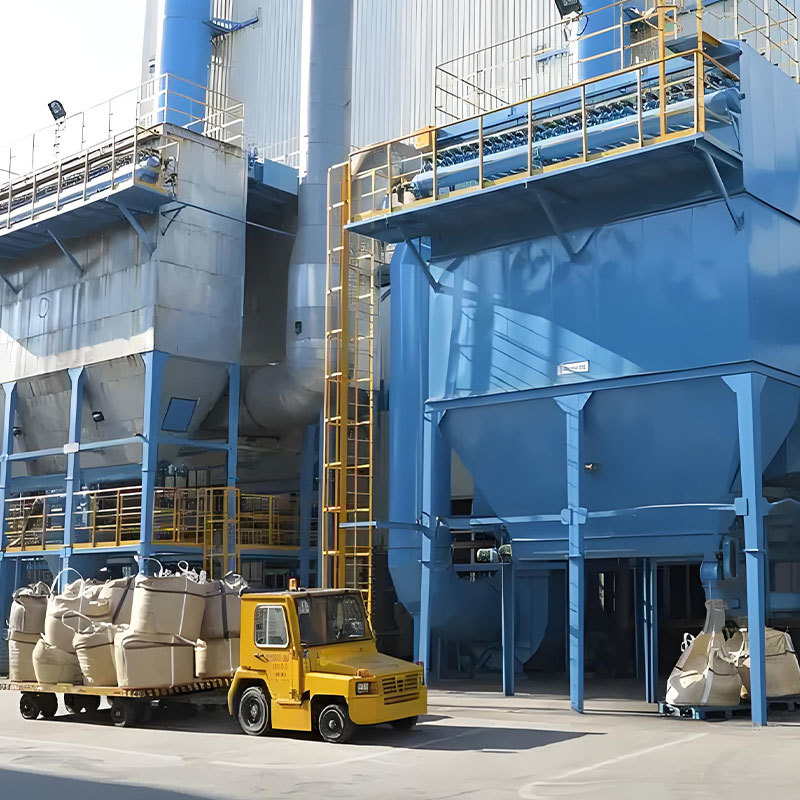
Industrial dust collector is a key equipment for controlling dust pollution, ensuring production safety, and meeting environmental emission requirements in industrial production. Whether the selection is reasonable directly determines the dust removal effect, equipment energy consumption, operation and maintenance costs, and service life. Choosing the wrong equipment not only fails to meet the dust removal standards, but also increases the probability of failure and raises the later investment.
1、 Dust Characteristics: Basic Basis for Selection
The dust attribute is the primary condition for determining the type of dust collector, and it is necessary to understand the various parameters of the dust in advance to avoid equipment and working conditions not matching. Firstly, it is necessary to determine the type of dust, whether it is hydrophobic dry dust, high humidity adhesive dust, flammable and explosive dust, toxic and harmful dust. The dust removal principles that are suitable for different types of dust are completely different.
Secondly, attention should be paid to dust concentration and particle size. For fine and high concentration dust, equipment with high filtration accuracy should be selected; For coarse particles and high flow dust, sedimentation and cyclone pretreatment equipment can be selected. Attention should also be paid to the corrosiveness and wear resistance of dust, which requires the use of corrosion-resistant and wear-resistant materials to prevent equipment from being damaged in advance.
2、 Processing air volume: core operating parameters
The processing air volume is the core indicator of the dust collector, which must be in line with the actual air production on site, neither too large nor too small. Choosing a small air volume can lead to incomplete dust extraction, resulting in dust overflow and failure to achieve dust removal effect; Choosing a larger air volume will increase equipment power, raise energy consumption and procurement costs, resulting in waste.
When selecting, it is necessary to calculate the total air production on site, reserve a reasonable margin, and cope with fluctuations in working conditions. At the same time, taking into account the length of the pipeline and the number of bends, calculate the wind pressure loss to ensure sufficient fan suction, achieve stable dust collection, and eliminate problems such as insufficient negative pressure and pipeline dust accumulation.
3、 Operating environment: Suitable for on-site conditions
The on-site working conditions directly affect the material, structure, and protection level of the dust collector, and three key conditions need to be considered. One is temperature. Conventional carbon steel equipment is used for normal temperature conditions, and high-temperature flue gas must be made of high-temperature resistant materials, combined with cooling pretreatment measures to prevent damage to filter media and accessories.
Secondly, in environments with high humidity and easy condensation, anti sticking bags and anti-corrosion structures should be selected to prevent dust adhesion and blockage; In dry environments, emphasis is placed on dust-proof and wear-resistant design. The third is installation space. Based on the site area and floor height, vertical, horizontal, and split type equipment are selected to balance installation and later operation and maintenance space.
4、 Dust removal principle and equipment type adaptation
The principles of common industrial dust collectors are different, and the applicable scenarios vary significantly, so it is necessary to choose according to needs. The cyclone dust collector is suitable for the pretreatment of coarse dust particles, with low cost and simple operation and maintenance, and is suitable for large particle and high concentration working conditions. The bag filter has high filtration accuracy, wide applicability, and can handle fine dust, meeting strict environmental emission requirements. It is a commonly used industrial model.
Electrostatic precipitators are suitable for high temperature and high air flow conditions, with low operating resistance and energy consumption, but require high maintenance. Wet dust collectors are suitable for handling flammable, explosive, and viscous dust. Water spraying is used for dust removal to eliminate the risk of dust explosion, but wastewater and waste residue need to be treated. The filter cartridge dust collector has a small volume and a large filtration area, making it suitable for working conditions with small spaces and fine dust.
5、 Environmental emissions and safety standards
The selection must comply with local environmental emission requirements, clarify dust emission concentration limits, and use equipment with standard filtration accuracy. When dealing with flammable and explosive dust (such as aluminum powder, coal powder, flour), explosion-proof dust collectors must be selected, and explosion-proof valves, flame retardant devices, and electrostatic discharge devices must be installed to eliminate safety hazards.
Toxic and harmful dust should be treated with equipment that is highly sealed and leak free, and equipped with waste gas treatment facilities to prevent the spread of dust and harm to human health. Simultaneously comply with local noise and energy consumption standards, and select compliant equipment.
6、 Operation and maintenance costs and durability
In addition to procurement costs, later operation and maintenance costs are also important considerations. Prioritize the use of equipment with simple structure, easy disassembly, and easy replacement of parts to reduce maintenance difficulty. Choose durable and easy to purchase consumables (such as filter bags and filter cartridges) to reduce replacement frequency and procurement costs.
At the same time, pay attention to equipment energy consumption, choose energy-saving fans and intelligent dust cleaning systems to reduce long-term operating electricity costs. The equipment material should be wear-resistant and corrosion-resistant, extend the service life of the whole machine, and reduce maintenance and replacement costs.
There is no absolute optimal solution for the selection of industrial dust collectors. The core is to fit the characteristics of dust, air volume parameters, working environment, and environmental standards. By balancing budget and operational conditions, selecting equipment that is suitable for the working conditions, rather than blindly pursuing high priced models, can stable dust removal, cost reduction, and long-term compliant operation be achieved.
Hot Tags:
PREVIOUS:

Contact Us
Tel:
WeChat:
WhatsApp:
E-mail:
Address:
338 National Road South, Longfengdian Village, Botou City, Hebei Province, China
JiuznTomine is expertly delivering technically complicated projects in markets & provides custom solutions for their customized need.


CONTACT INFO
Tel: +86 18531710311
WeChat: +86-18531710311
338 National Road South, Longfengdian Village, Botou City, Hebei Province, China