












Troubleshooting and Maintenance Methods for Electromagnetic Pulse Valve
Feb 05,2026
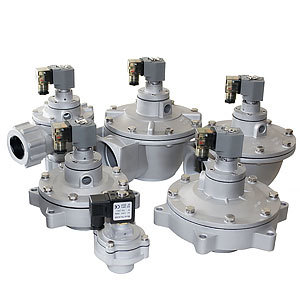
The electromagnetic pulse valve is the core executing component of the bag filter dust cleaning system, responsible for controlling the timing and intensity of compressed air injection. Its operating status directly affects the dust cleaning efficiency, filter bag life, and dust removal system stability. This article summarizes the common faults, troubleshooting processes, and scientific maintenance methods of electromagnetic pulse valves, helping foreign trade practitioners and on-site operation and maintenance personnel to quickly troubleshoot and standardize maintenance, ensuring long-term stable operation of equipment.
1、 Common faults and troubleshooting methods of electromagnetic pulse valve
Electromagnetic pulse valve faults are often manifested as abnormal spraying, inability to spray, or air leakage. The troubleshooting core follows the logic of "electrical first, mechanical second, and medium second", and does not require complex instruments to quickly locate the root cause of the problem.
(1) Common faults and targeted troubleshooting
1. Fault 1: The pulse valve cannot blow and does not operate. Troubleshooting: First check the power supply (whether the voltage is stable and whether the wiring is loose); Check the electromagnetic coil again (for burning or short circuit, measure the resistance with a multimeter, replace if abnormal); Finally, check the valve core (whether it is stuck by dust or impurities, disassemble and clean it).
2. Fault 2: The pulse valve has weak blowing and poor dust cleaning effect. Troubleshooting: Check the compressed air pressure (whether it reaches 0.3~0.5MPa, adjust the air compressor if the pressure is insufficient); Check the spray pipe and nozzle (for blockage, clean up debris); Check the valve core seal (for wear and aging that may cause air leakage, replace the seal).
3. Fault 3: Pulse valve leaks air and continues to exhaust. Troubleshooting: Check the sealing surface of the valve core (for scratches, impurities attached, clean or grind the sealing surface); Check the electromagnetic coil (whether it still attracts after power failure, investigate coil faults or abnormal control signals); Check the valve body and connection parts (whether the sealing gasket is damaged, tighten the bolts or replace the sealing gasket).
4. Fault 4: The pulse valve operates frequently or randomly. Troubleshooting: Check the controller (whether the output signal is normal, adjust the blowing cycle and pulse width); Check the circuit (for short circuits, misconnections, and organize the wiring); Check adjacent pulse valves for interference and test them one by one.
5. Fault 5: The coil heats up and burns out. Troubleshooting: Check the power supply voltage (whether it exceeds the rated range); Check the ambient temperature (whether it is too high, add heat dissipation devices); Check the valve core (whether it is stuck, causing long-term overload of the coil).
(2) General troubleshooting process (simplified steps)
1. Cut off power and gas, and ensure safety protection; 2. Appearance inspection (wiring, sealing parts, valve body for damage, air leakage traces); 3. Electrical testing (power supply, coil resistance); 4. Mechanical inspection (valve core, seal, spring status); 5. Ventilation test (restore power and gas supply, observe the blowing status).
2、 Maintenance and upkeep methods for electromagnetic pulse valves
The core of maintenance is to prevent blockage, air leakage, and coil damage, following the principle of "daily inspection+regular maintenance+special working condition protection" to reduce the occurrence rate of failures and extend the service life.
(1) Daily inspection (daily/weekly)
1. Observe whether the pulse valve blowing sound and frequency are normal, and whether there is any abnormal leakage sound;
2. Check if the wiring terminals are secure and if the coil is overheating or emitting any unusual odors;
3. Confirm that the compressed air pressure is stable and the filtering device (oil-water separator) is working properly to prevent oil and water from entering the valve body.
(2) Regular maintenance (monthly/quarterly)
1. Disassemble the pulse valve, clean the dust and impurities inside the valve body, valve core, and sealing surface to avoid jamming;
2. Check the wear and aging of seals and springs, and replace vulnerable parts in a timely manner;
3. Use a multimeter to check the coil resistance and identify potential faults. For pulse valves that have been idle for a long time, regularly energize and activate the coil;
4. Check the connection between the valve body, spray pipe, and airbag, tighten loose bolts, and replace damaged gaskets.
(3) Special condition maintenance (suitable for multiple overseas scenarios)
1. High temperature working conditions: Regularly check the heat dissipation of the coil, select high-temperature resistant coils to avoid coil overheating and burning out;
2. High humidity/corrosive working conditions: Carry out anti-corrosion treatment on the valve body, regularly replace the seals, and avoid moisture, corrosion, and air leakage;
3. High dust conditions: Increase cleaning frequency and install precision filtration devices at the inlet of the air bag to prevent dust from entering the valve body.
(4) Maintenance precautions
1. Before maintenance, power and gas must be cut off to release residual pressure in the gas bag and ensure safety protection;
2. Fragile parts (seals, coils) need to be spare, and when replacing, choose accessories that match the valve body model;
3. Avoid violent disassembly to prevent damage to the valve core and sealing surface. After disassembly, assemble in place to ensure sealing performance.
The faults of electromagnetic pulse valves are mainly caused by dust blockage, aging of seals, electrical abnormalities or improper maintenance. Scientific investigation and standardized maintenance are the key to reducing faults and ensuring their efficient operation.
In overseas industrial scenarios, operation and maintenance personnel can follow the simplified troubleshooting process outlined in this article to quickly locate and solve common faults, while implementing daily inspections and regular maintenance, and optimizing protective measures based on working conditions. This can not only extend the service life of electromagnetic pulse valves, but also ensure the stable operation of bag filter dust cleaning systems, providing reliable support for industrial dust control.
Hot Tags:
PREVIOUS:


Contact Us
Tel:
WeChat:
WhatsApp:
E-mail:
Address:
338 National Road South, Longfengdian Village, Botou City, Hebei Province, China
JiuznTomine is expertly delivering technically complicated projects in markets & provides custom solutions for their customized need.


CONTACT INFO
Tel: +86 18531710311
WeChat: +86-18531710311
338 National Road South, Longfengdian Village, Botou City, Hebei Province, China