












Structural design and ash discharge efficiency guarantee of star shaped unloader
Feb 05,2026

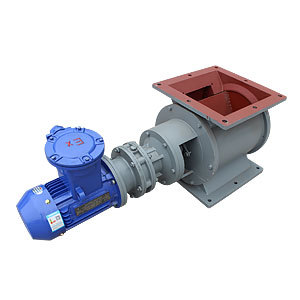
The star shaped unloader (also known as the star shaped unloader) is the core auxiliary equipment of industrial dust removal systems and powder conveying systems. Its core function is to connect the ash hopper with the ash discharge pipeline, achieving the dual function of "air lock+continuous ash discharge". The rationality of its structural design directly determines the ash discharge efficiency, operational stability, and system dust removal effect. This article refines and analyzes the core structural design points of the star shaped unloader, sorts out the key factors and guarantee measures that affect the ash discharge efficiency, and enables on-site operation and maintenance personnel to understand the equipment principle and optimize the operating effect.
1、 Core structure design of star shaped unloader
The star shaped unloader has a compact structure, consisting of 5 major components. Each component is designed around "sealing and air locking, smooth ash discharge", without redundant structure, and is suitable for industrial continuous operation needs. The specific design points are as follows:
(1) Core component design
1. Shell: It adopts a cylindrical or square structure, and the material is selected from carbon steel and stainless steel according to the working conditions. The design focus is on ensuring sealing and avoiding air leakage (air leakage will directly reduce the ash discharge efficiency and damage the negative pressure of the dust removal system). The inlet and outlet of the shell are connected by flanges for easy installation and disassembly.
2. Impeller: The core working component usually consists of 6-12 blades, evenly distributed in a star shape. The clearance between the blades and the shell or end cover needs to be precisely controlled (usually 0.1-0.3mm). If the clearance is too large, it is prone to air leakage, and if it is too small, it is prone to material jamming and wear; The blade material can be selected from ordinary steel plate or wear-resistant alloy plate according to the material hardness.
3. Transmission shaft: Connect the impeller and the driving device, using a solid shaft or hollow shaft, ensuring coaxiality to avoid shaking during operation, which may cause impeller wear and material jamming; The shaft end is equipped with a sealing device to prevent dust from entering the bearing and extend its service life.
4. Sealing device: a key auxiliary component, divided into shaft end seals and inlet/outlet seals, commonly used in two forms: packing seals and mechanical seals, adapted to different dust concentrations and pressure conditions. Its core function is to block the exchange of air flow inside and outside the shell, ensuring the effectiveness of air locking.
5. Drive device: composed of a motor and a reducer, the output speed can be adjusted according to the amount of ash discharge (usually 5-30r/min), and the design focus is to ensure stable output torque, adapt to the ash discharge requirements of different materials, and avoid overload shutdown.
(2) Key design principles
The core of structural design follows three principles: "sealing priority, wear-resistant adaptation, and smooth operation": precise matching of the gap between the blades and the shell, balancing sealing and wear resistance; The torque of the driving device is adapted to the load of the impeller to avoid overload; The sealing device is selected based on the characteristics of dust to prevent air and ash leakage, providing a structural foundation for ash discharge efficiency.
2、 Influencing factors and guarantee measures of ash discharge efficiency
The ash discharge efficiency of the star shaped unloader depends on "air lock sealing, impeller operation stability, and material compatibility". Here are four key influencing factors and practical protection techniques that can be implemented, which are simple, practical, and do not require complex operations:
(1) Core influencing factors
1. Sealing performance: Poor sealing at the shaft end and inlet/outlet can cause external air to enter the shell, damaging the negative pressure of the ash hopper, preventing dust from falling smoothly, directly reducing the efficiency of ash discharge, and even causing ash accumulation and blockage.
2. Impeller clearance: Excessive clearance leads to severe air leakage; The clearance is too small, causing friction and wear between the impeller and the shell, resulting in material jamming and interruption of ash discharge; After long-term operation, the gap becomes larger and needs to be adjusted in a timely manner.
3. Speed setting: The speed is too high, the material is not fully filled in the volume between the blades, and the ash discharge is not sufficient; The low speed causes material to accumulate inside the shell, leading to blockage and a decrease in ash discharge efficiency. It needs to be adapted to the ash accumulation speed of the ash hopper.
4. Material characteristics: Excessive dust humidity, viscosity, and particle size can easily cause blade sticking and shell volume ash, blocking the discharge channel and affecting the continuity of ash discharge.
(2) Measures to ensure the efficiency of ash discharge
1. Strengthen sealing maintenance: Regularly check the wear of the sealing device and replace the packing and sealing components in a timely manner; For high concentration and fine dust working conditions, mechanical seals are used to improve sealing reliability and prevent air leakage.
2. Control the clearance between the impeller: Accurately calibrate the clearance between the impeller, housing, and end cover during installation; Regularly inspect during operation and promptly adjust or replace the impeller and housing components if wear or increased clearance is found.
3. Adaptive speed adjustment: Adjust the driving device speed according to the ash accumulation speed and material characteristics of the ash hopper, ensuring that the material is fully filled between the blades while avoiding accumulation; Can be equipped with a variable frequency motor to achieve flexible speed adjustment.
4. Optimize material pretreatment: For high humidity and high viscosity dust, heating and stirring devices can be added to the ash hopper to reduce material viscosity; For large particle dust, filter it in advance to avoid material jamming and impeller wear.
5. Regular cleaning and maintenance: Regularly clean the dust and blade sticking inside the shell, check the wear of the impeller and the shaking of the transmission shaft, promptly handle any abnormalities, and avoid blockages or malfunctions that may cause a decrease in ash discharge efficiency.
The ash discharge efficiency of star shaped unloaders is essentially a comprehensive reflection of structural design and adaptability to working conditions. Reasonable design of shell, impeller, and sealing structure is the foundation for ensuring ash discharge efficiency; Regular maintenance of the sealing device, control of impeller clearance, adaptation of speed, and optimization of material characteristics are key to maintaining efficient ash discharge.
In overseas industrial scenarios, it is necessary to optimize structural selection and operating parameters based on dust characteristics and ash discharge requirements, and perform simple daily maintenance to ensure the smooth and efficient operation of star shaped unloaders, providing support for the stable operation of dust removal systems and powder conveying systems.
Hot Tags:


Contact Us
Tel:
WeChat:
WhatsApp:
E-mail:
Address:
338 National Road South, Longfengdian Village, Botou City, Hebei Province, China
JiuznTomine is expertly delivering technically complicated projects in markets & provides custom solutions for their customized need.


CONTACT INFO
Tel: +86 18531710311
WeChat: +86-18531710311
338 National Road South, Longfengdian Village, Botou City, Hebei Province, China