












Poor discharge of dust collector: solution to blockage of star shaped unloader
Jan 22,2026

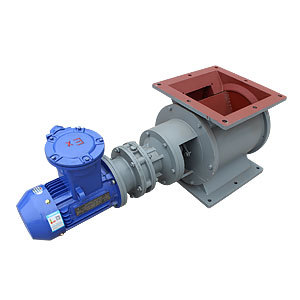
In the operation of industrial dust removal systems, the star shaped unloader, as a key unloading component, bears the dual responsibility of continuous ash discharge and air locking. Frequent issues of poor unloading and blockage can not only cause dust accumulation and overload in the dust collector, but also lead to decreased filtration efficiency. It may also cause equipment malfunctions and shutdowns, affecting the stable operation of the entire production line. This article analyzes the core causes of material blockage based on actual working conditions, provides targeted solutions and prevention strategies, and assists operation and maintenance personnel in efficiently handling related issues.
1、 Analysis of the core cause of material blockage in star shaped unloaders
Blockage is not caused by a single factor, but is often related to material characteristics, equipment status, operating conditions, etc. Common causes can be summarized into the following four categories:
1. Improper adaptation of material characteristics
The humidity, viscosity, and particle size of materials are the primary factors that cause blockage. If the humidity of the processed dust exceeds 8%, it is easy to condense and agglomerate on the blades, shell, and discharge port of the unloader, gradually accumulating and forming blockages; Dust with strong viscosity will adsorb onto the surface of the blade and accumulate over time, reducing the effective discharge space; Large particle impurities or foreign objects mixed with dust may get stuck in the gap between the blade and the shell, hindering the rotation of the blade and causing instantaneous blockage.
2. Equipment malfunction or design defects
The abnormal state of the star shaped unloader itself is an important cause of material blockage. Severe blade wear, deformation, or breakage can lead to a decrease in unloading efficiency and the accumulation of dust inside the shell; Bearing damage, insufficient motor power, or gearbox failure result in blade speed falling below the rated value, making it difficult to timely discharge dust falling from the ash hopper; Unreasonable equipment design, such as small discharge port diameter, insufficient shell cone angle, or excessive clearance between blades and shell (normal clearance should be controlled at 0.5-1.5mm), will exacerbate the risk of material blockage.
3. Fluctuations in working conditions and improper operation
Unstable working conditions of the dust removal system can easily lead to material blockage problems. The dust hopper of the dust collector accumulates too quickly, exceeding the rated processing capacity of the unloader, resulting in dust congestion at the entrance of the unloader; Abnormal operation of the dust cleaning system, such as failure of pulse valve blowing, bag sticking or blockage of filter bags, resulting in poor dust emission and indirectly increasing the load on the unloader; Operation and maintenance personnel make operational errors, such as not cleaning the residual dust inside the shell before starting up, not emptying the materials when stopping, and easily causing material blockage when restarting.
4. Impact of environmental factors
In low temperature environments, wet dust is prone to freeze on the shell of the unloader and the inner wall of the pipeline, forming hard lumps and blocking the discharge channel; Under high temperature conditions, some thermosensitive dust may soften and adhere, adsorb on the inner walls of the blades and shell, gradually causing discharge obstruction.
2、 On site solution for blockage of star shaped unloader
After discovering blockage, safety and compliance measures should be taken immediately to prevent the fault from expanding. The specific steps are as follows:
1. Emergency shutdown and safety confirmation
Immediately stop the operation of the star shaped unloader and upstream dust collector, cut off the power supply of the equipment, and hang a "Do Not Start" warning sign. After checking that there are no personnel working around the equipment and no safety hazards, subsequent handling should be carried out. It is strictly prohibited to directly clean up blockages during equipment operation.
2. Targeted cleaning of blockages
Select the cleaning method based on the degree of blockage and material characteristics: Mild blockage can be achieved by manually tapping the unloader housing (with soft material cushioning to prevent deformation of the housing), and using vibration to loosen and drop the accumulated dust; Moderate blockage can open the inspection port of the unloader and use specialized tools to clean the internal dust and clumps. During cleaning, avoid scratching the blades and shell; When there is severe blockage or foreign object jamming, it is necessary to dismantle the end cover of the unloader, remove the foreign object and thoroughly clean the accumulated dust. If necessary, the blades should be calibrated or replaced.
3. Troubleshooting and Repair
After clearing the blockage, it is necessary to investigate the equipment failure points one by one: check the wear and deformation of the blades, and if the wear exceeds the design standards, replace the blades in a timely manner; Check the lubrication status of the bearings, replenish or replace the lubricating oil. If the bearings are damaged, replace them immediately; Check the operation status of the motor and gearbox, confirm that the speed and power meet the rated requirements, and eliminate transmission system faults; Correct the gap between the blade and the shell to ensure it is within a reasonable range and avoid air leakage or material jamming.
4. Trial operation and status monitoring
After the repair is completed, start the star shaped unloader with no load, observe whether the equipment runs smoothly and has no abnormal noise, confirm that there are no abnormalities, and then connect the dust removal system to operate with load. During the initial operation, closely monitor the unloading speed, equipment vibration, and noise to ensure smooth unloading and no risk of secondary blockage.
3、 Long term preventive measures: avoid recurrence of poor unloading
By optimizing equipment, standardizing operations, and strengthening monitoring, the incidence of material blockage can be effectively reduced to ensure stable system operation
1. Optimize material pre-processing and equipment adaptation
For high humidity and high viscosity dust, drying and screening equipment should be added before entering the dust collector to reduce material humidity and viscosity, and remove large particle impurities; Select the appropriate star shaped unloader model based on material characteristics. For handling viscous materials, a unloader with scraper blades can be used. For handling large particle dust, the discharge port diameter can be increased to ensure that the discharge capacity matches the working conditions.
2. Strengthen daily maintenance and upkeep of equipment
Establish a regular maintenance ledger and check the operation status of the star shaped unloader daily, including the flexibility of blade rotation, whether there is any abnormal noise, and air leakage; Clean the dust accumulation on the blades and inner walls of the shell every week, and check the wear and clearance of the blades; Conduct comprehensive maintenance on bearings, motors, and gearboxes every month, replenish lubricating oil, and investigate potential faults; Regularly calibrate the dust cleaning system to ensure the effectiveness of filter bag cleaning and avoid rapid accumulation of dust in the ash hopper.
3. Standardize operating procedures and control of working conditions
Develop a standardized operation manual, and before starting up, it is necessary to clean the residual dust in the unloader and check the equipment status before starting; Strictly control the feeding amount during operation to avoid exceeding the rated processing capacity of the unloader; Before stopping the machine, it is necessary to empty the material in the ash hopper and unloader to prevent material from accumulating and clumping; In low-temperature environments, insulation and heat tracing measures should be taken for the unloader and pipeline to prevent dust from freezing; Under high temperature conditions, choose blades and shells made of high-temperature resistant materials to avoid material softening and adhesion.
4. Install monitoring and warning devices
Install level sensors at the entrance of the dust collector hopper and star shaped unloader to monitor the height of accumulated ash in real time. When the level reaches the warning value, a signal will be sent out in a timely manner to remind the operation and maintenance personnel to handle it; Install a current monitoring device on the unloader motor. When the motor current rises abnormally (indicating material blockage or overload), it will automatically shut down and sound an alarm to avoid equipment damage.
4、 Common Misconceptions to Avoid
When dealing with blockages, it is necessary to avoid the following misconceptions to prevent the fault from escalating: avoid using brute force to strike the equipment housing, so as not to cause deformation of the housing and damage to the blades; It is prohibited to dismantle the maintenance port and clean the blockage during equipment operation to prevent personnel injury or equipment jamming; Do not blindly increase the motor speed in pursuit of unloading speed, in order to avoid exceeding the equipment load and causing transmission system failures; Avoid neglecting the cleaning effect of the filter bag and only deal with the blockage of the unloader, without solving the root cause of rapid ash accumulation.
The blockage of star shaped unloaders is a common problem in the operation of dust removal systems, and the core lies in "prevention first, rapid disposal". By accurately analyzing the causes of material blockage, taking targeted cleaning and repair measures, optimizing equipment adaptation, and standardizing daily operation and maintenance, it can effectively ensure the smooth operation of the unloading system, reduce equipment failure and downtime rates, and provide support for the continuity and stability of industrial production. Operations personnel need to be familiar with equipment characteristics and operating conditions, accumulate practical experience, promptly identify potential risks, and ensure the efficient and reliable operation of the dust removal system.
Hot Tags:


Contact Us
Tel:
WeChat:
WhatsApp:
E-mail:
Address:
338 National Road South, Longfengdian Village, Botou City, Hebei Province, China
JiuznTomine is expertly delivering technically complicated projects in markets & provides custom solutions for their customized need.


CONTACT INFO
Tel: +86 18531710311
WeChat: +86-18531710311
338 National Road South, Longfengdian Village, Botou City, Hebei Province, China