











Comparison of material properties of dust removal bags and analysis of differences in filtration effects
Dec 25,2025

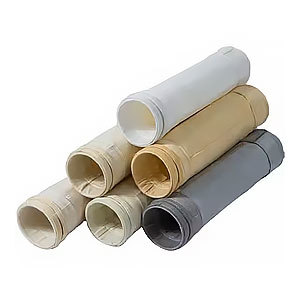
Dust bag is the core filtering element of bag filter, and its material directly determines the filtration efficiency, applicable working conditions, service life, and operational stability of the dust collector. In industrial dust removal scenarios, there are significant differences in dust characteristics (such as temperature, humidity, corrosiveness, particle size distribution) among different industries. Choosing suitable bag materials is a key prerequisite for achieving efficient dust removal. This article will focus on mainstream dust bag materials, conduct a comprehensive comparison based on core performance indicators, and deeply analyze the differences and influencing factors of different material filtration effects, providing scientific reference for material selection in industrial enterprises.
1、 Comparison of mainstream dust bag materials and core performance
The most widely used dust bag materials in the industrial field currently include polyester (PE), polypropylene (PP), polytetrafluoroethylene (PTFE, commonly known as Teflon), fiberglass (GF), aramid (such as Nomex), etc. There are significant differences in core performance such as working temperature, chemical resistance, mechanical strength, and filtration accuracy among various materials. The following is a detailed classification of each core performance by material:
1. Polyester (PE)
Continuous operating temperature: 120 ℃
Instantaneous maximum temperature: 150 ℃
Chemical resistance (acid-base): resistant to weak acids, not resistant to strong alkalis
Filtering accuracy (μ m): 1-5
Mechanical strength (tensile/wear-resistant): high, tensile strength ≥ 3.5N/tex, excellent wear resistance
Service life (under normal operating conditions): 1-2 years
Core advantages: high cost-effectiveness, good wear resistance, moderate filtration accuracy
Limitations: Limited high temperature resistance, not resistant to strong alkali corrosion
2. Polypropylene (PP)
Continuous operating temperature: 80 ℃
Instantaneous maximum temperature: 100 ℃
Chemical resistance (acid-base): resistant to strong acids and bases, with excellent chemical stability
Filtering accuracy (μ m): 1-5
Mechanical strength (tensile/wear-resistant): medium, tensile strength ≥ 2.5N/tex, moderate wear resistance
Service life (under normal operating conditions): 8-12 months
Core advantages: Strong corrosion resistance and low cost
Limitations: Poor high temperature resistance, slightly lower mechanical strength
3. Polytetrafluoroethylene (PTFE)
Continuous operating temperature: 240 ℃
Instantaneous maximum temperature: 260 ℃
Chemical resistance (acid-base): resistant to strong acids, strong bases, strong oxidants, and almost all chemical media
Filtering accuracy (μ m): 0.1-1
Mechanical strength (tensile/wear resistance): medium, tensile strength ≥ 2.0N/tex, moderate wear resistance
Service life (under normal operating conditions): 3-5 years
Core advantages: high temperature resistance, corrosion resistance, extremely high filtration accuracy, and not easy to stick to bags
Limitations: High cost, poor flexibility
4. Fiberglass (GF)
Continuous operating temperature: 260 ℃
Instantaneous maximum temperature: 300 ℃
Chemical resistance (acid-base): resistant to strong acids, not resistant to strong alkalis, moderate chemical resistance
Filtering accuracy (μ m): 5-10
Mechanical strength (tensile/wear-resistant): medium high, tensile strength ≥ 3.0N/tex, poor wear resistance
Service life (under normal operating conditions): 2-3 years
Core advantages: Excellent high temperature resistance and moderate cost
Limitations: Poor wear resistance, not resistant to strong alkali, prone to brittle cracking
5. Aramid
Continuous operating temperature: 200 ℃
Instantaneous maximum temperature: 220 ℃
Chemical resistance (acid-base): resistant to weak acids, not resistant to strong bases, generally resistant to organic solvents
Filtering accuracy (μ m): 1-3
Mechanical strength (tensile/wear-resistant): high, tensile strength ≥ 4.0N/tex, excellent wear resistance
Service life (under normal operating conditions): 2-4 years
Core advantages: high temperature resistance, high mechanical strength, good wear resistance
Limitations: Limited corrosion resistance and high cost
2、 Analysis of Differences and Causes in Filtering Effects of Different Materials
The filtration effect is the core evaluation indicator of dust removal bags, and its difference mainly lies in the ability to capture fine dust. The generation of this difference is closely related to the fiber structure, pore size distribution, surface characteristics, and processing technology of the material. Combining mainstream materials, analyze the differences in filtering effects and the reasons behind them in detail:
1. Filtering accuracy ranking: PTFE>aramid>polyester/polypropylene>glass fiber
According to the table data, PTFE material has the highest filtration accuracy and can effectively capture ultra-fine dust particles of 0.1-1 μ m, with a filtration efficiency of over 99.99%; Aramid material comes second, capable of capturing dust of 1-3 μ m; Polyester and polypropylene materials have similar filtration accuracy and better capture effect on 1-5 μ m dust; Fiberglass material has the lowest filtration accuracy and is mainly suitable for filtering coarse dust particles larger than 5 μ m.
Cause analysis: PTFE fibers have a unique microporous structure with uniform and small pore sizes, as well as a smooth surface, making it difficult for dust to penetrate into the fibers. They are mainly efficiently intercepted through "surface filtration"; Aramid fiber is an ultra fine denier fiber with a small fiber diameter and high weaving density, which can effectively block fine dust particles; Polyester and polypropylene fibers have moderate diameters and mature weaving processes, which can effectively filter medium to fine particles; Glass fiber is a rigid fiber with a larger diameter and relatively loose weaving gaps, so its ability to capture fine dust is weaker, making it more suitable for filtering coarse dust particles.
2. The influence of working condition stability on filtration effect: material adaptability determines the sustainability of filtration effect
In addition to the inherent characteristics of the material itself, the working conditions (temperature, humidity, dust corrosiveness) will directly affect the structural stability of the bag, and indirectly affect the filtration effect. The stability of filtration effects varies significantly among different materials under complex working conditions
1. High temperature conditions: Glass fiber and PTFE materials can maintain structural stability, and the filtration effect is not affected by temperature; If polyester material is used, when the continuous working temperature exceeds 120 ℃, the fibers will soften and shrink, resulting in an increase in pore size, a decrease in filtration accuracy, and even bag damage and dust leakage;
2. Corrosive working conditions: In strong acid/alkali environments, polypropylene and PTFE materials can maintain stable filtration effects; Polyester and aramid materials may experience a decrease in fiber strength, pore size deformation, and a gradual decrease in filtration accuracy due to chemical corrosion; Glass fibers will undergo hydrolysis in strong alkaline environments, rapidly losing their filtering function;
3. High humidity conditions: Polyester material is prone to moisture absorption in high humidity environments, causing dust to adhere to the surface of the bag and form a "stuck bag" phenomenon, blocking the filtration channel. Although the filtration accuracy temporarily increases, the equipment resistance suddenly increases, the air volume decreases, and the actual dust removal efficiency is greatly reduced; PTFE and polypropylene materials have excellent hydrophobic properties, are not easily hygroscopic, and can maintain stable filtration efficiency and breathability.
3. Indirect impact of dust removal performance on filtration efficiency: surface characteristics determine dust removal efficiency
The cleaning effect is closely related to the surface characteristics of the bag, and the thoroughness of the cleaning directly affects the stability of the subsequent filtration effect. PTFE material has a smooth surface and weak dust adhesion. When cleaning, only a small pulse pressure is needed to completely peel off the dust. The filtration resistance is always kept at a low level, and the filtration effect is stable; The surface of polyester material is relatively rough, and dust is easy to adhere. If the dust is not thoroughly cleaned, it will form a "dust layer compaction", which will increase the filtration resistance and even cause "secondary dust", affecting the filtration efficiency; Glass fiber material has poor wear resistance, and frequent cleaning can cause fiber damage, increase pore size, and decrease filtration accuracy.
3、 The core principle of material selection is to match the working conditions and requirements, balance the effect and cost
Based on the analysis of the performance and filtration effect differences mentioned above, material selection should focus on the core parameters of the operating conditions (dust temperature, corrosiveness, particle size distribution), while balancing filtration effect, service life, and procurement costs to avoid "over selection" or "under selection". The specific principles are as follows:
Low temperature conventional working conditions (≤ 120 ℃), dust is non corrosive medium fine particles: polyester material is preferred, with high cost-effectiveness and good wear resistance, which can meet the filtration needs of most general industrial scenarios;
Low temperature corrosive working conditions (≤ 80 ℃), dust containing strong acid/alkali: polypropylene material is selected, which has extremely strong corrosion resistance and can ensure filtration stability in harsh chemical environments;
High temperature working conditions (120-260 ℃), dust is non corrosive particles: aramid material is selected for medium temperature scenarios, with high mechanical strength and good wear resistance; Glass fiber material is selected for high temperature scenarios, with excellent high temperature resistance;
High precision filtration requirements (≤ 1 μ m), complex working conditions (high temperature+corrosion/high humidity): Choosing PTFE material, although costly, has extremely high filtration accuracy, temperature and corrosion resistance, is not easy to stick to bags, has a long service life, and can meet strict environmental standards.
In summary, the performance differences of dust bag materials directly determine the quality of filtration effect, and the core of scientific selection lies in "working condition adaptation". When choosing, enterprises need to comprehensively review their own dust characteristics and operating parameters, combine the core advantages and limitations of each material, and balance filtration efficiency, operational stability, and cost investment. With the continuous upgrading of filter material technology, the application of modified materials has gradually become widespread, further expanding the adaptation scenarios of cloth bags and providing more efficient solutions for industrial dust removal.
Hot Tags:


Contact Us
Tel:
WeChat:
WhatsApp:
E-mail:
Address:
338 National Road South, Longfengdian Village, Botou City, Hebei Province, China
JiuznTomine is expertly delivering technically complicated projects in markets & provides custom solutions for their customized need.


CONTACT INFO
Tel: +86 18531710311
WeChat: +86-18531710311
338 National Road South, Longfengdian Village, Botou City, Hebei Province, China