












Cyclone dust collector: combined application unlocks new scenarios for efficient dust removal
Dec 10,2025

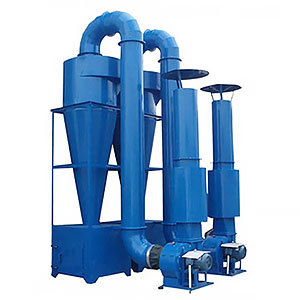
Cyclone dust collectors are widely used in overseas industrial scenarios such as mining, building materials, and chemical industries due to their advantages of simple structure, wear resistance, and low maintenance costs. However, when used alone, it has limited efficiency in capturing fine dust and is prone to bottlenecks when dealing with high concentrations and special properties of dust. Scientifically combining it with other dust removal equipment can not only retain its own advantages, but also make up for its shortcomings, achieving a dust removal effect of "1+1>2".
1、 Core logic: Why is combination more efficient?
The core principle of a cyclone dust collector is to use centrifugal force to separate dust, with a processing efficiency of over 90% for dust with large particle size and high density. However, when facing fine dust, fibrous dust, or high humidity dust, the separation ability will significantly decrease. The essence of combination application is "division of labor and cooperation", where the cyclone dust collector takes on the role of "coarse separation" or "pretreatment", and the subsequent equipment focuses on "fine filtration" or "targeted treatment", reducing the load on subsequent equipment, extending its service life, and improving the stability and compliance of the overall dust removal system.
2、 3 classic combination schemes: adapted to different industrial scenarios
1. Cyclone dust collector+filter bag dust collector: balancing cost and accuracy
This is the most commonly used combination mode in overseas factories, especially suitable for scenarios such as metal processing and feed processing where "coarse dust is abundant and fine dust needs to be strictly controlled".
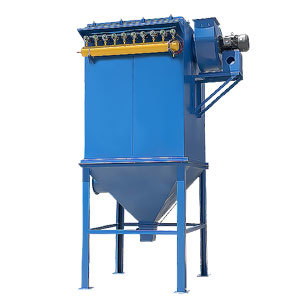
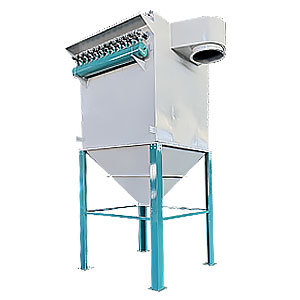
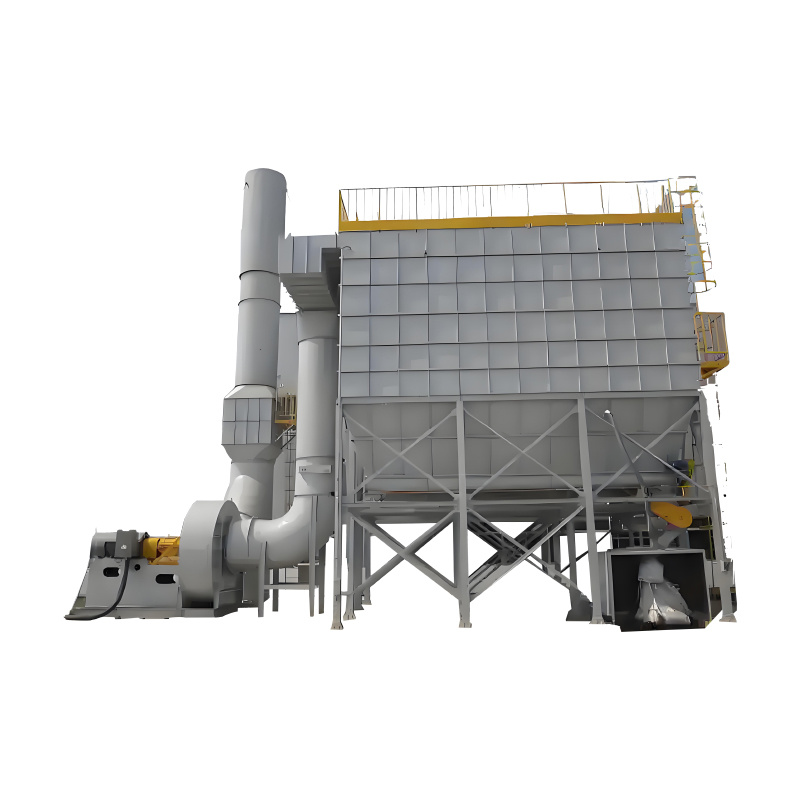
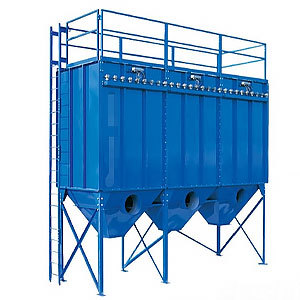
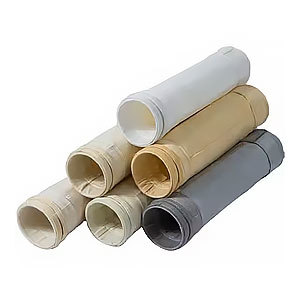
Workflow: The dusty gas first enters the cyclone dust collector, and 70% -80% of the coarse particles are separated and collected by centrifugal force. The remaining gas containing fine dust enters the filter bag dust collector. After pretreatment, the filter bag only needs to handle low concentration fine dust, significantly reducing filtration resistance, reducing dust cleaning frequency by more than 30%, and extending the service life of the filter bag by 1.5 times.
Foreign trade scenario reminder: In the EU region, if the emission requirements are stricter than 5mg/m ³, this combination can reduce the load on the filter bag through a cyclone dust collector, avoid rapid blockage of the filter bag due to high concentration dust, and ensure long-term compliance with emission standards.
2. Cyclone dust collector+electrostatic precipitator: for high temperature and high concentration working conditions
For high-temperature and high concentration dust scenarios such as metallurgy and coking, this combination can solve the tolerance problem of a single equipment.
Complementary advantages: The cyclone dust collector can first separate large particle dust from high-temperature flue gas, preventing it from directly impacting the electrode plate of the electrostatic precipitator, reducing electrode wear and dust accumulation; At the same time, reduce the dust concentration in the flue gas to avoid the phenomenon of "corona sealing" in electrostatic precipitators due to high dust concentration. After cyclone pretreatment, the dust collection efficiency of the electrostatic precipitator can be improved by 10% -15%, the electrode cleaning cycle is extended, and the equipment operation stability is greatly improved.
Applicable regions: In steel plants in the Middle East and Southeast Asia, this combination can adapt to the characteristics of high temperature and dry climate, reducing equipment failures caused by high-temperature dust impact.
3. Pre processing+cyclone dust collector: enhancing adaptability to extreme working conditions
When the flue gas contains a large amount of impurities or the temperature is too high, adding pre-treatment equipment before the cyclone dust collector can improve its operating efficiency.
Common combination: In mining crushing scenarios, large debris is first filtered through a grid impurity removal device before entering a cyclone dust collector; In high-temperature flue gas scenarios, the pre cooler reduces the flue gas temperature to the tolerance range of the cyclone dust collector. This "pre-processing+main separation" mode can avoid the cyclone dust collector from being stuck or deformed due to impurities or high temperatures, and is widely used in mining projects in Australia and South Africa.
3、 Two key principles of composite applications
1. Matching processing capacity and operating conditions: The total processing capacity of the combined system needs to be matched with the production operating conditions to avoid overloading of subsequent equipment caused by insufficient processing of preceding equipment, or energy waste caused by excessive processing of preceding equipment.
2. Pay attention to air flow stability: The equipment connection pipeline should reduce right angle bends to ensure smooth air flow and avoid reducing centrifugal separation efficiency due to air flow turbulence. In environmental projects in Europe, fluid simulation is usually used to optimize pipeline design and ensure the stability of airflow in the combined system.
The value of a cyclone dust collector is not limited to a single use, its core ability of "coarse separation" makes it the "golden pre unit" in the dust removal system. Based on the dust characteristics, emission requirements, and working conditions of different industries overseas, selecting an appropriate combination plan is necessary to achieve efficient and stable dust removal while controlling costs.
Hot Tags:


Contact Us
Tel:
WeChat:
WhatsApp:
E-mail:
Address:
338 National Road South, Longfengdian Village, Botou City, Hebei Province, China
JiuznTomine is expertly delivering technically complicated projects in markets & provides custom solutions for their customized need.


CONTACT INFO
Tel: +86 18531710311
WeChat: +86-18531710311
338 National Road South, Longfengdian Village, Botou City, Hebei Province, China