












Is the cyclone dust collector severely worn? These protective measures are extremely practical
Dec 04,2025

Cyclone dust collectors, with their advantages of simple structure, low cost, and no loss of filter materials, have become the "main force" for pre dust removal in overseas mining, metallurgy, building materials, and other industries. However, when dealing with high hardness and high concentration dust, the inner walls, inlet pipes, dust outlets, and other parts of the equipment are prone to wear and tear, which can lead to a decrease in air leakage efficiency or even cause equipment perforation and scrapping. Especially in high dust working areas such as Africa and the Middle East, wear and tear faults account for more than 70% of the total equipment failures.
1、 First find the root cause: 3 core causes of cyclone dust collector wear and tear
The wear and tear of a cyclone dust collector is essentially the impact and cutting effect of dust particles on the equipment surface, and its severity is directly related to dust characteristics, equipment structure, and operating parameters. Accurately identifying the cause is a prerequisite for developing protective measures.
1. Dust characteristics: the "innate determinant" of wear and tear
The hardness, particle size, and concentration of dust are the core factors that cause wear, and the higher the hardness, particle size, and concentration, the more severe the wear. In addition, the shape of dust also has an impact, with sharp edged dust having a stronger cutting effect than circular dust.
2. Equipment structure: worn "weak link amplifier"
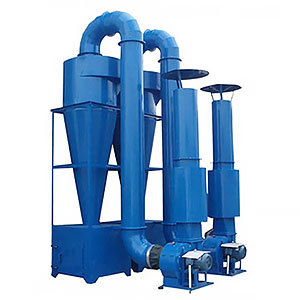
Unreasonable structural design can lead to sudden increases in local wind speed, exacerbating wear and tear. Common weak links include: ① Inlet pipe: the right angled part of the rectangular inlet is prone to vortex formation, where dust repeatedly impacts; ② The junction between the cylinder and the vertebral body: sudden changes in cross-section lead to turbulent airflow and concentrated dust erosion; ③ Dust exhaust port: The downward airflow turns here, and dust causes particularly severe wear on the dust exhaust valve. The corrosion and unevenness of the inner walls of old equipment will further enhance the cutting effect of dust.
3. Operating parameters: "postnatal control factors" of wear and tear
The import wind speed is a key control parameter. If the wind speed is too low, it will lead to a decrease in dust removal efficiency, while if it is too high, it will double the dust impact velocity and increase the wear intensity by 3-5 times. Some overseas factories blindly increase the fan speed in pursuit of high dust removal efficiency, resulting in excessive import wind speed and accelerating equipment wear and tear. In addition, vibrations during equipment operation can increase the frequency of contact between dust and the inner wall, further exacerbating wear and tear.
2、 Precise Protection: A Comprehensive Solution from Passive Wear Resistance to Active Wear Reduction
Based on the characteristics of overseas working conditions, it is necessary to choose a comprehensive protection strategy of "material upgrading as the main focus, structural optimization as a supplement, and operation control as a backup" for different wear and tear causes.
1. Material upgrade: Strengthen the wear resistance of vulnerable parts
Material upgrade is the most direct and effective means of protection, and it is necessary to choose suitable wear-resistant materials according to the degree of wear of different parts, balancing cost and service life.
1. High wear parts (imported pipe, lower part of vertebral body): ① Wear resistant ceramic patch: High alumina ceramics with an Al ₂ O3 content of ≥ 92%, with a hardness of up to Mohs 9, are selected and pasted on the inner wall with a special adhesive, suitable for high wear scenarios such as mining and cement; ② Welding wear-resistant layer: Plasma welding technology is used to weld WC wear-resistant alloy on carbon steel substrate. The thickness of the welding layer is 3-5mm, suitable for areas with high impact, but requires a professional construction team to operate.
2. Medium wear area (middle of the cylinder): ① Wear resistant composite steel plate: choose a composite plate of "Q235 substrate+high chromium alloy layer", with an alloy layer thickness of 6-8mm, which can directly replace ordinary carbon steel to make the cylinder, with a cost 40% lower than pure ceramics, suitable for cost sensitive areas such as Africa; ② Rubber lining: Nitrile rubber or polyurethane rubber with a thickness of 10-15mm is selected, suitable for handling high humidity dust, which can reduce dust adhesion and wear, but has poor temperature resistance and needs to avoid high temperature conditions.
3. Fragile accessories (dust exhaust valve, ash discharge valve): Replace with wear-resistant alloy material or spray ceramic coating on the surface of the valve core and seat to avoid frequent replacement.
2. Structural optimization: reduce airflow turbulence and dust impact
By optimizing the equipment structure, the impact strength of dust on the inner wall can be reduced from the source, especially suitable for the renovation and upgrading of old equipment.
1. Import pipe modification: Change the rectangular inlet to a circular or gradually expanding inlet to eliminate right angle eddy currents; Install a deflector inside the inlet pipe to guide dust to enter smoothly along the tangent direction of the cylinder, reducing impact.
2. Optimization of cylinder and vertebral body: Increase the transition fillet at the junction of cylinder and vertebral body to avoid sudden changes in cross-section; Adjust the semi apex angle of the vertebral body from 20 ° to 15 °, slow down the descent speed of the airflow, and reduce the erosion of dust on the lower part of the vertebral body.
3. Dust outlet protection: Install an "anti-wear guide ring" above the dust outlet to guide the airflow to turn smoothly; Adopting a "dual stage dust removal" design, a pre dust removal device is added in front of the main dust outlet to reduce the amount of dust entering the dust removal valve.
3. Operation regulation: avoid excessive parameters from exacerbating wear and tear
By scientifically regulating operating parameters, while ensuring dust removal efficiency, the risk of wear and tear is minimized to the greatest extent possible, without the need for additional investment costs, suitable for all overseas scenarios.
1. Control the inlet wind speed: Stabilize the inlet wind speed within the optimal range of 12-20m/s by adjusting the fan frequency converter or wind deflector. Install a wind speed sensor on the inlet pipe to monitor and adjust in real-time; For scenarios with large fluctuations in dust concentration, an automatic wind speed adjustment system can be set up to avoid exceeding the standard when the concentration suddenly rises.
2. Reduce equipment vibration: Regularly check the connecting bolts between the fan and the dust collector to ensure they are tightened; Install shock-absorbing pads on the equipment base to reduce vibration transmission.
3. Pre dust collection and pre-treatment: For high concentration dust, a gravity settling chamber or inertial dust collector should be added before the cyclone dust collector to remove more than 50% of the coarse particle dust and reduce the wear and tear pressure on subsequent equipment.
3、 Operations and Maintenance Management: The 'Key Guarantee' for Extending Protection Effectiveness
Even with proper protective measures, improper operation and maintenance can still lead to increased wear and tear. A targeted operation and maintenance mechanism needs to be established, especially suitable for the operation and maintenance conditions in remote overseas areas.
1. Regularly check the wear condition: Use a small hammer to tap the inner wall of the equipment every week, and judge the degree of wear through sound; Use an ultrasonic thickness gauge to measure the thickness of vulnerable areas every month. When the wear exceeds 50% of the original thickness, timely repair measures should be taken.
2. Timely cleaning of accumulated dust: Clean the dust inside the equipment every week to avoid forming an "abrasive mixture" with the airflow after the dust has hardened, which can exacerbate wear and tear; Regularly inspect the ash hopper under high humidity conditions to prevent dust agglomeration and bridging.
3. Spare parts reserve and quick replacement: For regions with long spare parts transportation cycles such as Africa and the Middle East, reserve vulnerable parts such as imported pipes and dust valves in advance to ensure quick replacement after wear and reduce downtime losses.
4、 Special Reminder for Foreign Trade Scenarios: Regional Protection Adaptation
1. High dust and low-cost areas in Africa: Prioritize the economic solution of "wear-resistant composite steel plate+operation control", reserve sufficient ordinary vulnerable parts, and avoid using welding, ceramic and other solutions that rely on professional maintenance.
2. High temperature and high wear areas in the Middle East: Choose materials that are resistant to high temperatures and wear, and avoid materials such as rubber lining that are not resistant to high temperatures; Regularly check the high temperature resistance of the adhesive to prevent detachment.
3. High compliance areas in Europe and America: Protection renovations must comply with local environmental standards, and wear-resistant materials used must pass RoHS certification; After the renovation, wear and tear detection records need to be retained for environmental audits.
4. High humidity areas in Southeast Asia: Priority should be given to using rust resistant and wear-resistant materials, and regular rust prevention treatment should be carried out inside the equipment to avoid the accumulation of rust and wear.
The core of wear protection for cyclone dust collectors lies in "precise matching of working conditions". There is no need to blindly pursue high-end materials to waste costs, nor can basic protection be ignored to cause equipment failures. Overseas operation and maintenance personnel need to combine local dust characteristics, cost budgets, and operation and maintenance conditions, and comprehensively use material upgrades, structural optimization, and operational control measures to ensure dust removal efficiency while maximizing equipment life and providing reliable support for production continuity.
Hot Tags:


Contact Us
Tel:
WeChat:
WhatsApp:
E-mail:
Address:
338 National Road South, Longfengdian Village, Botou City, Hebei Province, China
JiuznTomine is expertly delivering technically complicated projects in markets & provides custom solutions for their customized need.


CONTACT INFO
Tel: +86 18531710311
WeChat: +86-18531710311
338 National Road South, Longfengdian Village, Botou City, Hebei Province, China