











Industrial Environmental Protection Needs: A Comprehensive Guide to Scientific Selection of Dust Removal Equipment
Nov 24,2025

The environmental compliance in the global industrial sector has shifted from an "optional responsibility" to a "rigid requirement" - after the upgrade of the EU's Industrial Emissions Directive (IED), the dust emission concentration limit has been generally tightened to below 10mg/m ³; The US EPA's Clean Air Act for the manufacturing industry has strengthened the traceability of emission data; Emerging markets such as Southeast Asia and Africa are gradually benchmarking against international standards. As the core carrier of dust control, the scientific selection of dust removal equipment directly determines the environmental compliance effect and operating costs.
1、 Selection premise: Clarify the three core operating condition data
Talking about selection without considering working conditions is tantamount to "blind adaptation". Enterprises need to complete basic data collection first, which is the basis for all subsequent decisions. It is recommended to jointly confirm the following parameters with the production, technology, and environmental protection departments to avoid data deviation that may lead to inaccurate selection.
1. Core processing parameters: Accurate calculation of air volume and concentration
The processing air volume is the "capacity benchmark" of dust removal equipment, and calculation deviations can easily cause equipment overload or energy waste. The correct method is to first calculate the air volume demand of each equipment at all dust producing points (such as 3000-5000m ³/h for a single sanding machine), and then reserve a margin of 10% -15% to cope with production fluctuations. For example, in a workshop with 10 dust generating equipment, the total processing air volume needs to be ≥ 50000m ³/h.
The dust concentration determines the pre-treatment plan: when the inlet concentration is less than 50g/m ³, it can directly enter the filtration stage; A cyclone dust collector is required for pre dust removal with a concentration of 50-300g/m ³; When the concentration is greater than 300g/m ³, a gravity settling chamber should be added to avoid rapid blockage of the filter material by high concentration dust.
2. Smoke characteristic parameters: temperature, humidity, and corrosiveness
These three parameters directly affect the selection of equipment materials and filter media, and are the "hard constraints" for selection:
Temperature: Conventional filter media (polyester) can withstand temperatures ≤ 130 ℃. If this range is exceeded, PPS filter media (160-200 ℃), fiberglass filter media (≤ 300 ℃), or high-temperature plastic fired board should be selected; If the flue gas temperature fluctuates greatly, a temperature control system should be installed to prevent thermal damage to the filter material.
Humidity: When the relative humidity is greater than 70%, ordinary filter materials are prone to condensation and sticking to bags. PTFE coated filter materials or plastic fired plates should be selected, and a preheating device should be added at the equipment inlet (heating up to 5-8 ℃ can effectively prevent condensation). Food processing factories in high humidity areas of Southeast Asia often overlook this issue, resulting in frequent equipment malfunctions.
Corrosiveness: For acid and alkali containing flue gas in industries such as chemical and electroplating, equipment casings made of 316L stainless steel should be selected, and PTFE should be preferred as the filter material to avoid corrosion of metal parts and degradation of the filter material.
3. Dust characteristic parameters: particle size, viscosity, and explosion-proof requirements
The physical characteristics of dust determine the filtration method and equipment safety design:
Particle size: The D50 value (median particle size) is measured by a laser particle size analyzer. When the proportion of fine particles (<5 μ m) exceeds 30%, a membrane filter material or electrostatic precipitator should be selected; For mining and building materials industries with coarse particles (>10 μ m) as the main component, cyclone dust collectors can meet the pre dust removal requirements.
Viscosity: Viscous dust such as starch and resin can easily clog the filter material. Pulse jet cleaning should be chosen, and the filter material should be a PTFE film with a smooth surface, while reducing the cleaning cycle.
Explosion proof: In environments with combustible dust such as flour and aluminum powder, equipment must comply with ATEX certification (EU) or NFPA 654 standards (USA), equipped with explosion-proof motors, spark detection and fire extinguishing devices, and filter materials made of anti-static materials.
2、 Core link: Matching environmental standards with equipment types
The environmental standards vary greatly in different regions, and it is necessary to first clarify the emission limits of the target market, and then match the equipment types based on the working conditions. The following is an analysis of the applicable scenarios and compliance boundaries of mainstream devices.
1. Clarify regional environmental standards: avoid compliance risks
Before selecting, it is necessary to accurately locate the specific requirements of the target market. Common regional standards are as follows:
From a global perspective, there are significant differences in environmental standards among different regions. The following are the core requirements of the main target markets, which can serve as compliance criteria for selection:
EU: Its core standard is the Industrial Emissions Directive (IED Directive), which imposes extremely strict dust emission control on key industries, with typical emission limits of ≤ 5mg/m ³. At the same time, companies are required to provide continuous emission monitoring data to ensure traceability of emissions.
In the United States, following the EPA 40 CFR regulations, the typical dust emission limit for general manufacturing is ≤ 10mg/m ³. In addition, dust removal equipment put into use must pass UL certification to ensure both equipment safety and environmental performance.
Southeast Asia: According to the ASEAN Environmental Protection Agreement, some countries are still in the standard transition stage, and the dust emission limits are relatively loose, mostly ≤ 30mg/m ³. However, the high humidity and high dust environmental characteristics of this region have special requirements for the adaptability of equipment.
Middle East: Based on local industrial environmental standards, the typical dust emission limit is ≤ 20mg/m ³. Due to the hot climate in the region, equipment needs to have the ability to withstand high temperatures above 40 ℃ to ensure long-term stable operation.
Mastering these regional differences is the primary prerequisite for ensuring that equipment selection meets local compliance requirements.
2. Mainstream dust removal equipment types: precise matching for suitable scenarios
There is no 'universal device', only 'optimal matching'. The following are the selection criteria for five types of core equipment:
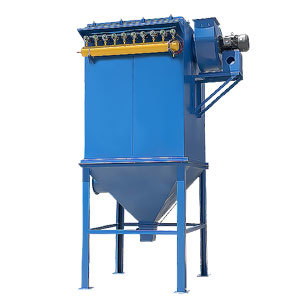
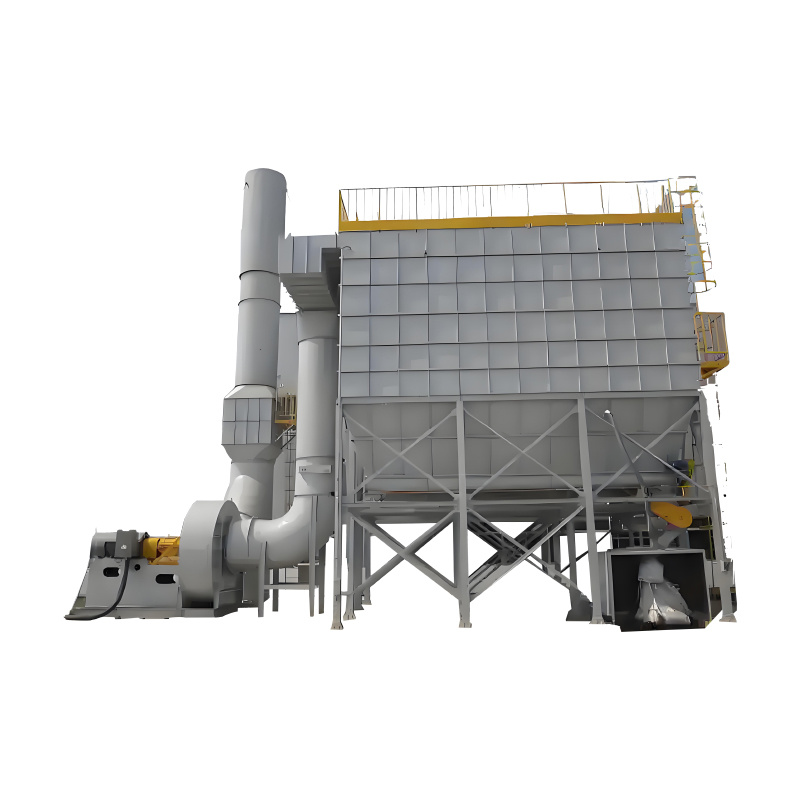
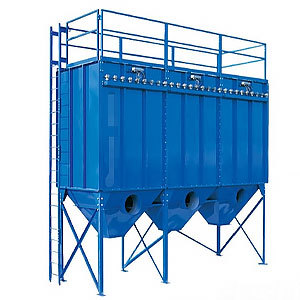
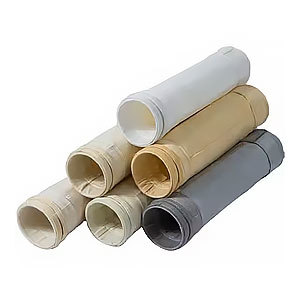
Bag filter: With a filtration efficiency of over 99.9%, it is suitable for fine particles (<5 μ m) and low to medium concentration dust, such as in the chemical, food, and electronics industries. The advantage is easy to meet emission standards, but the disadvantage is that high humidity and high viscosity environments are prone to bag blockage. Selection key: Select filter material according to temperature (such as PPS filter material for 180 ℃ flue gas in power plants), and choose pulse blowing or mechanical vibration method according to dust cleaning requirements.
Electrostatic precipitator: capable of handling high air volume (up to 1 million m ³/h per unit), suitable for high temperature (≤ 350 ℃) and high flow flue gas, such as steel and power plants. The advantage is low energy consumption and maintenance costs, while the disadvantage is limited capture efficiency for fine particles (<1 μ m). Selection key: Wide spacing electric field design can improve high humidity resistance, and variable frequency power supply system can reduce energy consumption by 20% -30%.
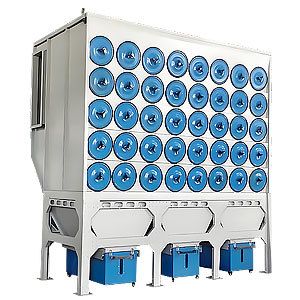
Filter cartridge dust collector: small in size and occupies less land, suitable for small workshops or dispersed dust production points, such as laser cutting and furniture manufacturing. The advantage is modular design and easy installation, but the disadvantage is limited air handling capacity (usually less than 100000 m ³/h per unit). Selection key: High efficiency filter media such as Ultra Web can enhance the ability to capture fine powder, and waterproof coating treatment is suitable for high humidity scenarios such as candy factories.
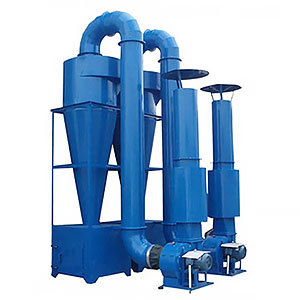
Cyclone dust collector: simple structure, low cost, suitable for pre dust removal of coarse particles (>10 μ m), such as mines and building materials. The advantage is no filter material loss, the disadvantage is low efficiency (usually 85% -92%). Selection key: Ceramic lining can enhance wear resistance, and dual stage design can improve pre dust removal efficiency.
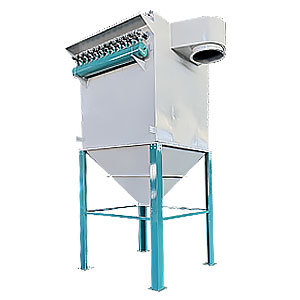
Plastic fired board dust collector: The surface is smooth and not easy to stick to dust, suitable for high humidity and high adhesion dust, such as glass factories and cement factories. The advantage is a long maintenance cycle (filter material lifespan of 3-5 years), while the disadvantage is higher initial investment. Selection key: Food industry needs to choose food grade plastic fired board that meets FDA standards, and high-temperature scenarios need to choose heat-resistant board.
3、 Advanced decision-making: full lifecycle cost control
In the context of foreign trade, the "hidden cost" of equipment often exceeds the initial purchase price. When selecting, it is necessary to comprehensively evaluate the life cycle cost (LCC), including procurement, installation, operation and maintenance, and energy consumption
Procurement cost: accounting for 40% -50% of LCC, requiring a balance between "compliance capability" and "budget". For example, in the European and American markets, CE/UL certified equipment is preferred to avoid the cost of later rectification; Emerging markets can choose modular equipment to reduce initial investment.
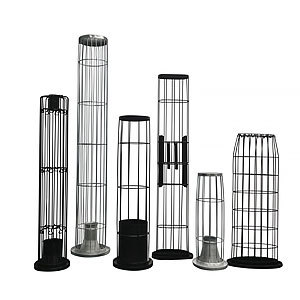
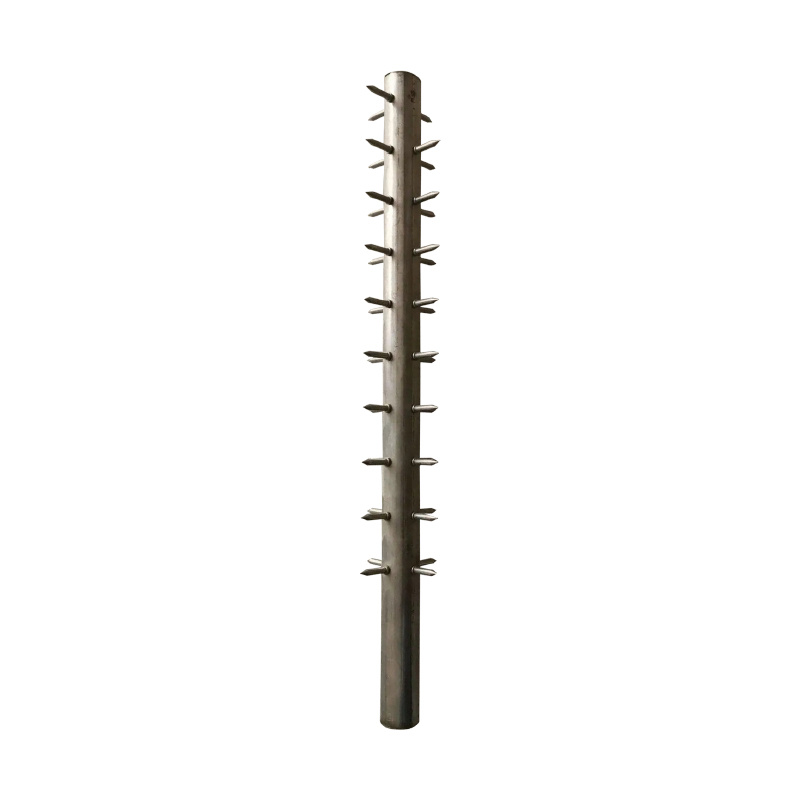
Operation and maintenance costs: The replacement of filter media accounts for the largest proportion, such as a lifespan of 1-2 years for polyester filter cartridges, 3-5 years for membrane filter cartridges, and over 5 years for PTFE filter media. When selecting, priority should be given to long-life accessories, such as the silicone sprayed dust removal skeleton, which can reduce scratches on the filter bag and extend its lifespan.
Energy consumption cost: Fan energy consumption accounts for more than 80% of the total energy consumption of the equipment. When selecting, choose high-efficiency motors with IE3 level or above, and use a frequency converter to dynamically adjust the air volume, which can reduce energy consumption by 20% -30%. For example, the low resistance design of a cyclone dust collector can save 30% of the annual wind turbine electricity bill.
4、 Regional adaptation: responding to special environmental challenges
Foreign trade equipment needs to adapt to the climate and working conditions of different regions, and targeted adjustments should be made when selecting:
Southeast Asia high humidity area: focus on solving the problem of condensation, equipment needs to be equipped with insulation layer, filter material selected with PTFE film type, bag filter can be coated with waterproof sealant at the seam.
High temperature zone in the Middle East: The equipment casing is made of weather resistant steel, the electrostatic precipitator needs to be reinforced with heat dissipation design, and the filter material is made of high temperature resistant materials such as fiberglass to avoid high temperature aging.
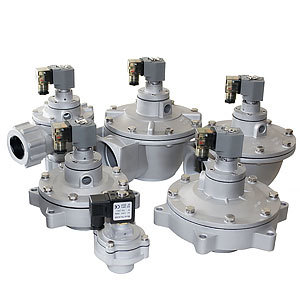
Strong corrosion areas in Europe and America: In the chemical industry, 316L stainless steel equipment is preferred, and explosion-proof and anti-corrosion types are selected for accessories such as pulse valves, which comply with explosion-proof standards such as Exd II CT5.
Dust prone areas in Africa: Equipment needs to simplify structure to improve reliability, pipeline wind speed should be controlled at 18-22m/s to avoid dust deposition, and the ash hopper design should be enlarged to reduce cleaning frequency.
5、 Selection Avoiding Pitfalls: Analysis of Three Common Misconceptions
Misconception 1: Only looking at efficiency without considering working conditions - blindly choosing high-efficiency equipment, such as using bag filters in coarse particle mines, leads to excessive loss of filter material and a sharp increase in operation and maintenance costs. The correct approach is to first clarify the particle size of the dust, and then match the equipment type.
Misconception 2: Excessive pursuit of low prices - Purchasing uncertified low-priced equipment may face the risk of customs clearance obstruction in the EU market or fines for non-compliance with emissions standards. Correct approach: Prioritize confirming that the equipment meets the target market certification (CE/EPA/FDA), and then compare cost-effectiveness.
Misconception 3: Neglecting post service - Overseas equipment maintenance is inconvenient, and if the supplier does not provide localized services, the loss of downtime after failure will be huge. Correct approach: Choose a supplier that can provide overseas installation guidance and quick supply of accessories.
The selection of industrial dust removal equipment is essentially the art of balancing compliance requirements, operating conditions, and cost control. For foreign trade enterprises, on-site survey before selection (such as dust particle size detection, air volume calculation), interpretation of target market standards, and verification of suppliers' technical solutions (such as CFD flow field simulation reports) are all key steps to ensure accurate selection. Ultimately, scientific selection can not only achieve environmental standards, but also create long-term value for enterprises by reducing energy consumption and operation costs.
Hot Tags:


Contact Us
Tel:
WeChat:
WhatsApp:
E-mail:
Address:
338 National Road South, Longfengdian Village, Botou City, Hebei Province, China
JiuznTomine is expertly delivering technically complicated projects in markets & provides custom solutions for their customized need.


CONTACT INFO
Tel: +86 18531710311
WeChat: +86-18531710311
338 National Road South, Longfengdian Village, Botou City, Hebei Province, China