











Dust bag stitching process: invisible technical defense against air leakage
Nov 24,2025

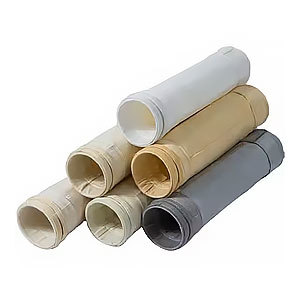
In the filtration system of bag filter, the performance of the filter material in the dust bag is often the focus of attention, while the stitching process, as the core link to connect the filter material and ensure structural integrity, is often overlooked. In fact, about 30% of dust collector air leakage problems are caused by defects in the stitching process, such as uneven needle spacing, loose stitching, or mismatched materials, which may lead to the escape of dusty smoke from the gaps. This not only reduces dust removal efficiency, but also may pose compliance risks for EU CE certification or US EPA environmental audits.
1、 The core logic of preventing air leakage: the "triple guarantee of sealing" of stitching technology
The stitching of the dust removal bag is not simply "spliced and fixed", but is constructed through a triple design of "stitching structure stitching material node reinforcement" to create a smoke sealing barrier. The core logic is to block the airflow channel through continuous and tight stitching, use adaptive materials to resist working condition erosion, strengthen the structure for stress concentration areas, and ultimately achieve the technical goal of air leakage rate ≤ 0.5% at the stitching, which matches the sealing performance of the filter material body.
2、 Key process parameters: precise control from stitch to needle pitch
The anti leakage effect of suture technology depends on the precise matching of parameters such as suture type, suture material, needle spacing density, etc. Different process standards need to be established for different working conditions.
1. Thread type: Select sealing structure as needed
The structure of the stitching directly determines the sealing and tensile resistance of the stitching area, and the selection should be based on the stress characteristics and working strength of the filter bag:
Flat seam (lock stitch): formed by interweaving two stitches, the stitch is flat and tight, suitable for conventional splicing of filter bag bodies. The advantage is good sealing and low risk of air leakage, but the disadvantage is moderate tensile strength, which is not suitable for scenarios with high pulse cleaning frequency (such as cement kiln tail).
Lock seam (wrapped chain stitch): The seam wraps around the edge of the filter material and forms a chain structure, with a tear resistance 40% higher than that of a flat seam, while also preventing the filter fiber from falling off. Recommended for the connection between filter bag mouth and flower board, as well as for sewing brittle filter materials such as fiberglass.
Three needle and six thread (safety stitch): A double stitch is formed by three needle and thread threads, with smooth seams and excellent tensile strength, capable of withstanding repeated expansion and contraction under high temperature and high pressure conditions. It is widely used in the sewing of the main body of high-temperature filter bags such as Flumes and PPS, and the needle fracture strength needs to reach 150N or above.
2. Suture material: "Same quality and same origin" as the filter material is the key
If the suture material does not match the filter material, it is prone to aging, breakage, and air leakage. The principle of "material compatibility and performance equivalence" should be followed:
PPS (Polyphenylene Sulfide): It is recommended to use PPS suture to adapt to 160-200 ℃ working conditions such as power plants and waste incineration. The core performance should meet the requirements of acid and alkali resistance and fracture strength ≥ 8N/tex.
PTFE (polytetrafluoroethylene): It is recommended to use PTFE suture to adapt to chemical, strong corrosion and other working conditions up to 260 ℃. The core performance is temperature resistance, corrosion resistance and resistance to aging.
Fiberglass: It is recommended to use silicone impregnated fiberglass stitching, which is suitable for metallurgical, high-temperature kilns and other working conditions ≤ 300 ℃. It needs to have high temperature resistance and tensile deformation resistance.
Food grade polyester: It is recommended to pair it with food grade polyester stitching, suitable for high hygiene scenarios such as food processing and pharmaceuticals. It needs to be certified by FDA and has no risk of fiber shedding.
3. Needle spacing and needle type: the "millimeter level standard" for controlling gaps
Excessive needle spacing can leave gaps, while insufficient spacing can damage the filter fibers. It is necessary to accurately set the filter thickness and dust particle size in combination
Needle spacing density: For conventional filter media (thickness 1-2mm), the needle spacing is controlled at 28-35 needles/10cm; for thick filter media (>2mm), it can be relaxed to 25-28 needles/10cm; for fine dust conditions (such as electronic factories), it needs to be increased to 35-40 needles/10cm to ensure that the suture gap is smaller than the dust particle size (usually<0.5 μ m).
Needle type selection: Use round headed needles to avoid puncturing the filter film layer. The needle diameter should be 0.1-0.2mm larger than the suture diameter to prevent the suture from being crushed and broken. When sewing hard and brittle filter materials such as PTFE, tungsten steel needles should be used to reduce wear.
3、 Key parts strengthening: Process treatment in areas with high risk of air leakage
The bag mouth, bag body connection, and bag bottom of the filter bag are areas with high stress concentration and air leakage, and require special processes to strengthen the sealing performance.
1. Bag opening: seamless connection with the flower board
The sealing failure between the bag opening and the flower board is the most common air leakage point, which requires dual protection from structural design and sewing process:
Adopting the structure of "external interface+stainless steel spring coil", the spring coil needs to be tightly adhered to the seam of the bag opening. Double seam locking is used during sewing to ensure that the spring coil is fixed without looseness, and the clearance between the spring coil and the flower board is ≤ 1mm.
The vertical edge of the bag mouth adopts a 45 ° oblique sewing process, which disperses the tension during installation and cleaning. The outer layer is wrapped and sewn with the same material filter material to enhance wear resistance and sealing performance.
2. Bag body connection: "double safety" of double-layer stitching
The joint of the bag body needs to withstand the impact of repeated dust cleaning airflow. We recommend the sewing solution of "single positioning+double reinforcement":
First, position the filter material with a single flat seam to ensure alignment and no deviation; Further strengthen with double seam locking seams, with a spacing of 3-5mm between the two seams to form a sealed redundancy.
The stitching should be perpendicular to the bag opening to avoid tilting and causing local stress concentration. The deviation of the stitching should be ≤ 1mm to ensure uniform force distribution.
3. Bag bottom: "reinforced design" for impact resistance
The bottom of the bag is prone to damage and leakage due to dust deposition and airflow impact, and structural reinforcement is needed to improve sealing and durability:
The bottom material of the bag is folded outward and upward, with a reinforcement layer of 100mm width, sewn with double needle or three needle stitching to enhance impact resistance.
Leave a distance of 10-12mm between the bottom edge of the bag body and the bottom of the bag, to provide a buffer space for thermal expansion and contraction, and to prevent the stitching from breaking due to deformation.
4、 Regional working condition adaptation: targeted optimization of air leakage prevention scheme
Due to the differences in working conditions in different regions overseas, special requirements are put forward for suture technology, and the plan needs to be adjusted based on environmental characteristics:
High humidity areas in Southeast Asia: High humidity environments can easily cause moldy stitching, so it is necessary to use polyester stitching containing anti mold agents. Additional waterproof sealant should be applied to the stitching at the bag opening and bottom to prevent moisture from seeping into the seams.
High temperature zone in the Middle East: High temperatures above 300 ℃ can easily cause aging of the stitching. Glass fiber impregnated silicone stitching should be used, and a thermal insulation coating should be added during sewing. At the same time, the needle spacing should be reduced to 35 needles/10cm to reduce the penetration of hot air.
Strong corrosion areas in Europe and America: The acidic and alkaline components in chemical flue gas are prone to corrode the suture, and PTFE suture should be used. All joints should be treated with hot melt sealing to ensure that there is no chemical medium in contact with the suture.
Africa's dusty areas: High dust loads can easily cause suture wear, requiring the use of high-strength suture with a coarse diameter (≥ 20tex). Three layers of suture should be used at the bag body connection to extend its service life.
5、 Quality Inspection and Maintenance: Practical Techniques for Extending Sealing Life
The sealing effect of suture technology needs to be strictly tested and verified, and daily maintenance can further reduce the risk of air leakage:
Factory inspection: The sealing is tested using the pressure attenuation method. The filter bag is inflated to 5kPa, and if the pressure drops by ≤ 0.2kPa within 5 minutes, it is considered qualified; Simultaneously conduct tensile testing to ensure that the fracture strength of the suture meets the requirements of the working conditions.
On site inspection: Before installation, check whether there are any skipped stitches or loose threads in the stitching, and whether the bag opening spring coil is flat; During operation, air leakage is detected through differential pressure monitoring (if the differential pressure drops abnormally, the suture area needs to be carefully inspected).
Maintenance points: Avoid excessive cleaning (cleaning pressure ≤ 0.6MPa) to prevent air flow impact from damaging the stitching; Regularly clean the surface dust of the filter bag to reduce the wear of the stitching caused by dust.
The stitching process of the dust removal bag is the "detail engineering" that determines whether the bag filter can operate stably for a long time. The core of its anti leakage technology lies in accurately matching process parameters with filter characteristics and operating conditions, and constructing reliable sealing barriers through structural reinforcement and material adaptation. For foreign trade scenarios, targeted regional optimization and strict quality control can not only meet the environmental compliance requirements of overseas customers, but also enhance the stability and economy of equipment operation - this is the core value brought by technical details.
Hot Tags:


Contact Us
Tel:
WeChat:
WhatsApp:
E-mail:
Address:
338 National Road South, Longfengdian Village, Botou City, Hebei Province, China
JiuznTomine is expertly delivering technically complicated projects in markets & provides custom solutions for their customized need.


CONTACT INFO
Tel: +86 18531710311
WeChat: +86-18531710311
338 National Road South, Longfengdian Village, Botou City, Hebei Province, China