












Dust removal skeleton organic silicon spraying: dual technical guarantee of anti sticking ash and acid alkali resistance
Nov 22,2025

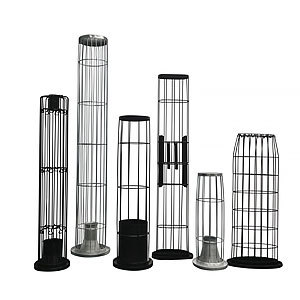
In the core components of bag filter, the dust removal skeleton (also known as bag cage or filter bag frame) plays a key role as the "filter bag rib", and its structural stability and surface performance directly determine the service life of the filter bag and the operating efficiency of the dust removal system. Ordinary carbon steel or galvanized skeleton is prone to dust adhesion, skeleton corrosion and other problems under complex working conditions such as chemical corrosion and high humidity bonding, which can lead to filter bag damage and equipment resistance surge. Organic silicon spraying technology forms a special functional coating on the surface of the skeleton, achieving dual protection of anti sticking ash and acid alkali resistance, becoming the preferred solution for overseas factories in metallurgy, chemical, coking and other industries.
1、 Technical essence: Characteristics and advantages of organic silicon coatings
The organic silicon spraying of the dust removal skeleton is not a simple surface coating, but a high-temperature vulcanization process that forms a strong bond between the organic silicon polymer and the skeleton substrate, forming a functional coating with uniform thickness (usually 20-50 μ m). The core advantage of this coating comes from the molecular structure characteristics of organic silicon materials - the siloxane main chain has excellent chemical stability, and the methyl groups on the side chains endow the surface with extremely low surface energy. These two characteristics together support the dual functions of anti sticking ash and acid and alkali resistance. Compared with traditional galvanizing and spray coating processes, the performance degradation rate of organic silicon coatings under extreme working conditions is reduced by more than 60%, and the continuous operation life of the skeleton can exceed 30000 hours in some adaptation scenarios.
2、 Anti adhesive dust: reducing dust adhesion and cleaning load from the root
The adhesion of dust on the surface of the skeleton is mainly due to van der Waals forces and liquid bridge forces, especially in high humidity and high viscosity dust conditions (such as food processing and feed production). Traditional skeleton surfaces are prone to forming "dust hard shells", which not only increase the shrinkage resistance of the filter bag, but also lead to increased friction between the filter bag and the skeleton during dust cleaning. Organic silicon spraying achieves anti sticking effect through two main mechanisms:
Low surface energy inhibits adhesion: The surface energy of organic silicon coatings is usually less than 30mN/m, much lower than the surface energy of water (72.8mN/m) and most industrial dust, making it difficult for dust particles to form stable adhesion on the surface. Experimental data shows that under the same working conditions, the dust adhesion of organic silicon spray coating skeleton is only 15% -20% of that of galvanized skeleton, especially for fine powders with particle size less than 10 μ m, the suppression effect is more significant. In the application of grain processing plants in high humidity areas of Southeast Asia, it can effectively prevent dust from forming blockages on the skeleton surface due to moisture absorption and adhesion.
Smooth surface accelerated peeling: After the organic silicon coating is cured, the surface roughness Ra is ≤ 0.8 μ m, presenting a uniform and smooth mirror effect. Combined with the high-frequency vibration of the filter bag during pulse cleaning, dust particles are easily detached from the skeleton surface under the action of gravity and airflow, and enter the ash hopper for collection. In the sawdust dust removal system of the woodworking industry, after using organic silicon spray skeleton, the cleaning interval of the filter bag can be extended from the original 8 minutes to 15 minutes, and the energy consumption of the fan can be reduced by 22%.
It should be noted that the anti sticking effect needs to be matched with the parameters of the dust cleaning system - when dealing with high concentration dust (such as mine crushing, dust concentration>50g/m ³), it is recommended to use the organic silicon spray skeleton in conjunction with the low-pressure pulse dust cleaning system to avoid excessive dust cleaning leading to coating wear and minimize dust residue.
3、 Acid and alkali resistance: a chemical barrier that resists corrosive media
The flue gas from industries such as chemical, coking, and waste incineration often contains acidic and alkaline corrosive media such as HCl, SO ₂, Na ₂ CO ∝. Ordinary skeletons are prone to problems such as welding point corrosion and longitudinal reinforcement thinning under such working conditions, resulting in a decrease in skeleton strength and deformation and damage of filter bags due to the loss of effective support. The chemical stability of organic silicon coatings makes them a reliable barrier against corrosion, manifested as:
Wide range acid-base tolerance: The siloxane backbone of organosilicon has excellent resistance to decomposition in acidic and alkaline media, and can work stably in environments with pH values of 1-14. A coking plant in the Midwest of the United States once frequently shut down for maintenance due to corrosion of the bag filter framework. After using organic silicon coating (combined with resin repair agent to repair the damage), the framework operated continuously in sulfur-containing flue gas for 11 years without significant corrosion, completely solving the problem of regular welding maintenance.
Isolation of corrosive medium penetration: High quality organic silicon spraying technology can form a continuous coating without pinholes or cracks, effectively preventing corrosive gases and moisture from penetrating the surface of the skeleton substrate. In the ammonia fertilizer dust removal system of the fertilizer plant, the organic silicon spray skeleton can resist the synergistic corrosion of ammonia and nitrogen oxides, and its service life is more than three times that of the galvanized skeleton; In acid mist dust removal in the electroplating industry, it can prevent the skeleton from breaking due to hydrogen embrittlement.
High temperature environmental stability: The organic silicon coating can withstand a temperature range of -40 ℃ to 200 ℃, and some high-temperature resistant modified models can reach 260 ℃. It can still maintain stable acid and alkali resistance in high-temperature corrosion conditions such as boiler flue gas (temperature 180-220 ℃) in power plants and wet flue gas (temperature 240-260 ℃) in glass factories, without problems such as coating softening or peeling.
4、 Process control: a key link to ensure dual performance
The effect of organic silicon spraying is not only determined by the material itself, but also by the entire process control from the pre-treatment of the skeleton substrate to the curing of the coating, which directly affects the final anti sticking ash and acid alkali resistance performance. Especially for products exported overseas, they need to comply with industrial standards in different regions:
1. Substrate pretreatment: After the skeleton welding is completed, it is necessary to first remove the welding slag, oil stains, and oxide scale on the surface through shot blasting or water sandblasting treatment, so that the surface roughness of the substrate can reach Ra3.2-6.3 μ m, and enhance the adhesion of the coating. For corroded old skeletons, acid washing and rust removal should be carried out before sandblasting treatment to ensure a firm bond between the coating and the substrate.
2. Spraying parameter control: High pressure airless spraying technology is adopted, with a spraying distance controlled between 20-30cm and a uniform coating thickness controlled between 30-40 μ m (which can be monitored in real time by a wet film thickness gauge). To avoid coating sagging caused by excessive thickness during one-time spraying, it is usually sprayed in two layers. The first layer is cured before the second layer is sprayed to ensure the density of the coating.
3. High temperature curing process: After spraying is completed, it needs to enter the curing furnace for segmented curing. First, preheat at 80 ℃ for 15 minutes to remove moisture, and then heat up to 180 ℃ for 30 minutes to fully crosslink and cure the silicone coating. The cured skeleton needs to be cooled to room temperature before testing to avoid cracking of the coating due to sudden cooling.
4. Quality inspection standards: The skeleton exported to the European Union must comply with the EN 13285 standard, and the coating adhesion must pass the grid test (with a grid spacing of 1mm and no coating peeling); Products exported to the United States must meet EPA requirements and show no signs of corrosion after a 500 hour salt spray test on the coating. In addition, the surface of the skeleton should be free of burrs and the welding points should be smooth. The verticality error should be controlled within a range of 6 meters ± 1 millimeter to avoid scratching the filter bag during installation.
5、 Adaptation to foreign trade scenarios: targeted adjustment of regional working conditions
The working conditions vary greatly in different regions overseas, and the application of organic silicon spray skeleton needs to be adjusted according to regional characteristics to ensure maximum performance:
Southeast Asia high humidity area: Factories in this area need to focus on strengthening their anti adhesive properties. It is recommended to use hydrophobic organic silicon coatings (static water contact angle ≥ 110 °), and increase the coating thickness to 45 μ m at the skeleton welding points to prevent corrosion of the welds due to high humidity environments. In the dust treatment of rubber product factories, ash hopper heating devices can be used in conjunction to further reduce the risk of dust adhesion.
High temperature and high dust areas in the Middle East: For the high-temperature flue gas in the cement and metallurgical industries, a high-temperature resistant modified silicone coating (temperature resistant to 260 ℃) is selected, and the skeleton material is preferably matched with 316L stainless steel to avoid accelerated oxidation of the substrate at high temperatures. In the kiln tail dust removal system of a cement plant in Dubai, this combination extends the lifespan of the skeleton from the original 18 months to 5 years.
Strict environmental protection zones in Europe and America: In addition to meeting the requirements of acid and alkali resistance and anti adhesive properties, it is necessary to ensure that the organic silicon coating does not contain harmful substances such as heavy metals and complies with the RoHS directive. When applied in industries such as medicine and food, coatings need to pass FDA certification to avoid contamination caused by dust coming into contact with the product. At the same time, in conjunction with an intelligent monitoring system, real-time tracking of the skeleton status meets the data traceability requirements of environmental audits.
Corrosion conditions in Africa: For the highly corrosive flue gas of chemical enterprises in some regions, a composite protection scheme of "organic silicon coating+zinc chromium coating" is adopted. The zinc chromium coating is first applied to enhance the adhesion of the substrate, and then the organic silicon coating is sprayed to improve the acid and alkali resistance, which can adapt to extreme corrosion environments with pH values of 0.5-14.
6、 Operation and Maintenance Suggestions: Practical Techniques for Extending Coating Life
To fully utilize the dual protection effect of organic silicon spray skeleton, overseas factories need to pay attention to the following points during operation and maintenance:
Regularly check the status of the skeleton coating. If local coating damage is found (such as being scratched by sharp objects), it is necessary to promptly use organic silicon repair agent to fill it, in order to avoid the damage expanding and causing substrate corrosion.
Avoid pulling forcefully during the installation of the filter bag to prevent coating wear caused by friction between the filter bag and the skeleton; When replacing the filter bag, it is necessary to clean the residual dust on the surface of the skeleton, which can be gently blown with compressed air (pressure ≤ 0.3MPa).
Under high concentration dust conditions, it is recommended to regularly (every 3 months) check the parameters of the dust cleaning system to ensure that the pulse pressure is stable at 0.4-0.6MPa, in order to avoid excessive pressure causing wear on the coating or low pressure causing dust residue.
For equipment that has been shut down for a long time, the silicone spray coating skeleton should be removed, cleaned, and stored in a dry and ventilated environment to avoid prolonged exposure to high humidity or corrosive gases.
The organic silicon spraying technology for dust removal skeleton essentially combines material science and process control to provide a dual solution of "anti sticking+anti-corrosion" for dust removal systems under complex working conditions. Its value lies not only in extending the service life of the skeleton and filter bag, reducing operation and maintenance costs, but also in ensuring the stable and compliant operation of the dust removal system, helping overseas enterprises cope with environmental regulations and working conditions challenges in different regions. In practical applications, customized design should be based on the smoke characteristics of specific industries and regional environmental parameters in order to maximize technological advantages, rather than simply applying standardized products.
Hot Tags:


Contact Us
Tel:
WeChat:
WhatsApp:
E-mail:
Address:
338 National Road South, Longfengdian Village, Botou City, Hebei Province, China
JiuznTomine is expertly delivering technically complicated projects in markets & provides custom solutions for their customized need.


CONTACT INFO
Tel: +86 18531710311
WeChat: +86-18531710311
338 National Road South, Longfengdian Village, Botou City, Hebei Province, China