











High viscosity dust filter cartridge dust collector: anti clogging membrane filter material solution
Nov 21,2025

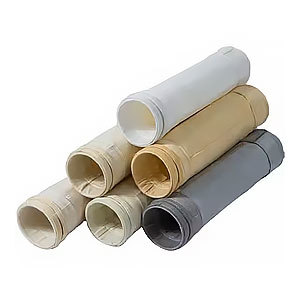
High viscosity dust, due to its high moisture content, strong viscosity, and tendency to agglomerate, is prone to form a "bonding layer" on the surface of the filter cartridge, leading to clogging of the filter cartridge dust collector, soaring resistance, and ineffective dust cleaning, ultimately resulting in equipment shutdown and excessive emissions. Ordinary filter media is difficult to solve this pain point, while membrane filter media has become the core technology solution for high viscosity dust treatment through the dual optimization of material characteristics and structural design. Its core logic is to reduce dust adhesion from the source, while improving dust stripping efficiency and achieving long-term stable filtration.
1、 The core cause of high viscosity dust blockage
The blockage of filter cartridges by high viscosity dust is not caused by a single factor, but rather the result of insufficient material adaptation and the combination of operating conditions:
The viscosity essence of dust: High viscosity dust surfaces usually contain viscous substances (such as resins, oils) or high water content, which are prone to physical adsorption when in contact with filter media, forming a "sticky dust layer" that is difficult to peel off.
Structural defects of filter material: Ordinary filter material has uniform pores and no anti sticking treatment. Dust easily penetrates into the deep layers of the filter material, rather than just staying on the surface, gradually blocking the internal channels.
Collaborative failure of dust cleaning: Viscous dust has strong adhesion with ordinary filter media, and even with pulse cleaning, it is difficult to completely peel off. Residual dust continues to accumulate, ultimately leading to the scrapping of the filter cartridge.
2、 The core principle of anti clogging of membrane filter material
The membrane filter material solves the problem of high viscosity dust adhesion and blockage from the root through "surface modification+structural optimization", and its technical logic can be summarized into three points:
1. Ultra low surface tension, blocking viscous adsorption
The mainstream membrane filter materials mostly use PTFE (polytetrafluoroethylene) or modified PU (polyurethane) membrane, with a surface tension of only 0.018N/m (PTFE) or less than 20mN/m (modified PU), which is equivalent to forming a "invisible isolation layer" on the surface of the filter material. High viscosity dust is difficult to establish effective adsorption with the surface of the filter material, and can only form loose accumulation, unable to penetrate into the interior of the filter material to form a "bonding layer", avoiding blockage from the source.
2. Gradient pore structure to avoid deep blockage
The membrane filter material adopts a gradient structure design of "coarse on the outside and fine on the inside": the outer layer has larger pores, which first intercept large particles of viscous dust to reduce its impact on the inner layer; The inner layer has dense pores (pore size 0.1-1 μ m), accurately filters fine powder, and both the inner and outer layers have undergone anti sticking treatment. This structure ensures that dust only forms a "peelable dust layer" on the surface of the filter material, rather than blocking internal pores, maintaining long-term smooth ventilation.
3. Smooth surface characteristics improve dust removal efficiency
The surface smoothness of laminated filter material is improved by more than 40% compared to ordinary filter material, and some materials have undergone hydrophobic treatment (water contact angle>130 °), further reducing the adhesion between dust and filter material. When combined with the pulse cleaning system, the dust stripping rate can reach over 98%, and the resistance of the filter cartridge can quickly drop back to the initial level (100-150Pa) after cleaning, avoiding the accumulation of residual dust.
3、 The selection logic of membrane filter material: adaptation to working conditions is key
Different high viscosity dust working conditions (temperature, corrosiveness, dust type) have different requirements for membrane filter media, and the principle of "matching material characteristics with working conditions requirements" should be followed:
1. Core material selection
PTFE coating: with the lowest surface tension and the best anti sticking performance, it can withstand temperatures ranging from -200 ℃ to 260 ℃ and is resistant to acid and alkali corrosion. It is suitable for complex scenarios such as chemical engineering, plastic granulation, and high-temperature viscous dust. The filtration efficiency reaches over 99.9% and can intercept fine dust particles above 0.3 μ m.
PVDF coating: With extremely strong chemical stability, it can withstand high temperatures ranging from 80 ℃ to 100 ℃, resist strong acid-base and organic solvent corrosion, and is suitable for high viscosity dust containing corrosive components (such as chemical additive dust).
Modified PU film coating: relatively affordable in cost, excellent in hydrophobic performance, suitable for high humidity and viscous dust scenarios at room temperature without strong corrosion (such as wood processing resin dust, flour processing dust).
2. Key points for adapting to working conditions
Temperature adaptation: PTFE coating is preferred for high-temperature conditions (such as hot melt adhesive production and coking coal powder); Modified PU or PVDF film can be used for normal temperature conditions (such as food processing and painting workshops).
Humidity adaptation: In high humidity environments (such as coastal factories in Southeast Asia), hydrophobic film coating should be selected to avoid water vapor assisted dust agglomeration.
Corrosive adaptation: PTFE or PVDF coating is preferred for acidic and alkaline dust (such as chemical viscous dust), while modified PU coating can be used for ordinary viscous dust (such as cement ash).
4、 Anti clogging supporting technology: collaborative optimization of dust cleaning and pre coating
Coated filter media requires scientific supporting technology to maximize its anti clogging effect. The core lies in optimizing the parameters of the ash cleaning system and the reasonable application of pre coating technology
1. Optimization of pulse cleaning parameters
Spray pressure: For high viscosity dust, it is recommended to set it at 0.4-0.6MPa to ensure dust cleaning penetration and achieve rapid dust removal.
Pulse width: extended to 0.2-0.3 seconds, providing sufficient stripping time for viscous dust to avoid residue caused by insufficient blowing time.
Spray cycle: Adopting a pressure difference control mode (trigger threshold 1.2-1.5kPa) instead of a fixed time period, it ensures the cleaning effect and reduces unnecessary frequent cleaning damage to the filter material.
2. Auxiliary application of pre coating technology
For highly viscous dust (such as asphalt smoke and adhesive powder), a pre coating (such as diatomaceous earth) can be applied to the filter cartridge during the initial use, with a dosage of 0.5-1 pound per filter cartridge. The pre coating will form a layer of "isolation film" on the surface of the film, and the sticky dust will only adhere to the surface of the pre coating. When cleaning, it can be peeled off together with the pre coating, further extending the life of the filter cartridge.
5、 Typical Industry Application Scenarios
The effectiveness of the membrane filter solution needs to be verified in conjunction with specific industry conditions, and the following three scenarios are the most representative:
1. Food processing industry (flour, sugar powder)
The high viscosity dust in the food industry has both viscosity and hygiene requirements. Choosing FDA compliant PTFE coated filter media can avoid dust residue and microbial growth. After adopting this plan, a certain flour mill extended the filter blockage cycle from 1 week to 2 months, reduced the frequency of ash cleaning by 60%, and stabilized the emission concentration below 5mg/m ³, which meets food safety standards.
2. Chemical industry (resin powder, coating powder)
Chemical high viscosity dust often contains corrosive components, and the use of PVDF coated filter material can resist acid and alkali erosion. A certain resin processing plant has extended the lifespan of the PTFE coated filter cartridge from 3 months to 10 months through the "PTFE coated filter cartridge+optimized pulse cleaning" scheme, reducing system energy consumption by 25% and avoiding production interruptions caused by frequent filter cartridge replacement.
3. Building materials industry (cement ash, gypsum powder)
Building materials dust is high in humidity and viscosity, prone to clumping and blockage. The use of hydrophobic PTFE coated filter material and gradient pore structure can effectively prevent the adhesion of damp dust. After application in a cement plant, the final resistance of the filter cartridge decreased from above 1500Pa to below 1000Pa, the energy consumption of the fan decreased by 15% -20%, and the maintenance cost decreased by 50%.
6、 Key points of practical operation: compliance and operation and maintenance
1. International compliance adaptation
The food industry needs to use coated filter media that complies with FDA or EU 10/2011 regulations to ensure no safety risks in dust recovery.
Explosion proof scenarios (such as wood powder and coal powder) require ATEX certified coated filter media and dust collectors to avoid safety hazards caused by dust accumulation.
The European and American markets need to meet the environmental standard of emission concentration ≤ 5mg/m ³, and the efficient filtration characteristics of PTFE membrane filter material can be directly adapted.
2. Core matters of operation and maintenance
Regularly monitor the resistance of the filter cartridge. When the resistance continues to exceed 1200Pa, check the cleaning parameters or filter material status to avoid excessive blockage.
Compressed air needs to undergo oil-water separation (oil content<1ppm) to prevent oil stains from adhering to the surface of the film and affecting its anti sticking performance.
The replacement cycle of filter media needs to be adjusted according to the working conditions. In conventional high viscosity dust scenarios, the lifespan of membrane filter media can reach 6-15 months, far exceeding the 3-6 months of ordinary filter media.
The core value of the membrane filter solution is to transform the treatment of high viscosity dust from "passive filter cartridge replacement" to "active anti clogging" through precise adaptation of materials and working conditions. It is not a universal solution, but requires scientific selection based on factors such as dust characteristics, temperature, corrosiveness, and optimization and standardized operation and maintenance of the dust cleaning system in order to achieve long-term stable operation. Against the backdrop of increasingly stringent global environmental compliance requirements, this solution provides a technological path for the high viscosity dust industry that balances efficiency, cost, and compliance.
Hot Tags:


Contact Us
Tel:
WeChat:
WhatsApp:
E-mail:
Address:
338 National Road South, Longfengdian Village, Botou City, Hebei Province, China
JiuznTomine is expertly delivering technically complicated projects in markets & provides custom solutions for their customized need.


CONTACT INFO
Tel: +86 18531710311
WeChat: +86-18531710311
338 National Road South, Longfengdian Village, Botou City, Hebei Province, China