


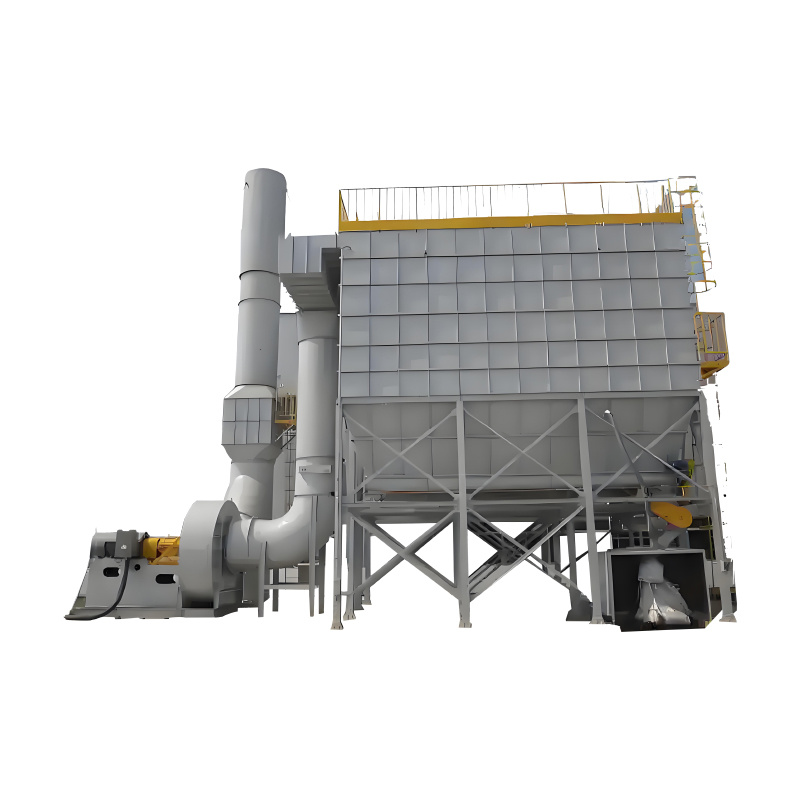
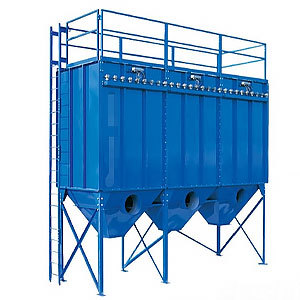
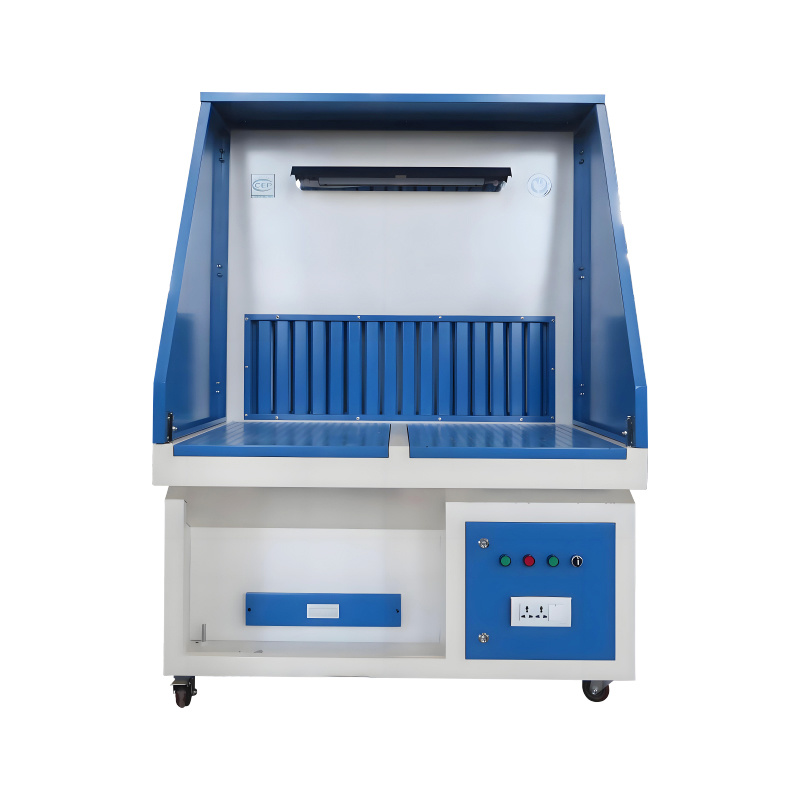
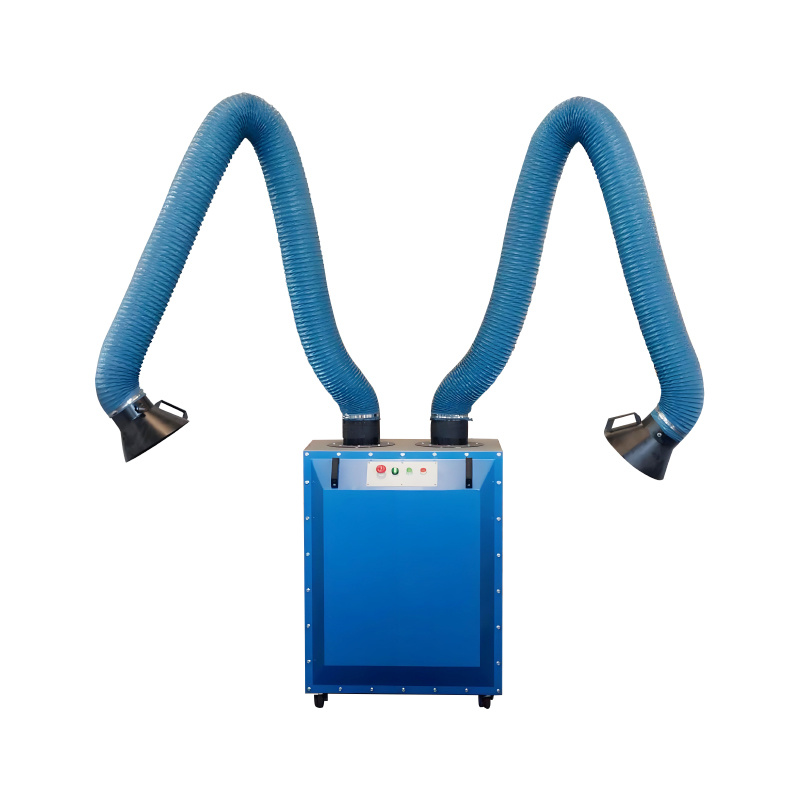










Green industrial dust collector dust recycling and reuse: technical path and value realization
Nov 21,2025

In the context of the deep integration of global circular economy and ESG (environmental, social, and governance) concepts, industrial dust has transformed from a "pollutant" to a recyclable "secondary resource". Green industrial dust collectors not only undertake the core functions of dust purification and standard emissions, but also achieve multiple goals of resource recycling, cost savings, and environmental compliance through a scientific recycling and reuse system. This transformation not only responds to international regulatory requirements such as the EU's Circular Economy Action Plan and the US OSHA environmental standards, but also creates significant economic and environmental value for industrial enterprises.
1、 The core value of dust recycling and reuse: triple empowerment of environment, economy, and compliance
Dust recycling and reuse is not simply about "waste treatment", but a key link in industrial green transformation, and its value is reflected in three core dimensions:
1. Environmental Value: A Deep Breakthrough from "Emission Reduction" to "Carbon Reduction"
Industrial dust recycling can directly reduce the amount of solid waste landfill and avoid secondary dust pollution to the atmosphere, soil, and water bodies. For high-temperature industrial scenarios, the waste heat carried by dust is converted into steam or electricity through heat exchangers, with a heat recovery efficiency of over 60%, indirectly reducing fossil energy consumption and carbon emissions. In industries such as metallurgy and chemical engineering, targeted recycling of harmful substances in dust can prevent the infiltration and diffusion of heavy metals and other pollutants, and protect the ecological environment.
2. Economic Value: Dual benefits of cost savings and resource revenue generation
Directly reducing raw material costs is the most intuitive benefit. The iron oxide dust recovered by metallurgical enterprises can be cold pressed into balls and then returned to the furnace for smelting, which can reduce raw material costs by 15% -20%; Building materials factories use fly ash and quartz dust to produce concrete admixtures or bricks, reducing raw material costs by over 30%. The recovery of high-value dust is more economically efficient. The gold ore dressing plant recovers 263.76 tons of metal dust annually through bag filters, with a direct profit of over 210000 yuan; The recovery rate of precious metals recovered in electronic waste treatment can reach over 95%. At the same time, the recycling system can reduce implicit expenses such as sewage fees and solid waste treatment fees. After the technological transformation of a certain cement plant, the annual savings in sewage fees reached 511800 yuan.
3. Compliance value: meeting the rigid requirements of international environmental regulations
Global environmental regulations have put forward stricter requirements for dust emissions and resource recycling. The new EU battery regulations require industrial enterprises to establish dust recycling systems, and companies that fail to meet the standards will face a maximum fine of 100000 euros or a sales ban; The US EPA standards not only limit dust emission concentrations, but also encourage resource recycling projects to participate in carbon trading. By recycling and reusing dust, enterprises can easily meet the compliance requirements of international certifications such as CE and EAC, avoiding trade barriers and legal risks.
2、 The core technological path of dust recycling and reuse: the entire process from collection to resource utilization
The recycling and reuse of dust should follow the scientific path of "classification collection sorting purification resource conversion", and the technical solution should be dynamically adapted according to the characteristics of dust and industry scenarios
1. Preprocessing: Classification collection and basic purification
Classification collection is a prerequisite: through a dedicated dust removal system, dust is collected according to its composition and particle size, avoiding the mixing of different types of dust and reducing the recycling value. For example, electronic factory welding smoke dust and chemical corrosive dust need to be collected independently, while metal dust and non-metal dust need to be treated separately.
Basic purification and impurity reduction: Physical methods such as screening and magnetic separation are used to remove metal impurities and large particles from dust, reducing the difficulty of subsequent processing. High humidity areas require heating and dehumidification devices to prevent dust agglomeration and ensure smooth recycling.
2. Core processing: Adaptation of sorting and purification technology
Physical sorting: For dust with significant differences in particle size, airflow classification technology is used to separate different components; Metal dust can be enriched through magnetic separation, reselection, and other methods to improve the purity of target components.
Chemical purification: For high-value dust in the metallurgical and chemical industries, techniques such as acid washing and solvent extraction are used to remove impurities. For example, calcium carbide powder in the chlor alkali industry can be reused for acetylene gas synthesis after purification.
Surface modification: Activating organic dust such as rubber and plastic to enhance their reusability. For example, rubber powder modification can be used as asphalt pavement filler, with an increase in wear resistance of about 30%.
3. Resource transformation: the direction of utilizing industry characteristics
Material regeneration: Metal dust (iron, aluminum, copper, etc.) is used as smelting raw materials or processed into metal products; Non metallic mineral dust (quartz, feldspar) is used in the production of building materials and ceramics; Food processing dust can be recycled after FDA compliant treatment.
Energy recovery: Wood dust from wood processing and furniture factories can be converted into biomass fuel pellets for the production of thermal or electrical energy; The waste heat from high-temperature industrial dust is converted into production energy through a heat exchange system.
Chemical conversion: Specific chemical dust is catalyzed to synthesize new chemicals, achieving a value upgrade from "waste" to "raw materials".
3、 Typical Industry Application Cases: Technology Implementation and Scene Adaptation
The effectiveness of dust recycling and reuse depends on the precise matching of technology and industry scenarios, with the following three scenarios being the most representative:
1. Electronic waste recycling industry: Collaborative recycling of precious metals and harmful substances
A battery recycling company in Australia uses specialized industrial dust collectors to efficiently capture volatile compounds and heavy metal dust generated during the treatment of electronic waste. Through the integrated system of "dust removal sorting purification", not only are metal resources such as zinc and nickel recovered from dust, but heavy metal pollution is also avoided, fully complying with the EU WEEE directive and local environmental standards. The real-time monitoring technology equipped in this system can accurately control the filtering performance, ensuring that the recycling efficiency and compliance meet the standards synchronously.
2. Metallurgical industry: dust recycling and resource closed-loop
The iron oxide dust generated by the converter and blast furnace in the steel plant is collected by a bag filter and cold pressed into pellets through sintering technology, which are directly transported back to the smelting furnace for reuse. This model not only reduces the consumption of iron ore raw materials, but also reduces dust emissions. A certain steel enterprise saved over 10 million yuan in raw material costs annually through this plan, and the dust emissions decreased by 40%. For metallurgical dust containing precious metals, plasma technology is used to extract gold, silver, etc., with a recovery rate of over 95%, and the investment payback period can be shortened to within six months.
3. Building materials and wood processing industry: high-value conversion of low value dust
After the dust at the kiln tail of the cement plant is collected by a dust collector and impurities are removed, it can be recycled back to the kiln as raw material, which reduces alkaline dust pollution and limestone consumption; Sawdust and sanding dust from wood processing plants are centrally recovered through dust collectors to produce biomass fuel or board materials, achieving a closed-loop model of "production recycling reproduction". The initial investment payback period for such schemes is usually 1-3 years, and long-term operation and maintenance costs can be reduced by more than 20%.
4、 Key points of practical operation: technology selection and compliance implementation
1. Principle of technical adaptation
Priority selection based on dust characteristics: For dust with a metal content of ≥ 30%, smelting recovery technology is preferred. For fine powder (particle size<1 μ m), membrane separation technology is suitable. For high humidity and high viscosity dust, anti clogging dust removal and drying systems are required.
Balancing energy consumption and efficiency: Choose a dust collector with an intelligent dust cleaning system to reduce compressed air consumption; Priority should be given to using integrated waste heat recovery equipment in high-temperature scenarios to enhance comprehensive benefits.
2. Compliance and operation precautions
Maintain complete data records: The detection data and processing reports of the recycling process need to be synchronized to the company's ESG system to meet the requirements of EU EcoVadis audit and US EPA compliance traceability.
Targeted operation and maintenance: Regularly check the permeability of the dust collector filter material and the sealing of the recovery pipeline. The metal dust recovery system needs to be treated with anti-corrosion measures, and explosion-proof devices should be equipped in flammable dust scenarios.
Regional compliance adaptation: The EU market needs to meet the recycling targets of PPWR (Packaging and Packaging Waste Regulations), the US market needs to meet OSHA safety standards, and high humidity areas in Southeast Asia need to strengthen equipment moisture-proof design.
Dust recycling and reuse is a win-win path for industrial enterprises to achieve "green transformation" and "cost reduction and efficiency improvement". Its core lies in upgrading dust collectors from "pollution control equipment" to "resource recycling hubs". Through scientific technology selection, scenario based scheme design, and international compliance adaptation, industrial dust can not only achieve zero environmental hazards, but also be transformed into stable economic benefits. Driven by the global carbon neutrality goal, this "turning waste into treasure" model will become a key support for industrial and foreign trade enterprises to enhance their core competitiveness.
Hot Tags:
PREVIOUS:


Contact Us
Tel:
WeChat:
WhatsApp:
E-mail:
Address:
338 National Road South, Longfengdian Village, Botou City, Hebei Province, China
JiuznTomine is expertly delivering technically complicated projects in markets & provides custom solutions for their customized need.


CONTACT INFO
Tel: +86 18531710311
WeChat: +86-18531710311
338 National Road South, Longfengdian Village, Botou City, Hebei Province, China