











Selection Guide for Dust Removal Equipment in Small Factories
Nov 18,2025

The core logic of selecting dust removal equipment for small factories is "adapting to working conditions+controlling costs". There is no need to pursue high-end and complex models. The key is to accurately match dust characteristics, site conditions, and compliance requirements, while also considering maintenance convenience and long-term operating costs. The following guidelines provide practical decision-making references for small factories from three dimensions: selection prerequisites, equipment adaptation, and key principles, adapting to multiple scenarios such as mechanical processing, food processing, and small-scale chemical production.
1、 Before selecting, it is necessary to clarify: 3 core prerequisites
1. Clarify the key parameters of dust
Dust particle size: Coarse dust above 10 μ m (such as sawdust and ore powder) and fine powder between 0.1-10 μ m (such as flour and solder powder) are suitable for different equipment, and filter equipment should be preferred for fine powder.
Dust characteristics: Whether it contains corrosiveness (such as chemical acid alkali dust), viscosity (such as sugar powder, coating powder), flammability and explosiveness (such as aluminum powder, coal powder), directly determines the equipment material and explosion-proof level.
Dust concentration: Intermittent low concentration (such as laboratory feeding) and continuous high concentration (such as small production lines) affect equipment processing air volume and ash cleaning system configuration.
2. Clarify the site and installation conditions
Space limitation: If the workshop area is less than 500 square meters or the height is less than 4 meters, compact and modular equipment (such as small filter cartridge dust collectors, wall mounted cyclone dust collectors) should be preferred to avoid large bag filters occupying too much space.
Installation difficulty: For factories without professional construction teams, priority should be given to the "plug and play" model, which does not require complex pipeline modifications or civil engineering projects.
Energy consumption limit: If the factory's power supply is tight, attention should be paid to equipment power (priority should be given to 1-5kW models) to avoid high energy consuming equipment increasing the burden of electricity bills.
3. Lock in compliance and cost boundaries
Local emission standards: Clearly define emission limits for target markets (such as EU ≤ 10mg/m ³, some developing countries ≤ 30mg/m ³) to avoid fines for inadequate equipment compliance.
Budget allocation: For small factories, it is recommended to consider the total cost of "equipment procurement+3 years of operation and maintenance" instead of just looking at the initial purchase price (for example, if low-priced equipment frequently changes filter materials, long-term costs may be higher).
2、 Adaptation analysis of mainstream dust removal equipment
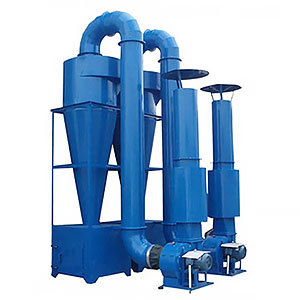
1. Cyclone dust collector
Adaptation scenario: Dealing with coarse dust above 10 μ m without fine powder emission requirements, such as wood processing, stone cutting, and small-scale mine crushing.
Core advantages: simple structure, no consumables, lowest cost (usually 1/3-1/2 of the purchase price of filtering equipment), maintenance only requires regular cleaning of the ash hopper.
Limitations: The fine powder capture rate is only 85% -90%, which cannot meet the low emission requirements; High humidity dust is prone to scaling and blockage on the cylinder wall.
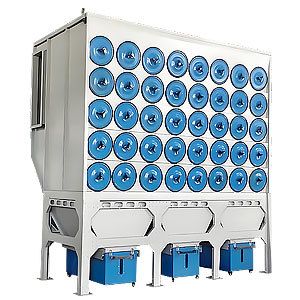
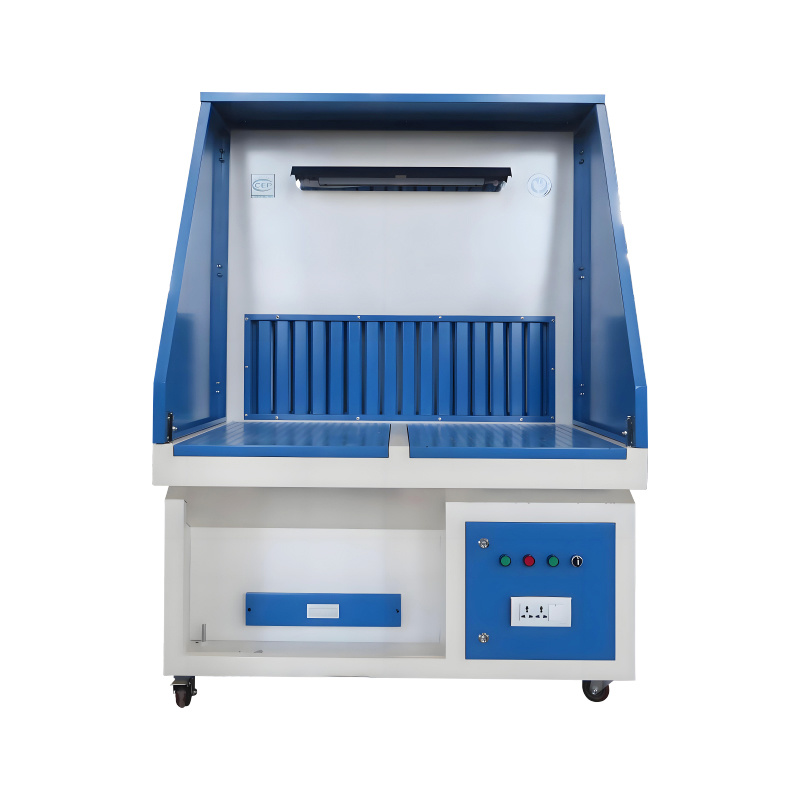
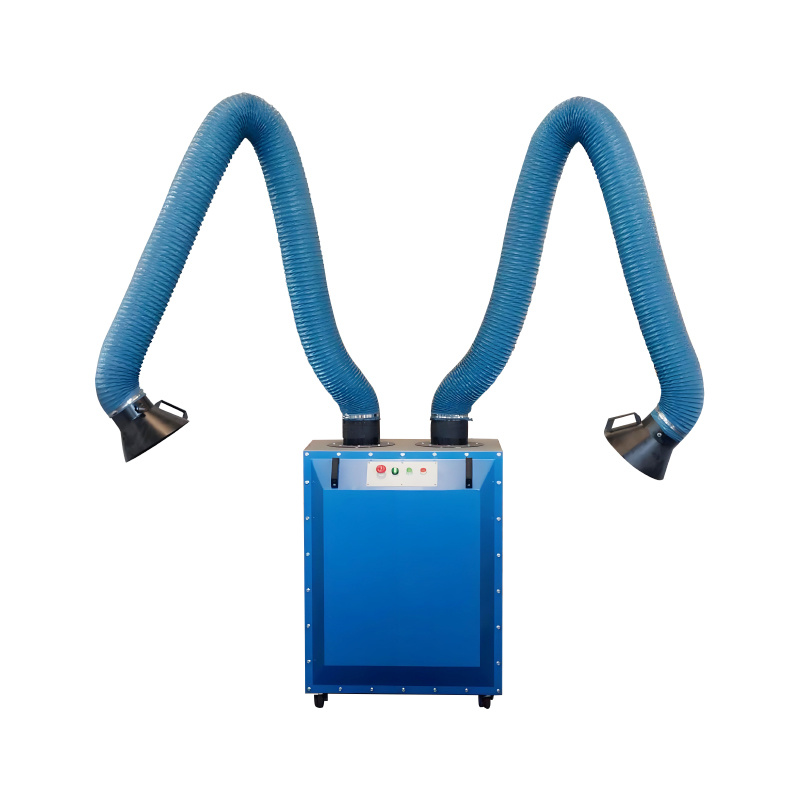
2. Filter cartridge dust collector
Adaptation scenarios: Fine powder processing (such as electronic factory soldering cigarettes, food factory flour, pharmaceutical factory powder), small factories with limited workshop space.
Core advantage: The fine powder capture rate is over 99%, which can meet the emission standards of most regions; Compact in size (occupying 0.5-1.5 square meters), flexible in installation, supporting wall mounted or vertical placement.
Limitations: Viscous dust can easily clog the filter cartridge and requires frequent cleaning; Additional dehumidification devices need to be installed in high humidity environments, otherwise the filter material is prone to moisture and failure.
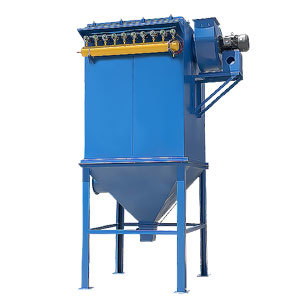
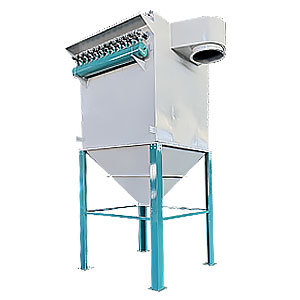
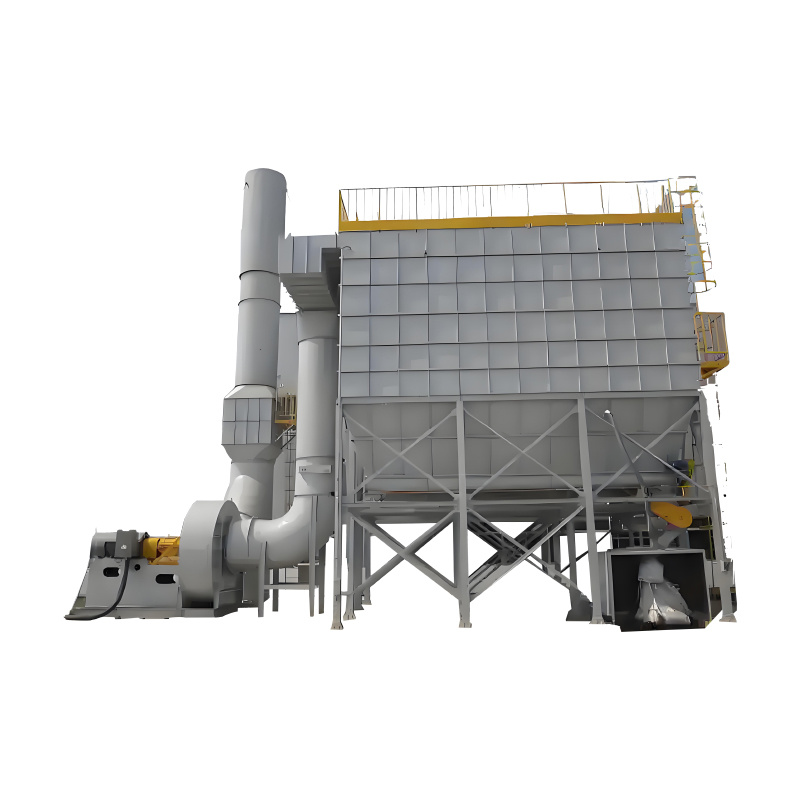
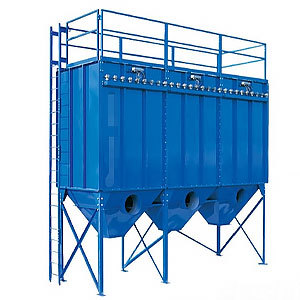
3. Small bag filter
Adaptation scenario: Medium concentration dust (such as small boiler flue gas, furniture factory spray paint dust), with high emission requirements and dust containing a small amount of viscosity.
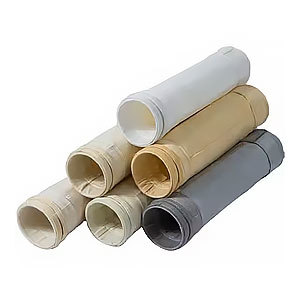
Core advantage: The filter bag material selection is diverse (such as PTFE corrosion-resistant, PPS high-temperature resistant), with strong adaptability; The dust cleaning effect is stable and not easily exceeded due to dust fluctuations.
Limitations: The footprint is slightly larger than that of a filter cartridge dust collector, and the filter bag needs to be replaced regularly (1-2 times a year). The maintenance cost is higher than that of a cyclone dust collector.
4. Electrostatic precipitator (small model)
Adaptation scenario: High temperature dust (such as small plastic granulation, metal melting flue gas), scenarios without filter material loss requirements.
Core advantages: High temperature resistance (up to 300 ℃), no filter bag replacement cost, suitable for continuous operation in high-temperature conditions.
Limitations: The fine powder capture rate is lower than that of filter cartridges/bag filters, and the equipment price is higher; The treatment efficiency of high specific resistance dust (such as some chemical dust) decreases, and maintenance requires professional personnel.
3、 Key principle of selection: Adapt to the actual needs of small factories
1. Prioritize selecting models with "no consumables/low consumables"
Small factories should avoid equipment that requires frequent replacement of expensive accessories. For example, in high viscosity dust scenarios, if a filter cartridge dust collector is selected, the cost of frequent filter cartridge replacement needs to be borne. It is better to choose a combination of cyclone dust collector and simple filter cotton to reduce maintenance expenses.
2. Maintenance convenience>parameter high-end
Choose equipment with simple structure and few fault points, such as cyclone dust collectors without complex electrical control systems, or filter cartridge dust collectors that support non disassembly and cleaning to avoid equipment idle due to a lack of professional operation and maintenance personnel.
3. Compliance costs are controllable
Non European and American markets: If local emission requirements are relaxed (≤ 30mg/m ³), cyclone dust collectors can be directly selected for coarse dust scenarios without the need for additional filtering modules.
European and American/high compliance markets: For fine powder scenarios, filter cartridges/bag dust collectors with CE/EPA certification are required. Food factories need to additionally meet FDA food grade material requirements to avoid product exports being affected by certification deficiencies.
4. Priority should be given to adapting to regional working conditions
Southeast Asia/South America high humidity areas: Avoid selecting equipment that is prone to condensation (such as ordinary bag filters), and prioritize filter cartridges with dehumidification modules or stainless steel cyclone dust collectors.
High temperature regions in the Middle East/Africa: Equipment should be made of high-temperature resistant materials (such as 304 stainless steel shells), and fans should have heat dissipation functions to prevent component aging caused by high temperature environments.
4、 Avoiding pitfalls: 3 common selection misconceptions
1. Misconception: Only focus on the initial price and ignore maintenance costs. For example, purchasing a regular filter cartridge dust collector at a low price, but needing to replace the filter cartridge every month due to strong dust viscosity, the annual maintenance cost far exceeds the equipment itself.
2. Misconception: Blindly pursuing high parameters. If a small woodworking workshop does not need to choose equipment with a processing air volume of 10000m ³/h, it can match the actual air volume of the workshop (usually 500-3000m ³/h) to avoid energy waste.
3. Misconception: Neglecting installation and transportation costs. Although large bag filters have high processing efficiency, small factories may not be able to install them due to narrow workshop doors, insufficient floor height, or high cross-border transportation costs. Therefore, it is better to choose modular and detachable models.
The core of selecting small factories is "precise matching", without the need to follow the trend and choose high-end equipment. By clarifying the characteristics of dust, site limitations, and compliance requirements, a balance can be found between "processing efficiency, cost, and maintenance" to select a cost-effective dust removal equipment that is suitable for oneself.
Hot Tags:


Contact Us
Tel:
WeChat:
WhatsApp:
E-mail:
Address:
338 National Road South, Longfengdian Village, Botou City, Hebei Province, China
JiuznTomine is expertly delivering technically complicated projects in markets & provides custom solutions for their customized need.


CONTACT INFO
Tel: +86 18531710311
WeChat: +86-18531710311
338 National Road South, Longfengdian Village, Botou City, Hebei Province, China