



































Selection of Bag Filter Bag for Bag Dust Collector: Matching Guide by Dust Type
Nov 17,2025
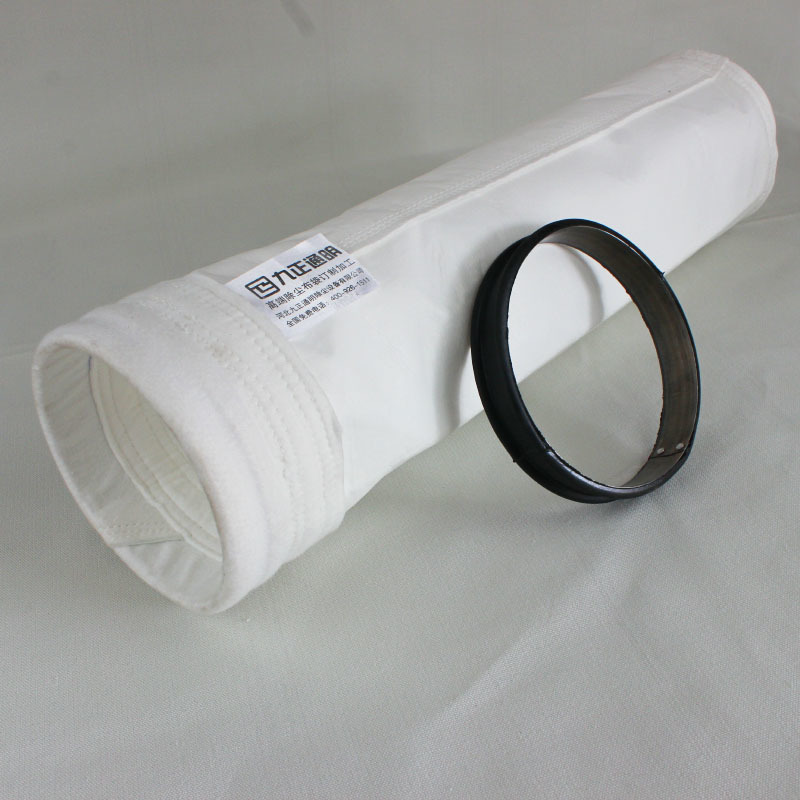
The filtration efficiency and operational stability of a bag filter depend on the compatibility of the filter bag with the characteristics of industrial dust. There are significant differences in particle size, humidity, corrosiveness, temperature, and other dimensions among different types of dust. Blindly selecting universal filter bags can easily lead to filtration failure, premature damage to filter bags, or a sharp increase in maintenance costs. Based on common types of industrial dust, the following provides a scientific logic and reference for filter bag selection, taking into account technical adaptability and compliance requirements for overseas working conditions.
1、 Coarse particle dust (particle size ≥ 10 μ m): emphasizing wear resistance and impact resistance
Dust characteristics
Commonly used in mining crushing, building material grinding, metallurgical sintering and other scenarios, the dust particle size is large (10-100 μ m), the hardness is high, and the settling speed is fast. It has obvious wear and impact on the surface of the filter bag, which can easily cause needle holes or thread breakage of the filter bag.
Key selection points
1. The preferred material is polyester needle punched felt, which has high fiber strength, good wear resistance, and can resist the mechanical impact of coarse dust particles. Its service life is 2-3 times longer than ordinary polypropylene filter bags.
2. The structure adopts a "thick base fabric+surface velvet" design, with a base fabric thickness of ≥ 0.8mm to enhance wear resistance; Avoid using thin film coated filter bags to prevent the coating layer from being scratched and falling off by coarse particles.
When the operating temperature is ≤ 130 ℃, normal temperature polyester material should be selected. If the flue gas temperature occasionally reaches 150 ℃, high temperature resistant modified polyester filter bags can be used to balance economy and adaptability.
2、 Fine particulate dust (particle size ≤ 5 μ m): focusing filtration accuracy and anti clogging
Dust characteristics
Commonly found in industries such as electronic welding, pharmaceutical crushing, and food processing, dust particles with fine particle size (0.1-5 μ m) and large specific surface area are prone to penetrate ordinary filter materials or adhere to the surface of filter bags to form blockages, leading to a surge in equipment resistance.
Key selection points
1. The material used is laminated filter material, preferably PTFE or polyester film. The pore size of the filter membrane is controlled at 0.1-0.3 μ m, which can achieve a fine powder capture rate of over 99.9%, and the surface is smooth and not easy to adhere to dust.
2. The filter bag structure adopts a multi fold design to expand the filtering area, reduce the dust load per unit area, and minimize the probability of blockage; The cleaning method is matched with low-pressure pulse cleaning to avoid damage to the filter membrane caused by high-pressure impact.
3. Food and pharmaceutical scenes require the use of food grade coated filter bags that comply with FDA or EU 10/2011 standards to ensure dust recovery without secondary pollution and meet overseas health compliance requirements.
3、 High humidity dust (humidity ≥ 60%): Core anti bonding and moisture resistance
Dust characteristics
Commonly used in chemical condensation, waste incineration, wood processing and other working conditions, dust contains liquid moisture or is prone to moisture absorption and agglomeration, which can easily adhere to the surface of filter bags to form "sticky bags", resulting in ineffective dust cleaning and loss of control of equipment resistance.
Key selection points
1. Use hydrophobic filter materials, such as PTFE coated filter bags or polyester filter bags impregnated with silicone oil, with a surface contact angle of ≥ 120 ° to reduce moisture adsorption and dust adhesion.
2. Avoid using untreated polypropylene or nylon filter bags, as these materials have strong moisture absorption and are prone to deformation and decreased strength due to moisture.
3. Auxiliary design: The surface of the filter bag is treated with "anti-static+hydrophobic" dual treatment. In high humidity and high dust concentration scenarios, pulse spraying can be used to strengthen dust cleaning and shorten the cleaning interval to 5-8 minutes per time.
4、 Corrosive dust (including acidic and alkaline components): reinforced with corrosion-resistant materials for adaptation
Dust characteristics
Mainly from chemical reactions, electroplating acid washing, metallurgical acid washing and other processes, the dust contains corrosive ions such as SO ₂ and Cl ⁻, or exhibits strong acidity (pH ≤ 3) and strong alkalinity (pH ≥ 11), which can easily corrode the filter bag fibers and cause the filter bag to become brittle and damaged.
Key selection points
In the scenario of mild corrosion (pH 4-10), acid and alkali resistant polyester filter bags are selected, and the fibers are treated with anti-corrosion modification to resist weak acid and alkali erosion.
2. In scenarios of moderate to severe corrosion (pH ≤ 3 or pH ≥ 11), PTFE filter bags are preferred as they have strong chemical stability, can withstand most acidic and alkaline media, and have a wide range of high temperature resistance (-200 ℃ to 260 ℃); If the cost is limited, PPS filter bags (applicable temperature ≤ 190 ℃) can be used, but it is necessary to avoid using them in working conditions with high oxygen content.
3. The filter bag stitching and sealing gasket should be made of corrosion-resistant materials, such as PTFE stitching and fluororubber sealing gasket, to avoid overall sealing failure caused by corrosion of auxiliary components.
5、 High temperature dust (temperature ≥ 150 ℃): focusing on high temperature stability
Dust characteristics
Commonly found in industries such as power plant boilers, steel smelting, and glass manufacturing, with high flue gas temperatures (150-300 ℃) and some accompanied by instantaneous high temperature impacts, ordinary filter bags are prone to thermal shrinkage, melting, or decomposition, leading to filtration failure.
Key selection points
1. Temperature range of 150-190 ℃: PPS filter bags are selected, which have good high-temperature stability and certain acid and alkali resistance, and are suitable for scenarios such as coal-fired power plants and waste incineration.
2. Temperature range of 190-260 ℃: PTFE filter bags are selected, which can operate stably in high temperature environments for a long time. They have excellent chemical and dimensional stability and are suitable for high-end chemical and metallurgical high-temperature flue gas treatment.
3. Temperature range of 260-300 ℃: Fiberglass coated filter bags are selected. Fiberglass material has a high temperature resistance limit of 300 ℃, but it is brittle and needs to be combined with flexible base cloth to enhance toughness and avoid breakage during dust cleaning; It should be noted that fiberglass filter bags are not resistant to strong alkali, and the acidity and alkalinity of the flue gas should be confirmed before selection.
6、 Flammable and explosive dust (such as aluminum powder, coal powder, wood powder): balancing anti-static and explosion-proof properties
Dust characteristics
Commonly found in industries such as metal processing, coal processing, and wood processing, dust can easily cause explosions at certain concentrations, and static electricity generated by friction can accumulate on the surface of filter bags, posing a safety hazard.
Key selection points
1. The material used is an anti-static filter bag. By mixing conductive fibers (such as carbon fiber and stainless steel fiber) into the fibers, the surface resistance of the filter bag is reduced to ≤ 10 ΩΩ, and static electricity is promptly discharged to avoid static accumulation.
2. The filter bag should be used in conjunction with an explosion-proof bag filter, using flame-retardant materials such as flame-retardant polyester and PTFE to reduce the risk of dust combustion; Avoid using ordinary chemical fiber filter bags that are prone to static electricity.
3. Comply with overseas explosion-proof compliance requirements, filter bags and dust collectors must pass ATEX certification (EU) or NFPA standards (USA) to ensure safe use in flammable and explosive conditions.
7、 General principles for selection
1. First, clarify the core parameters: in addition to dust type, it is necessary to simultaneously confirm the flue gas temperature, humidity, corrosiveness, dust concentration, and local emission standards (such as EU EN 13285, US EPA) to avoid single dimensional selection deviation.
2. Balance performance and cost: High end materials (such as PTFE) have strong adaptability but high cost. Depending on the severity of the working conditions and the operating cycle of the equipment, a combination of "basic materials+targeted treatment" (such as polyester coating+anti-static treatment) can be selected.
3. Adaptation of cleaning methods: The pulse cleaning system is compatible with laminated filter bags, and the anti blowing cleaning system is compatible with needle punched felt filter bags to avoid damage caused by mismatched filter bag structures and cleaning methods.
The core of filter bag selection is "precise matching of dust characteristics", rather than blindly pursuing high-end materials. Overseas industrial users need to comprehensively judge the selection direction based on their own operating parameters, compliance requirements, and maintenance costs. If necessary, the selection plan can be optimized through dust sample testing to ensure the long-term stable operation of bag filters.
Hot Tags:


Contact Us
Tel:
WeChat:
WhatsApp:
E-mail:
Address:
338 National Road South, Longfengdian Village, Botou City, Hebei Province, China
JiuznTomine is expertly delivering technically complicated projects in markets & provides custom solutions for their customized need.


CONTACT INFO
Tel: +86 18531710311
WeChat: +86-18531710311
338 National Road South, Longfengdian Village, Botou City, Hebei Province, China