












Bag filter and cyclone synergy: dual treatment technology path for fine and coarse dust in mines
Nov 14,2025

Mining, crushing, screening and other processes generate a large amount of coarse and fine mixed dust, with over 60% of the dust particles being larger than 10 μ m, and having high hardness and strong wear characteristics. On the other hand, sub micron fine powder is prone to diffusion, making it difficult for a single dust removal equipment to balance "efficient processing+low loss operation". The collaborative system of "pre treatment of cyclone dust collector+post fine treatment of bag filter" achieves dual purification of coarse and fine dust through functional division of labor, becoming an adaptive solution for mine dust control. Its core value lies in optimizing processing efficiency and equipment operation stability.
1、 The core logic of collaborative systems: division of labor, complementarity, and adaptation to the characteristics of mine dust
The design of the collaborative system is based on the principle of "coarse and fine layer treatment" of mine dust, with each level of equipment performing its own duties to avoid the performance limitations of a single device
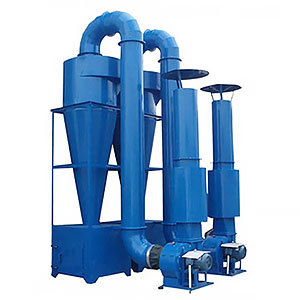
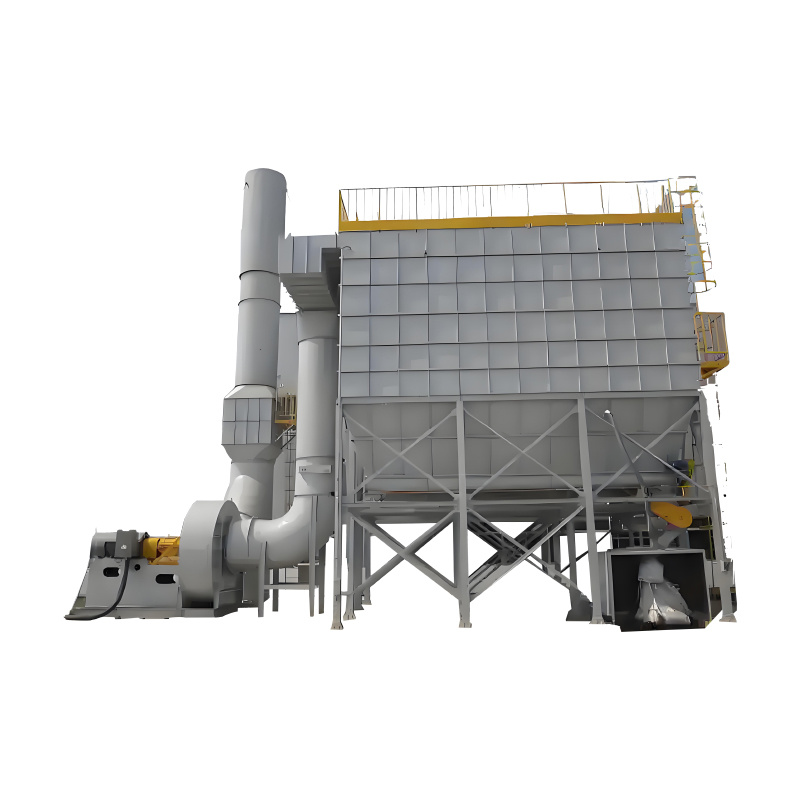
As a pre-processing unit, the cyclone dust collector utilizes the principle of centrifugal force to separate coarse particles of dust larger than 10 μ m in the flue gas, with a separation efficiency of up to 85% -90%. This energy-saving process significantly reduces the dust load of subsequent bag filters, reduces the impact and wear of coarse particles on bag filter materials, and lowers the overall resistance of the system.
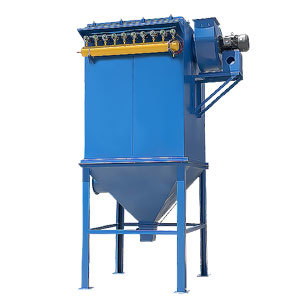
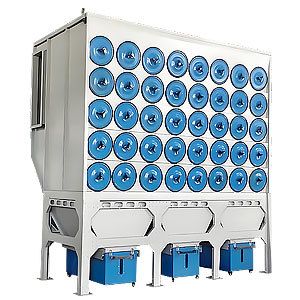
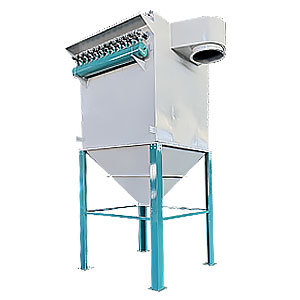
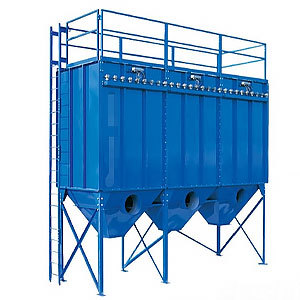
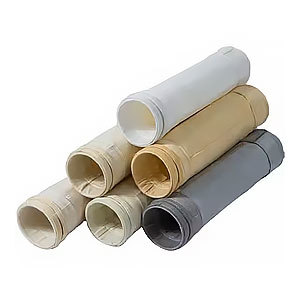
After being processed by the cyclone dust collector, the remaining 0.1-10 μ m fine powder dust enters the bag filter and is efficiently captured through physical filtration of the filter material. The capture efficiency remains stable at over 99.5%, ensuring that the final emission concentration meets the environmental protection standards of the mine and avoiding air pollution and occupational health risks caused by fine powder diffusion.
The coarse dust collected by the cyclone dust collector can be directly recycled and reused (such as the coarse dust in the crushing process of mining stones), while the fine powder is centrally collected by the bag filter to achieve the graded treatment of dust resource utilization, which meets the needs of green mining in mines.
2、 Key technical adaptation points for collaborative systems
To ensure the stable operation of the collaborative system, three core issues need to be addressed: airflow connection, equipment selection, and parameter matching, in order to avoid a decrease in processing efficiency due to improper adaptation
Optimization of airflow connection: A guide device and buffer chamber need to be installed between the two-stage equipment to control the wind speed of the air duct at 12-18m/s, ensuring that the airflow treated by the cyclone dust collector enters the bag filter chamber evenly and preventing excessive wear of local filter bags due to fast airflow or uneven dust concentration. At the same time, the buffer chamber can reduce airflow pulsation and avoid secondary dust from fine powder.
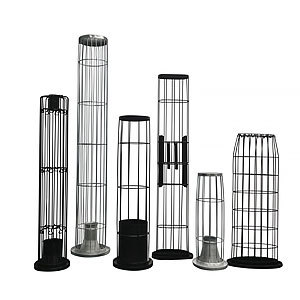
Equipment selection and adaptation: The cyclone dust collector needs to use a wear-resistant cylinder (such as ceramic or wear-resistant steel lining) to cope with the high wear of mine coarse dust, and the cone angle is designed to be 20 ° -30 ° to improve the settling efficiency of coarse dust; The filter material of the bag filter should be selected with strong wear resistance and temperature resistance (such as laminated polyester or PPS filter material). The filter bag structure adopts a thickened design to enhance impact resistance, and the skeleton is made of organic silicon spray coating or 316L stainless steel material to avoid scratching the filter bag after rusting.
Matching of operating parameters: dynamically adjust the system operating parameters based on the concentration of mine dust. When the dust concentration in the crushing process suddenly increases, the inlet wind speed of the cyclone dust collector can be appropriately increased (not exceeding 22m/s), while shortening the cleaning cycle of the bag filter (5-8 minutes/time); Under normal operating conditions, maintain a wind speed of 15-18m/s and a cleaning cycle of 10-15 minutes per time to balance processing efficiency and energy consumption.
3、 Application adjustment of collaborative systems in different stages of mining
There are differences in the dust characteristics of various production processes in mines, and the collaborative system needs to be adjusted specifically to adapt to actual working conditions
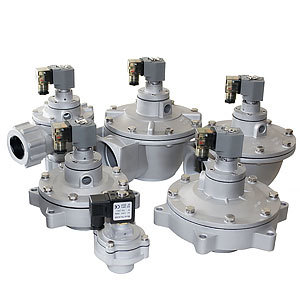
Crushing process: high dust concentration (up to 5000-10000mg/m ³), high proportion of coarse particles, and containing a large amount of sharp crushed stone particles. The collaborative system requires the use of a high-capacity cyclone dust collector, with a thickened wear-resistant lining installed on the cylinder. The bag filter adopts a pulse cleaning pressure upper limit (0.6MPa) to ensure rapid removal of attached dust.
Screening and transportation process: The dust concentration is moderate (1000-3000mg/m ³), the proportion of fine powder increases, and the airflow fluctuates greatly. It is necessary to optimize the guide structure of the cyclone dust collector to reduce airflow deviation. The bag filter should use membrane filter materials to reduce the risk of fine powder adhesion. At the same time, an air volume regulating valve should be installed to cope with airflow fluctuations.
Open pit mining process: greatly affected by environmental humidity, high humidity weather can easily lead to dust agglomeration. A dehydration device needs to be installed at the inlet of the cyclone dust collector, and the ash hopper of the bag filter should be equipped with a heating module (temperature controlled at 5-10 ℃ above dew point) to avoid dust adhesion and blockage of the equipment.
4、 The core focus of operation and maintenance for collaborative systems
The stable operation of collaborative systems relies on targeted operation and maintenance, taking into account the characteristics of both levels of equipment, with a focus on the following two points:
Operation and maintenance of cyclone dust collector: Regularly check the wear condition of the wear-resistant lining of the cylinder body. If the local wear thickness exceeds 3mm, it needs to be repaired or replaced in a timely manner; When cleaning the dust hopper, avoid excessive dust accumulation to form a "bridge" that affects the discharge of coarse dust; Regularly calibrate the wind speed monitoring device to ensure that the inlet wind speed is within the appropriate range.
Bag filter operation and maintenance: Adjust the cleaning parameters according to changes in resistance. When the system resistance exceeds 1800Pa, check whether the filter bag is blocked or damaged; Regularly inspect the surface wear of the filter bag, and replace it promptly if there are local holes to avoid fine powder leakage; In high humidity or high corrosion environments, it is necessary to shorten the inspection cycle of filter bags and perform rust prevention maintenance on the skeleton.
The core advantage of the bag filter and cyclone collaborative system lies in achieving precise division of labor for the pain points of "strong abrasion of coarse powder and difficult capture of fine powder" in mining dust. The cyclone dust collector solves the problem of efficient separation of coarse powder and equipment wear prevention, while the bag filter focuses on fine powder capture and standard discharge. The synergy between the two not only reduces the operating pressure of a single device, but also improves the overall processing efficiency and stability. The application of this system does not rely on special technological breakthroughs, but rather on targeted adaptation to mining conditions. Its operational effectiveness depends on the precision of equipment selection, parameter matching, and operation and maintenance management, providing a practical and economical technical path for mine dust control.
Hot Tags:


Contact Us
Tel:
WeChat:
WhatsApp:
E-mail:
Address:
338 National Road South, Longfengdian Village, Botou City, Hebei Province, China
JiuznTomine is expertly delivering technically complicated projects in markets & provides custom solutions for their customized need.


CONTACT INFO
Tel: +86 18531710311
WeChat: +86-18531710311
338 National Road South, Longfengdian Village, Botou City, Hebei Province, China