












Bag filter operation and maintenance guide: 5 key factors to extend the life of filter bags
Nov 14,2025

The filter bag is the core filtering element of the bag filter, and its lifespan directly affects the stability of equipment operation and maintenance costs. In industrial flue gas treatment, premature damage, aging, or blockage of filter bags often stem from improper operation and maintenance rather than the product itself. The following 5 key operation and maintenance points provide a practical technical path for extending the service life of filter bags, from working condition adaptation, operating standards to daily management, suitable for foreign trade production scenarios in multiple industries such as chemical, metallurgical, and building materials.
1、 Key 1: Proper flue gas pretreatment to reduce the source of filter bag damage
The high temperature, high humidity, oil stains or sharp particles in the flue gas are the main causes of rapid failure of filter bags, and pre-treatment needs to address these issues in a targeted manner:
High temperature flue gas (>120 ℃) needs to be equipped with cooling devices to control the temperature within the tolerance range of the filter bag (such as polyester filter bag ≤ 120 ℃, PPS filter bag ≤ 180 ℃), to avoid melting or accelerated aging of the filter material;
For high humidity flue gas (humidity>60%), a dehydrator should be installed at the inlet of the dust collector, and a heating module should be added to the ash hopper to prevent water vapor condensation from causing dust to adhere to the filter bag and form a plate structure;
Oil containing or viscous dust scenes (such as mechanical processing, asphalt flue gas) require a pre installed oil removal device to prevent oil stains from adhering to the surface of the filter bag, causing permanent blockage;
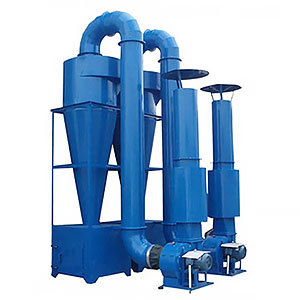
Smoke containing sharp hard particles (such as in mining and cement industries) can be equipped with a cyclone pre dust collector at the inlet to separate coarse particles and reduce impact wear on the filter bag.
2、 Key 2: Standardize the installation and sealing of filter bags to avoid human damage
The installation quality of filter bags directly determines their initial lifespan, and improper operation can easily lead to early damage:
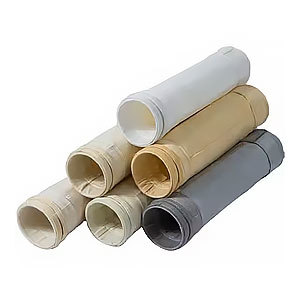
Before installation, check the appearance of the filter bag to ensure that there are no defects such as pinholes or loose stitching. At the same time, clean the burrs and welding slag on the edges of the flower plate holes to avoid scratching the filter bag mouth;
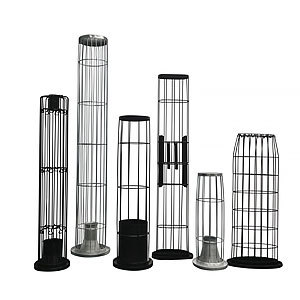
When installing the filter bag, it should be handled gently to avoid dragging and squeezing. Ensure that the filter bag is fully unfolded and fits snugly with the dust removal frame without wrinkles. If the frame is deformed or has burrs, it should be replaced in a timely manner;
The sealing components (such as the sealing ring of the filter bag mouth) should be intact and undamaged. After installation, check the sealing gap between the flower plate and the filter bag to ensure it is ≤ 0.5mm, to prevent the dust containing airflow from short circuiting and washing the edge of the filter bag;
After installation, test run for 10-15 minutes to observe if there is any dust leakage or abnormal airflow, and adjust it in a timely manner.
3、 Key 3: Optimize the parameters of the dust cleaning system, balance the dust cleaning effect and filter bag loss
Excessive or insufficient cleaning of dust will shorten the service life of the filter bag, and it needs to be dynamically adjusted according to the characteristics of the dust:
It is advisable to control the dust cleaning pressure between 0.3-0.6MPa. If it is too high, it may cause the filter bag film to fall off or the fibers to be damaged. If it is too low, it may not be possible to completely remove the dust;
The cleaning cycle and blowing time should match the dust concentration: for high concentration dust (such as mines), the cycle can be shortened to 5-8 minutes per time, and the blowing time is 0.1-0.2 seconds; Low concentration dust can extend the cycle to 15-20 minutes/time to avoid frequent blowing and wear on the filter bag;
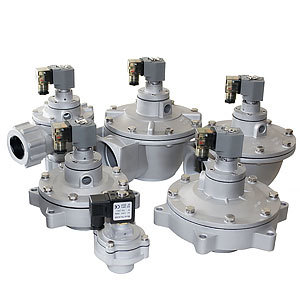
Regularly check the working status of the pulse valve and spray pipe: if the pulse valve diaphragm leaks, it should be replaced in a timely manner, and the spray pipe nozzle should be aligned with the center of the filter bag to prevent the airflow from deviating and flushing the local filter bag;
Avoid frequent cleaning of dust during the initial start-up or shutdown of the equipment, as the dust layer on the surface of the filter bag has not yet formed and cleaning can easily damage the filter material.
4、 Key 4: Strengthen daily inspections and promptly handle abnormal working conditions
High frequency inspections can solve problems during the hidden danger stage and prevent minor faults from escalating into irreversible damage to the filter bag
Daily monitoring of system resistance (normal range 800-1500Pa), if the resistance suddenly rises above 1800Pa, it is necessary to investigate whether it is due to filter bag blockage or dust cleaning system failure; If the resistance drops sharply, it may be due to damage to the filter bag, and the machine needs to be stopped immediately for inspection;
Check the sealing condition of the filter bag chamber every week, check whether the door cover sealing strip is aging, and whether the shell welding seam is leaking air. Leakage can cause local air flow to accelerate, exacerbating the wear of the filter bag;
Clean up the dust accumulation in the ash hopper every month to prevent excessive dust accumulation from forming a "bridge" and causing dust to blow back onto the surface of the filter bag, increasing the filtration load;
For high corrosion conditions (such as acidic chemical flue gas), regularly check the surface of the filter bag for corrosion and damage, and monitor the pH value of the flue gas. If it exceeds the tolerance range of the filter bag, adjust the pre-treatment process.
5、 Key 5: Adapt to working conditions and store filter bags to extend their lifespan from the source
The basis of the lifespan of filter bags is "selection and adaptation", which, when combined with standardized storage, can avoid damage before use:
Accurate selection based on working conditions: PPS, PTFE and other high-temperature resistant filter materials are selected for high-temperature working conditions, PTFE coated filter bags are selected for corrosive working conditions, and FDA certified sanitary grade filter materials are selected for the food industry to avoid "low material high use" or "high material low use";
The storage of filter bags should follow the principles of "dry, dark, and moisture-proof". They should be stored in an environment with a temperature of 5-30 ℃ and a humidity of less than 60%, avoiding contact with acids, bases, and oil stains. Filter bags that have not been used within their shelf life should be regularly flipped over;
When shutting down for a long time, it is necessary to thoroughly clean the dust and close the inlet and outlet valves of the dust collector. If the shutdown exceeds one month, the filter bag can be removed and sealed for storage to prevent environmental moisture erosion or dust agglomeration.
The core of extending the lifespan of bag filter bags in bag filters lies in "source protection, standardized operation, and dynamic adaptation". The above 5 operation and maintenance points do not require reliance on special equipment. By optimizing processes, standardizing operations, and daily management, the lifespan of filter bags can be extended by more than 30%, while reducing equipment failure rates and operation and maintenance costs. During the operation and maintenance process, it is necessary to flexibly adjust the filter bag according to the specific industry's flue gas characteristics and regional conditions (such as high temperature in the Middle East and high humidity in Southeast Asia), so that the filter bag can always be in a stable working state, ensuring the long-term and efficient operation of the bag filter.
Hot Tags:
PREVIOUS:


Contact Us
Tel:
WeChat:
WhatsApp:
E-mail:
Address:
338 National Road South, Longfengdian Village, Botou City, Hebei Province, China
JiuznTomine is expertly delivering technically complicated projects in markets & provides custom solutions for their customized need.


CONTACT INFO
Tel: +86 18531710311
WeChat: +86-18531710311
338 National Road South, Longfengdian Village, Botou City, Hebei Province, China