












Selection of Ash Unloading Valve: Star vs Spiral Dust Adaptation Techniques
Nov 13,2025

The ash discharge valve is the core component of the industrial dust removal system's ash discharge process, and its selection directly affects the dust emission efficiency and system stability. Star shaped ash discharge valves and spiral ash discharge valves have different dust characteristics and operating conditions due to structural differences. The following provides objective technical references for overseas industrial users by exploring the core characteristics of both, dust adaptation logic, and key dimensions of selection.
1、 Comparison of core characteristics between star shaped and spiral ash discharge valves
1. Star shaped ash discharge valve
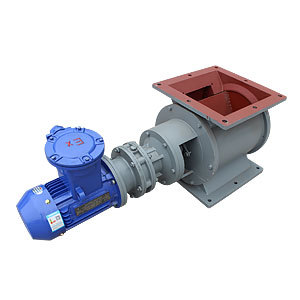
Working principle: The dust in the ash hopper is quantitatively "cut" and discharged through the rotating impeller, and the gap between the impeller and the shell forms a seal to prevent air backflow.
Core advantages: compact structure, easy installation, good sealing (gap usually ≤ 0.5mm), low operating noise.
Inherent limitations: Poor adaptability to high humidity and agglomerated dust, prone to impeller jamming; The single conveying capacity is limited and not suitable for high flow ash discharge.
2. Spiral ash discharge valve
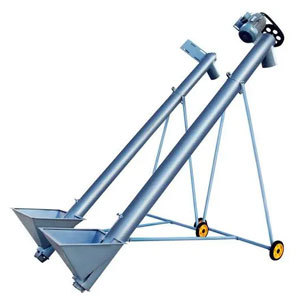
Working principle: The dust is transported along the pipeline by the rotation of the spiral blades, and can be discharged horizontally or obliquely, with both conveying and unloading functions.
Core advantage: Strong penetration through viscous and agglomerated dust, not easily clogged; Long conveying distance (up to 10 meters), capable of centralized ash discharge; The range of adjustment for conveying capacity is wide.
Inherent limitations: Weak sealing compared to star valves, prone to dust leakage; Complex structure, slightly higher maintenance cost; The operating energy consumption is higher than that of the same flow star valve.
2、 Core techniques for adapting dust characteristics
The core of selection is to match the four key parameters of dust: particle size, humidity, flowability, and viscosity. The specific adaptation logic is as follows:
1. Adapt according to dust particle size
Star shaped ash discharge valve: suitable for dry dust with particle size of 0.1-50mm, especially for fine powder (0.1-10mm) and small and medium-sized particle dust (10-30mm). When the dust particle size is uniform and there are no large clumps, the impeller wear is small and the operation is stable.
Spiral ash discharge valve: Suitable for various types of dust with particle sizes ranging from 0.1-100mm, and has stronger compatibility with large particles (50-100mm) or mixed dust with uneven particle sizes. The pushing force of spiral blades can prevent large particles from getting stuck, making it suitable for coarse dust scenes such as mining and building materials.
2. Adapt according to dust humidity and viscosity
Star shaped ash discharge valve: only suitable for dry dust with humidity ≤ 8% (such as cement powder, flour, metal powder). When the dust humidity is greater than 10% or has viscosity, it is easy to adhere to the surface of the impeller, causing dust accumulation and agglomeration, leading to motor overload or valve jamming.
Spiral ash discharge valve: Suitable for medium to high humidity dust with humidity ≤ 20% (such as coal slurry, sludge, high humidity mineral powder), or highly viscous dust (such as tree fat powder, starch). The shearing and pushing action of spiral blades can break slight clumps and avoid blockage.
3. Adapt according to dust mobility
Star shaped ash discharge valve: suitable for dust with good fluidity (resting angle ≤ 30 °). Dust with poor fluidity is prone to bridging at the outlet of the ash hopper, causing the star valve to "idle" or uneven ash discharge, and needs to be used in conjunction with the gasification device.
Spiral ash discharge valve: suitable for dust with moderate to poor fluidity (resting angle 30 ° -60 °). The forced conveying characteristics of spiral blades can break the dust bridging, without the need for additional gasification devices, and have more flexible adaptability.
3、 Supplementary adaptation to working conditions and scenarios
In addition to dust characteristics, installation space, transportation requirements, system pressure and other working conditions also need to be considered in the selection:
1. Installation space and conveying distance
Star shaped ash discharge valve: low in height and small in volume, suitable for direct installation below the ash hopper, can only discharge ash vertically, with a conveying distance of ≤ 0.5 meters, suitable for nearby ash discharge of single machine dust removal equipment.
Spiral ash discharge valve: can be installed horizontally or obliquely (inclination angle ≤ 30 °), with a conveying distance of 1-10 meters, suitable for multiple dust removal equipment to discharge ash in a centralized manner, or for scenarios where dust needs to be transported to a storage bin.
2. System pressure and sealing requirements
Star shaped ash discharge valve: with good sealing performance, suitable for positive pressure (≤ 0.3MPa) or negative pressure dust removal systems, it can effectively prevent air backflow from affecting dust removal efficiency, and is suitable for high sealing requirements in chemical, food and other industries.
Spiral ash discharge valve: with weak sealing, it is suitable for atmospheric pressure systems by default. If used in positive/negative pressure scenarios, additional sealing end caps and packing boxes are required to adapt to extensive ash discharge scenarios with low sealing requirements (such as mines and building materials).
3. Delivery volume demand
Star shaped ash discharge valve: The single conveying capacity is usually ≤ 50m ³/h, suitable for small and medium flow ash discharge (such as small filter cartridge dust collectors, laboratory dust removal equipment).
Spiral ash discharge valve: The single conveying capacity can reach 10-200m ³/h, suitable for high flow ash discharge (such as centralized discharge of large bag dust collectors and electrostatic precipitators).
4、 Common selection misconceptions to avoid
1. Misconception: Choosing star shaped valves for high humidity dust → Consequences: impeller jamming, motor burnout. Correct choice: spiral ash discharge valve+heat tracing device.
2. Misconception: Choosing multiple star shaped valves in parallel for high flow ash discharge → Consequences: complex installation and high maintenance costs. Correct choice: single large-diameter spiral ash discharge valve.
3. Misconception: Choosing a regular spiral ash discharge valve for the negative pressure system → Consequences: air backflow, decreased dust removal efficiency. Correct choice: spiral ash discharge valve+sealing modification.
4. Misconception: Choose spiral ash discharge valve for fine powder conveying → Consequences: dust leakage, energy waste. Correct choice: star shaped ash discharge valve, balancing sealing and energy saving.
5、 Summary of Selection Decision Logic
The selection of ash discharge valves should follow the logic of "first look at the characteristics of the dust, and then look at the requirements of the working conditions":
1. Prioritize the determination of dust humidity and viscosity: dry and non sticky star shaped, high humidity with sticky spiral;
2. Re match particle size and flowability: For fine powder with good flowability, choose star shaped; for coarse powder with poor flowability, choose spiral;
3. Finally, considering installation space, conveying distance, and system pressure: star shaped for short distance and high sealing requirements, and spiral for concentrated long distance and high flow rate.
The core of selection is "adaptation rather than optimization", which needs to be comprehensively judged based on actual dust parameters and working conditions, to avoid blindly pursuing a single characteristic that may lead to equipment operation failure.
Hot Tags:
PREVIOUS:


Contact Us
Tel:
WeChat:
WhatsApp:
E-mail:
Address:
338 National Road South, Longfengdian Village, Botou City, Hebei Province, China
JiuznTomine is expertly delivering technically complicated projects in markets & provides custom solutions for their customized need.


CONTACT INFO
Tel: +86 18531710311
WeChat: +86-18531710311
338 National Road South, Longfengdian Village, Botou City, Hebei Province, China