












Common problems and solutions of cyclone dust collector
Nov 13,2025

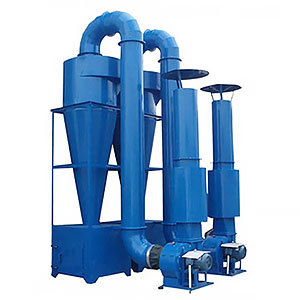
Cyclone dust collectors are widely used in industrial scenarios such as mining, building materials, and metallurgy due to their simple structure and adaptability to coarse dust treatment. However, in long-term operation, they are susceptible to various problems caused by fluctuations in working conditions and installation deviations. The following outlines the high-frequency faults, causes, and targeted solutions to provide practical reference for overseas industrial users.
1、 Common problem 1: Dust removal efficiency lower than expected
Common causes
1. The deviation of the flue gas inlet wind speed from the design value (too fast or too slow) leads to a decrease in dust separation efficiency;
2. The proportion of fine powder with a particle size less than 5 μ m is too high, exceeding the separation threshold of the cyclone dust collector;
3. During equipment installation, there may be vertical deviation, airflow deviation, and failure of local dust removal channels;
4. The outlet pipeline is leaking air, and the separated dust is brought into the airflow again.
solution
1. Adjust the frequency of the fan and control the inlet wind speed at 12-20m/s (adapted according to the equipment design parameters) to avoid turbulence caused by excessive wind speed;
When the proportion of fine powder exceeds 30%, a filter cartridge or bag filter device should be added after the cyclone dust collector to form a combination of "coarse filtration+fine filtration";
3. Re calibrate the verticality of the equipment installation, with a deviation controlled within ± 1 °, to ensure that the airflow spirals along the cylinder wall;
4. Check the flange and sealing gasket of the outlet pipeline, repair the air leakage with sealant, and replace the aging sealing parts.
2、 Common problem 2: The inner wall of the equipment wears out too quickly
Common causes
1. Handling dust with high hardness (such as quartz sand, iron ore debris) and long-term impact on the cylinder wall;
2. If the inlet wind speed is too high, the cutting effect of dust on the cylinder wall will be intensified;
3. The material of the cylinder wall is ordinary carbon steel, without wear-resistant treatment;
4. The airflow deviation causes local cylinder walls to be concentrated due to dust impact.
solution
1. Reduce the inlet wind speed to the design lower limit (such as 12-15m/s) to reduce the kinetic energy of dust impact;
2. Install ceramic lining or wear-resistant steel lining plate in the easily worn areas of the cylinder wall (inside the inlet, bottom of the cone section), with a thickness of 8-15mm selected according to the dust hardness;
3. Replace the material of the cylinder wall with Q355 wear-resistant steel, or apply wear-resistant coating treatment to the original carbon steel cylinder wall;
4. Adjust the angle of the inlet guide plate to ensure even distribution of airflow and avoid localized impact concentration.
3、 Common problem 3: Ash accumulation and blockage in the ash hopper
Common causes
1. The high humidity of dust causes it to absorb moisture and clump in the ash hopper, making it difficult to discharge smoothly;
2. The cone angle of the ash hopper is too small (less than 45 °), resulting in poor dust mobility;
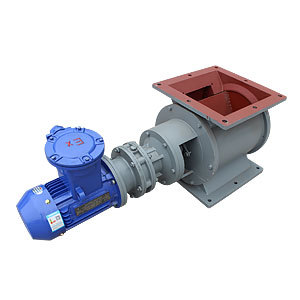
3. Ash discharge valve malfunction (such as motor damage, impeller jamming), resulting in the inability to discharge accumulated ash in a timely manner;
4. In low temperature environments, condensation occurs on the inner wall of the ash hopper, and dust adheres and accumulates.
solution
Under high humidity conditions, install a heat tracing device (such as an electric heating plate) in the ash hopper, and control the temperature at 5-10 ℃ above the dew point to prevent dust agglomeration;
Equipment with a cone angle less than 45 ° should be equipped with internal deflectors or designed with a large cone angle (45-60 °) to improve dust mobility;
3. Regularly check the operation status of the ash discharge valve, replace damaged motors in a timely manner, and clean up large pieces of dust stuck inside the impeller;
4. For equipment used in low-temperature environments, insulation treatment should be applied to the outer wall of the ash hopper to avoid condensation and sticking of ash.
4、 Common problem 4: Abnormal increase in system resistance
Common causes
1. The blockage of the ash hopper leads to a narrowing of the airflow channel and an increase in resistance;
2. Dust accumulation in the inlet pipeline reduces the cross-sectional area of circulation;
3. The dust adhesion on the inner wall of the equipment is severe, and the effective diameter of the cylinder wall is reduced;
4. If there are too many bends or the diameter of the outlet pipeline is too small, the airflow resistance will increase.
solution
1. Prioritize cleaning the dust accumulation in the ash hopper, repairing the ash discharge valve, and ensuring smooth ash discharge;
2. Regularly blow the inlet pipeline with compressed air to avoid dust accumulation, and the inner wall of the pipeline can be coated with a smooth layer to reduce adhesion;
3. After shutdown, rinse the cylinder wall with a high-pressure water gun (water-resistant condition) or mechanically clean the adhesive dust, and install an online dust cleaning nozzle if necessary;
4. Optimize the design of the outlet pipeline, reduce the number of bends (no more than 2 per 10 meters), ensure that the pipe diameter matches the fan airflow, and avoid airflow throttling.
5、 Common problem 5: Excessive noise and vibration during equipment operation
Common causes
1. The connection between the fan and the dust collector is not concentric, resulting in resonance during operation;
2. The fixing bolts of the equipment base are loose, and the vibration is transmitted to the whole machine;
3. The inlet wind speed is too high, and the airflow impacts the cylinder wall, causing aerodynamic noise;
4. Uneven accumulation of ash in the ash hopper causes the center of gravity of the equipment to shift and the operation to be unbalanced.
solution
1. Re calibrate the coaxiality of the fan and dust collector, with a deviation controlled within 0.2mm, and install flexible joints at the connection to absorb vibration;
2. Tighten the base bolts and install rubber shock absorbers between the base and the ground to reduce vibration transmission;
3. Adjust the wind speed to a reasonable design range to avoid noise caused by airflow impact;
4. Clean up the dust accumulation in the ash hopper in a timely manner, maintain the balance of the equipment's center of gravity, and regularly check the distribution of dust accumulation inside the ash hopper.
6、 Daily operation and maintenance prevention suggestions
1. Regularly monitor key parameters such as inlet wind speed, system resistance, and dust removal efficiency, establish an operating ledger, and promptly investigate any abnormalities;
2. Under high dust and high hardness working conditions, check the wear of the cylinder wall every month and replace the sealing parts of vulnerable parts every quarter;
3. In high humidity and low temperature environments, priority should be given to using heat tracing and insulation devices to avoid dust agglomeration and condensation;
4. Adjust operating parameters according to dust characteristics to avoid operating conditions exceeding the equipment design range (such as wind speed, temperature, dust concentration).
The above methods focus on the core pain points of equipment operation, formulated based on structural principles and working condition adaptation logic, which can help users quickly locate problems, reduce operation and maintenance costs, and are suitable for cyclone dust collectors in various industrial coarse dust treatment scenarios.
Hot Tags:


Contact Us
Tel:
WeChat:
WhatsApp:
E-mail:
Address:
338 National Road South, Longfengdian Village, Botou City, Hebei Province, China
JiuznTomine is expertly delivering technically complicated projects in markets & provides custom solutions for their customized need.


CONTACT INFO
Tel: +86 18531710311
WeChat: +86-18531710311
338 National Road South, Longfengdian Village, Botou City, Hebei Province, China