


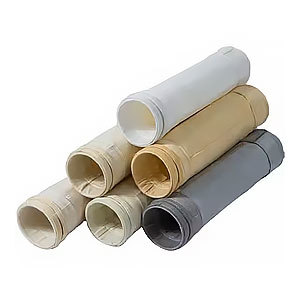









Dust bag stitching process: key technical details for preventing air leakage
Nov 12,2025
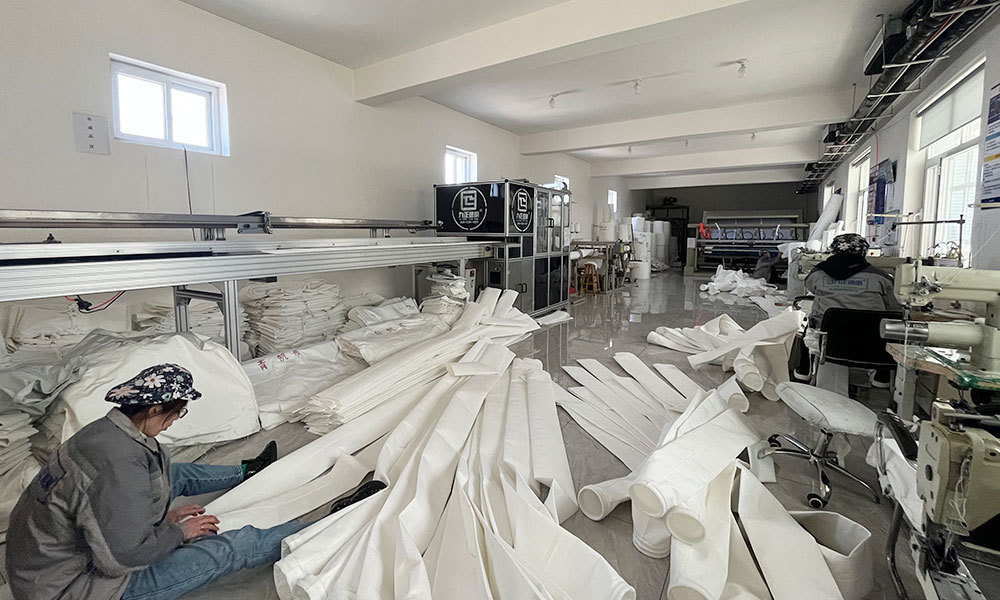
The filtration efficiency of dust removal bags not only depends on the filter material itself, but also on the stitching process as the core link connecting the filter material and forming the bag body, which directly determines the sealing of the bag body. Small gaps, pinholes or process defects at the stitching can become channels for dust leakage, leading to excessive emissions from the dust removal system and intensified local wear of the filter material. In industrial dust removal scenarios, about 30% of "air leakage problems" stem from non-standard stitching processes, and the control of technical details is the core prerequisite for ensuring the stable operation of dust removal bags.
1、 The core goal of suture technology is to achieve a balance between sealing and structural strength
The stitching of the dust removal bag needs to meet two core requirements simultaneously, both of which are indispensable:
1. Sealing and leakage prevention: To prevent dust from penetrating through the needle holes and gaps of the stitching, especially for fine powders between 0.1-5 μ m, the gap size needs to be reduced through process design to be smaller than the dust particle size;
2. Stable structure: It can withstand high-frequency vibration, airflow impact, and installation and disassembly tension during dust cleaning, avoid breakage or detachment of stitching, and ensure that the service life matches the filter material.
The balance between the two is the key to the stitching process - excessive pursuit of sealing to reduce needle spacing and increase stitch density may lead to a decrease in local strength of the filter material; Focusing only on strength and neglecting the sealing of the trace will directly cause air leakage.
2、 Analysis of Key Technical Details for Leak Prevention
1. Selection of Trace Type: Suitable for Filter Material Characteristics and Operating Conditions
The sealing effect and tensile strength of different traces vary significantly, and need to be accurately matched according to the type of filter material and usage scenario:
Lock stitch: formed by interweaving bottom and surface threads, with strong sealing and small pinhole gaps, suitable for fine powder processing scenarios (such as electronics factories and food factories), but with moderate tensile strength and not suitable for high-frequency vibration conditions;
Double line chain stitch: The stitch is in a chain like shape, with high tensile strength and good elasticity, and can adapt to vibration deformation during dust cleaning. It is suitable for high dust and high-frequency dust cleaning scenarios such as mines and cement, but the sealing performance needs to be improved through needle spacing optimization;
Edge wrapped chain stitch: Stitching is completed while locking the edge, with both sealing and anti-wear effects. It is suitable for areas such as filter bag mouth and bottom that are prone to wear and require strong sealing, reducing dust infiltration from edge gaps.
2. Needle spacing and pinhole control: reduce leakage channels from the source
The needle spacing size directly determines the pinhole density and gap width, and is the core parameter for preventing air leakage:
The selection of needle spacing should be combined with dust particle size: when processing fine powder ≤ 5 μ m, the needle spacing should be controlled at 3-4mm/needle to avoid needle hole gaps larger than the dust particle size; When dealing with coarse dust (≥ 10 μ m), the needle spacing can be relaxed to 4-5mm per needle to balance sealing and filter material strength;
Adopting the principle of "tight needle and narrow spacing": in key sealing areas such as the seam and mouth of the filter bag, the needle spacing can be reduced by 10% -15%. At the same time, fine needle sizes (such as 75-90) are selected to reduce the diameter of the needle hole and lower the risk of dust penetration;
Avoid "heavy needle stacking": Repeating sewing at the same position can enlarge the needle hole and damage the filter material fibers. A single molding process is required to ensure the continuity and integrity of the stitches.
3. Compatibility between suture material and filter material
The material of the stitching should be consistent with the temperature and corrosion resistance characteristics of the main filter material of the filter bag, otherwise it may cause sealing failure due to material aging:
Normal temperature condition (≤ 120 ℃): Polyester stitching is selected, matched with polyester filter material, with moderate cost and good tensile strength;
High temperature conditions (120-260 ℃): Paired with PTFE (polytetrafluoroethylene) or glass fiber stitching, compatible with PPS and PTFE filter materials, to avoid seam melting and brittleness at high temperatures, resulting in gaps;
Corrosion conditions (acid alkali flue gas): PTFE suture is preferred, with a pH resistance range of 1-14, which can prevent the suture from being corroded and broken, ensuring long-term sealing.
4. Edge sealing and finishing treatment: block the "dead corners of edge air leakage"
The opening, bottom, and seam edges of the filter bag are weak links in the stitching process and require special treatment to strengthen the sealing:
Bag sealing: Adopting the design of "edge wrapping+double stitching", the edges of the filter material are folded and sewn to avoid gaps caused by loose fibers at the edges, while increasing the fit with the dust removal skeleton and reducing installation gaps;
Bag bottom treatment: For circular bag bottoms, radial stitching and circular edge sealing are used to ensure uniform stress on the bag bottom and avoid cracking of the stitching caused by dust cleaning vibration;
Closing reinforcement: The end of the suture adopts the "back needle locking edge" process, with a length of not less than 20mm, to prevent the thread head from falling off, the thread from becoming loose, and to form an air leakage channel.
3、 Key factors affecting the sealing performance of sutures
1. Compatibility of filter materials: Hard filter materials (such as laminated filter materials) should use stitching with good elasticity to avoid gaps caused by inconsistent shrinkage between the stitching and the filter material; Flexible filter materials need to enhance the tensile strength of the traces to prevent tensile deformation;
2. Sewing tension control: Excessive sewing tension can cause the filter material fibers to be compressed and deformed, resulting in enlarged pinholes; If the tension is too low, the thread will become loose and the seal will fail. It is necessary to adjust the tension accurately through equipment to ensure that the thread is tightly attached to the filter material and does not damage the fibers;
3. Equipment accuracy: CNC sewing equipment is used to ensure uniform needle spacing and smooth stitching, avoiding needle spacing fluctuations and skewed stitching caused by manual sewing, and reducing local seam concentration;
4. Adaptation and adjustment of working conditions: Waterproof stitching should be selected for high humidity working conditions to avoid moisture absorption and expansion of the stitching, which may cause the stitching to loosen; High frequency dust cleaning conditions require an increase in trace density to enhance vibration resistance.
4、 Process validation and testing standards
The sealing performance of the sewing process needs to be verified through targeted testing to ensure compliance with industrial dust removal requirements
Airtightness testing: Inflate the sewn bag to 0.05MPa and maintain it for 30 minutes. Determine the sealing by the amount of pressure decay. The qualified standard is a pressure drop of ≤ 5%;
Pinhole detection: Fluorescent powder testing method is used, where fluorescent powder is sprayed inside the bag and exposed to ultraviolet light externally. If there is no fluorescence leakage, it is considered qualified;
Tensile testing: Conduct tensile strength testing on the suture area, and the fracture strength should not be less than 80% of the strength of the filter material itself to avoid the suture being damaged before the filter material during use.
The stitching process of dust removal bags may seem delicate, but it is actually the "last line of defense" against air leakage. The core of its technology lies in precise matching of thread type, needle spacing, suture material, and edge sealing treatment, combined with process optimization based on working conditions, to ensure sealing performance without damaging the filter material structure. In industrial dust removal systems, paying attention to the details of the stitching process is a key link in avoiding air leakage, improving dust removal efficiency, and extending the service life of the bag.
Hot Tags:


Contact Us
Tel:
WeChat:
WhatsApp:
E-mail:
Address:
338 National Road South, Longfengdian Village, Botou City, Hebei Province, China
JiuznTomine is expertly delivering technically complicated projects in markets & provides custom solutions for their customized need.


CONTACT INFO
Tel: +86 18531710311
WeChat: +86-18531710311
338 National Road South, Longfengdian Village, Botou City, Hebei Province, China